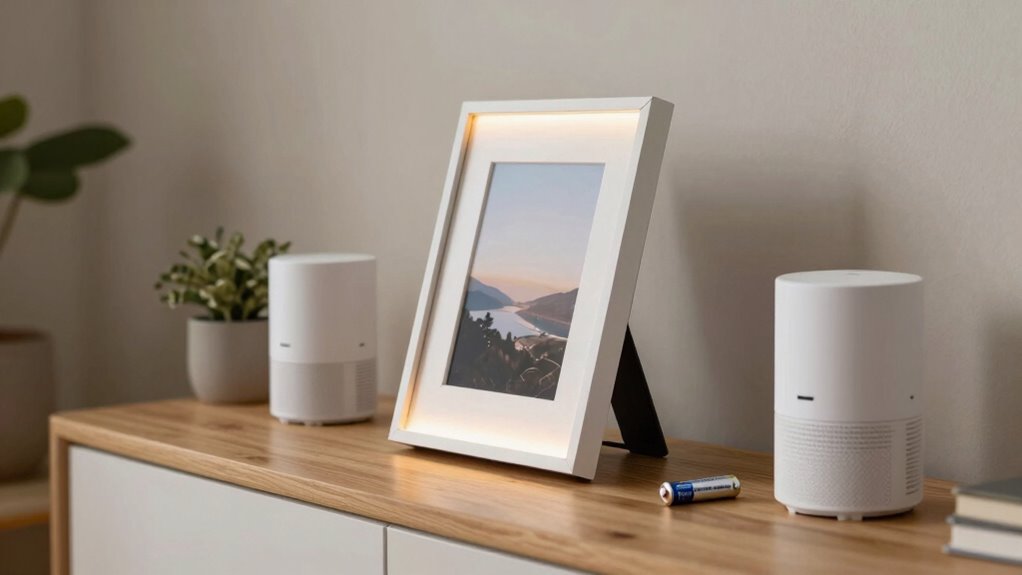

So, could IKEA’s new Frame actually outsmart your usual smart sensors? The frame packs a surprising sting of affordable innovation, hiding a full suite of environmental sensing inside a simple, stylish photo frame. It runs on a 1,100 mAh lithium polymer battery with an unbelievable idle draw of just 18 microamps. In plain terms, that means long life on a single charge, with a theoretical near seven-year lifespan. The original one-year minimum goal got a lucky sevenfold boost, and that kind of longevity makes you rethink what “smart” usually costs in batteries and hassle.
This design focuses on extreme power efficiency as a primary goal, aiming for a sensor that can stay in place for years with minimal maintenance. Power efficiency also translates into a more discreet aesthetic since less frequent battery changes mean fewer interruptions and fewer visible components in the room.
It’s the kind of durability you notice when you forget to swap batteries for years, and you start to wonder what the heck you were paying extra for with other brands.
Pricewise, this mix of hidden tech and friendly pricing is a refreshing change. IKEA’s smart sensors sit at $7.99 to $10 per unit, part of a new range that includes 21 products at approachable price points. Compare that to Aqara or Philips Hue, and the difference stings less the wallet and more the alarm on your phone when you realize you could outfit a whole room for what one premium sensor costs.
IKEA sensors run $7.99–$10, undercutting Aqara and Hue for a whole-room setup.
And yes, there’s a surprisingly stylish temperature and humidity sensor for budget-friendly monitoring, which makes the whole setup feel less like a gadget graveyard and more like decor with a brain.
Design integration isn’t an afterthought here. All components are tucked inside the photo frame, with a nearly invisible air channel carved into plastic that reads the room’s environment without shouting for attention. The sensor fits inside, hiding in plain sight and eliminating the visual clutter that haunts many plastic boxes. Over 200 smart home companies now back the Connectivity Standards Alliance standard, meaning devices like this frame are built to work within a broad, well-supported ecosystem from day one.
It’s a design win in the aesthetics department, a functional piece that doubles as a decorative element.
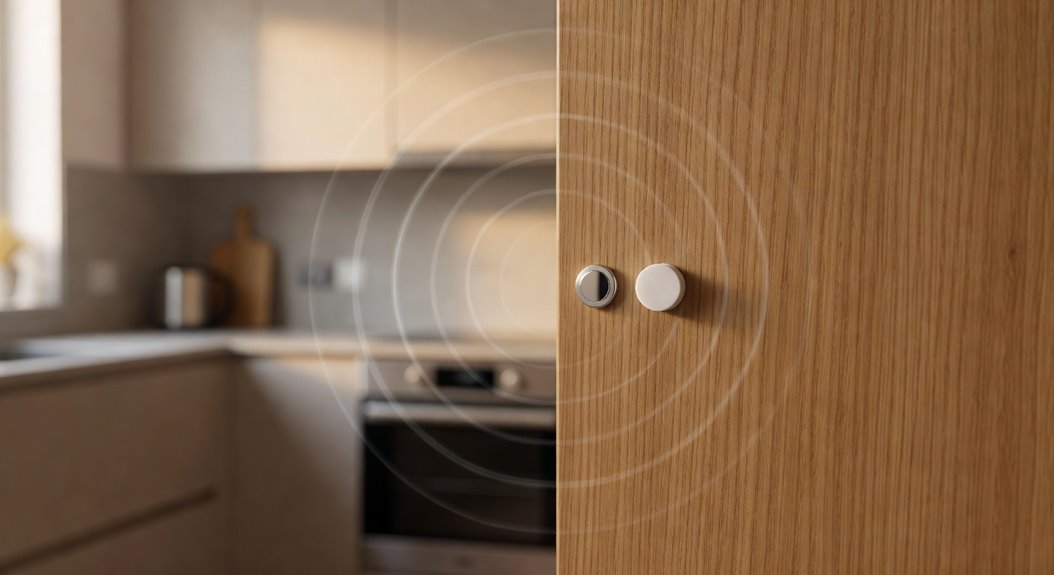
On the capability front, you get temperature and humidity, plus an air quality readout for CO₂, PM2.5, and more. Motion, door/window alerts, and water leakage sensors add a practical safety net. The frame works with Matter, connecting to major hubs while staying future-proof.
Performance tests show IKEA sensors hold their own against premium rivals, with reliable response and solid range. In a world of pricey gadgets, this frame proves that affordable innovation can be sexy, practical, and incredibly sane.
References
- https://www.hackster.io/news/turning-an-ikea-frame-into-a-smart-home-sensor-3161b6af2215
- https://www.ikea.com/global/en/newsroom/retail/the-new-smart-home-from-ikea-matter-compatible-251106/
- https://community.hubitat.com/t/interesting-video-comparing-new-ikeas-new-smart-home-devices-one-major-flaw/161241
- https://www.youtube.com/watch?v=HtAavzXOq2k
- https://www.livingetc.com/shopping/ikea-smart-sensor-range
- https://www.idealhome.co.uk/house-manual/smart-home/ikea-smart-sensors
- https://www.youtube.com/watch?v=KE7bOYCYETM