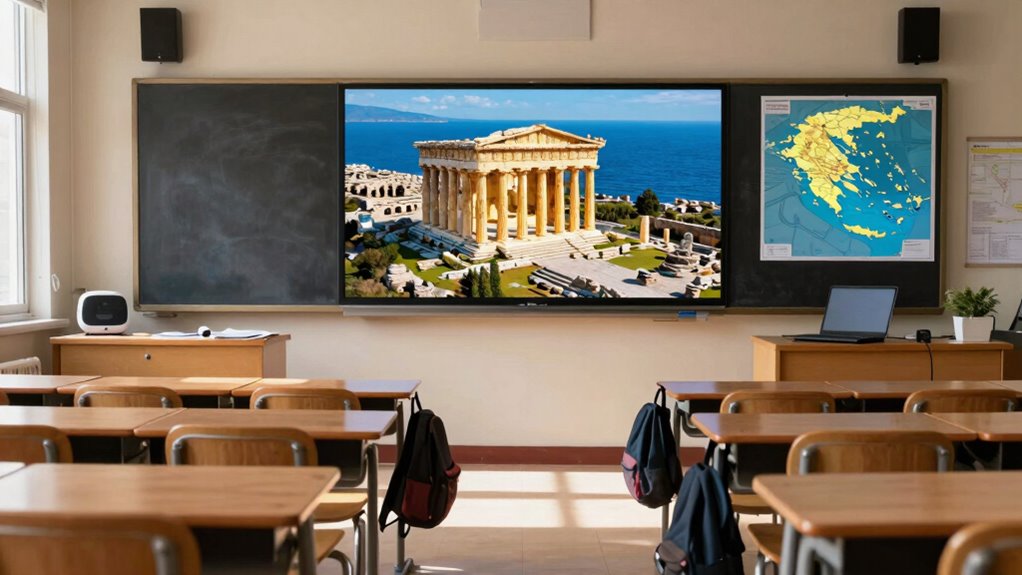
In Minnesota, schools are ditching field trips like last year’s fashion trend, and the halls feel a tad quieter without bus engines rumbling outside. The shift isn’t just about swapping cardboard maps for screens; it’s about trading a day away from the classroom for something that can travel across screens in a heartbeat.
Virtual field trips have moved into the spotlight, and they’re not just a quirky tech fad. They’re practical, accessible, and oddly democratic in their reach. Students log on, and suddenly the world’s a few clicks away, rotating through ancient Greece, distant rainforests, or a museum’s virtual gallery like it’s no big deal. The idea is simple: explore big ideas without filling a bus seat.
Virtual field trips put the world at students’ fingertips, swapping buses for brilliant, accessible exploration.
Educators outline a steady rhythm: videos, worksheets, interactive elements, live 45-minute sessions with up to 30 students. It sounds calm, almost too calm, but the outcomes are anything but. Virtual education leans hard on student engagement, weaving quizzes, discussion prompts, and simulated experiments into a tight, dynamic package. You’re not just watching a slideshow; you’re stepping into Poseidon’s world, tracing the routes of ancient democracies, and comparing Greek gods to modern movies, all while staying in the living room apartment you share with a pet, a laugh track, and a snack drawer.
The format even suits distance learners in hybrid setups, linking in in-person classrooms with shared cohort groups, which means fewer scheduling headaches and more consistent learning time. Some classrooms have even integrated voice assistant software like Alexa into their hybrid setups, allowing students to ask questions and retrieve information hands-free during virtual sessions.
The content is broad and concrete. Ancient Greece, architecture, archaeology, and even natural history get stitched together with modern humor and relatable references. Kids pick a god or goddess, build a sculpture or costume, explain their choices, and then melt into class Olympics that span multiple rooms or schools.
There’s a wink here—videos show how Percy Jackson ties into everyday life, while the Iliad and Odyssey get teased out into bite-sized readings. And yes, those VR journeys to Crete and Samariá Gorge exist, letting curious minds hike without leaving the couch.
The whole package, from Bell Museum programs to VictoryXR experiences, paints a picture of education that travels at the speed of a browser tab, not a school bus. It’s a bold, chatty shift that still honors curiosity, collaboration, and a well-timed joke. The presentation of Greek myth and ancient civilization content helps keep students engaged through interactive elements and group discussions.
References
- https://virtualfieldtrips.org/ancient-greece-birthplace-of-democracy/
- https://www.bellmuseum.umn.edu/virtual-k12/
- https://virtualfieldtrips.org/about_/articles/classroom-ideas/classroom-ideas_ancient-greece/
- https://www.ascsa.edu.gr/index.php/news/newsDetails/virtual-field-trip-anyone
- https://www.victoryxr.com/full-list-of-field-trips/