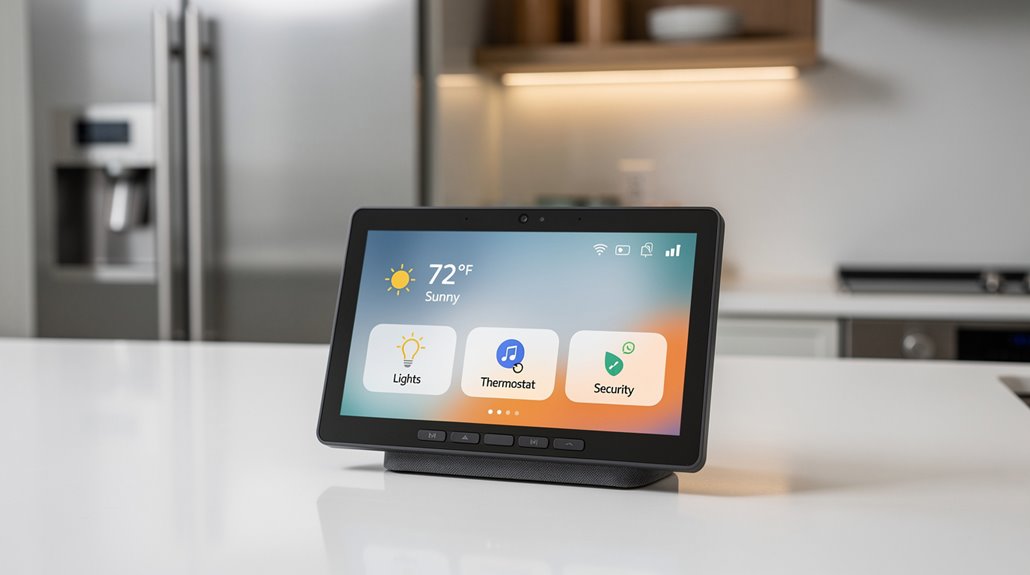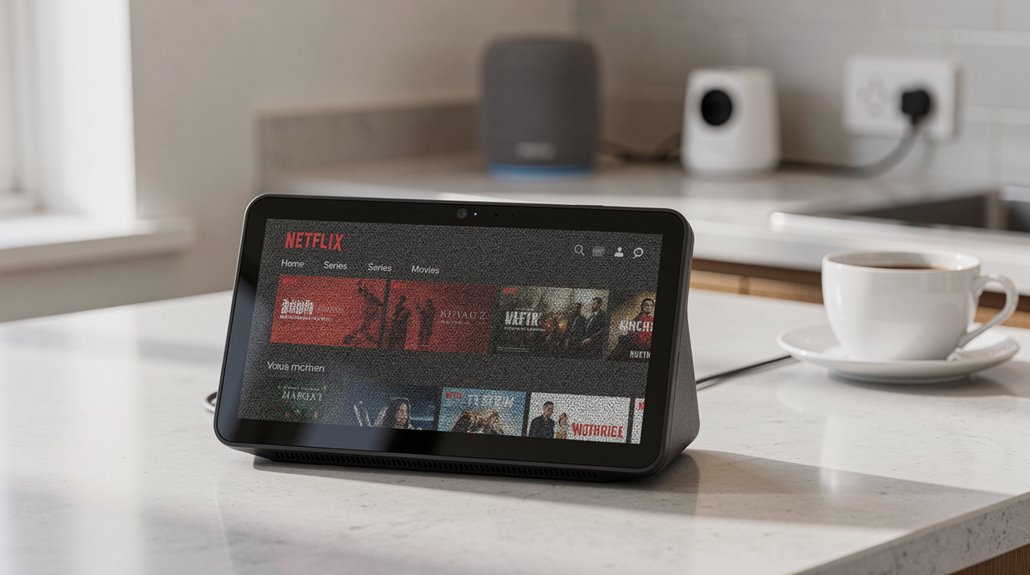
Picture a tiny, clever chip that can turn a plain wall into a mini‑smart‑display, and you’ve got the ESP32‑S3 in action. It’s a dual‑microcontroller marvel, pairing a primary ESP32‑S3 processor with a secondary ESP32 variant, and that combo reveals a lot of ESP32 S3 advantages. Think of a 1.8‑inch to 7‑inch touchscreen that can sport anything from a modest 360×360 IPS panel to a crisp 800×480 screen, all driven by a board that can even host PSRAM for extra memory.
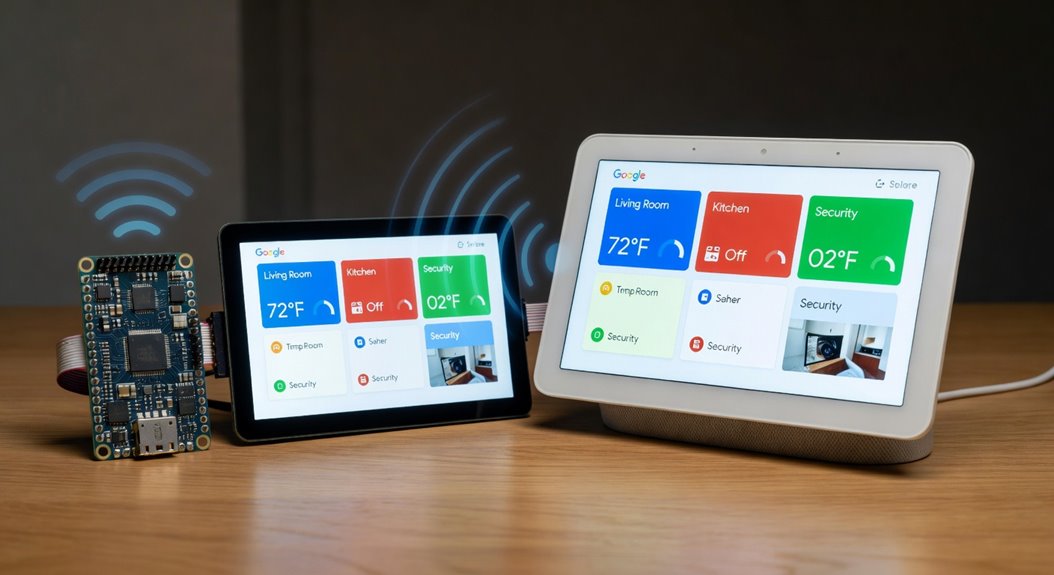
The chip can juggle a capacitive touch controller, a CNC‑machined mechanical frame, and even a separate coprocessor that handles display rendering, leaving the main MCU free to stay responsive. When you stack that against a Google Nest Hub, the contrast is funny: Nest leans on a single, tightly integrated SoC, while ESP32‑S3 spreads the load, making it easier to tweak, upgrade, or even swap out parts without a full redesign.
Development feels like a breeze, too. The official ESP‑IDF framework gives low‑level access to every peripheral, while the Arduino IDE offers a shortcut for hobbyists who just want to flash a sketch and see it work. You can add libraries on the fly, prototype fast, and still dive deep later if you need that extra performance.
The flexibility shines when you pair the board with a 7‑inch Elecrow CrowPanel Advance, which boasts an 800×480 display driven by the ESP32‑S3. The panel’s capacitive touch feels smooth, and the display controller can act as an independent coprocessor, offloading graphics work and keeping the UI buttery‑smooth. That scalability lets you build a compact 360×360 gadget for a tiny kitchen corner or a full‑size smart mirror for a living‑room wall, all with the same core chip.
Pair the 7‑inch Elecrow panel with ESP32‑S3 for buttery‑smooth UI, scalable from 360×360 gadgets to full‑size smart mirrors.
Networking is another win. The ESP32‑C6 secondary coprocessor brings built‑in IEEE 802.15.4 radio, so Thread and Matter support become native features, not afterthoughts. A dual‑radio design lets the primary ESP32‑S3 stay on Wi‑Fi for cloud tasks while the secondary handles Thread mesh traffic, keeping latency low and stability high. The Connectivity Standards Alliance created the Matter standard specifically to unify fragmented IoT devices like these under a single, interoperable protocol.
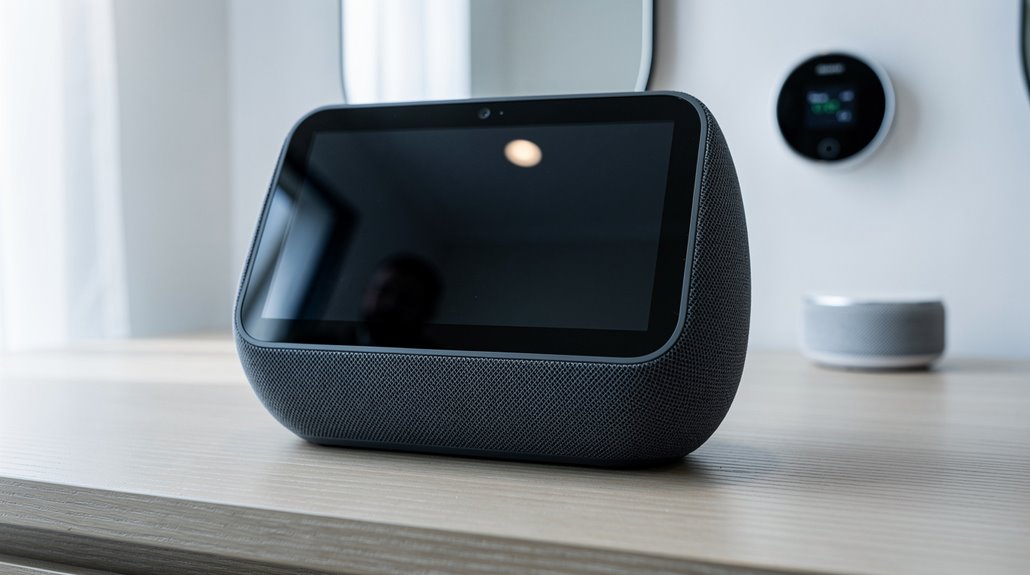
Matter compatibility means the DIY display can join the same smart‑home fabric as a Nest Hub, but without the vendor lock‑in. You can even run ESPHome firmware on the board, turning a repurposed smart speaker into a local‑processing hub, no cloud required.
In short, the ESP32‑S3 gives hobbyists a playful, powerful alternative that can give Google’s Nest a run for its money, especially when you factor in the humor of building your own smart display from a kit and watching it out‑shine a pricey commercial product. Open‑source collaborative design enables community engineers to contribute PCB layouts, GND pouring, and shielding improvements directly on GitHub. AI‑assisted debugging can streamline the development process.
References
- https://community.home-assistant.io/t/request-alternative-to-onju-voice-drop-in-pcb-repacement-for-google-nest-mini-google-home-mini-speakers-with-added-xmos-chip-to-match-official-home-assistant-voice-preview-edition-reference-hardware-specification/860001
- https://www.youtube.com/shorts/03Z900Zhzp0
- https://www.xda-developers.com/made-own-google-nest-hub-esp32-claude-code/
- https://www.xda-developers.com/built-google-home-hub-replacement-esp32-display/
- https://www.xda-developers.com/replaced-half-smart-home-esphome-devices/
- https://www.youtube.com/watch?v=LNWYiWLzkwA