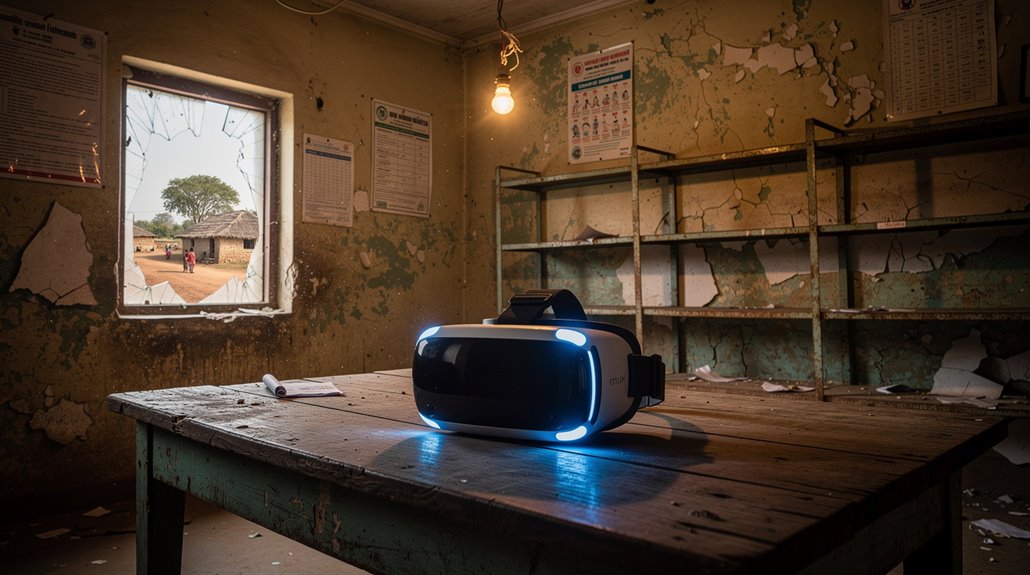
While India’s medical establishment congratulates itself for generating 400 million Ayushman Bharat Health Accounts—a bureaucratic triumph roughly equivalent to creating email addresses and calling it healthcare—the Ministry of Health now proposes injecting Virtual Reality into this digital fever dream, presumably because nothing says “addressing doctor shortages in rural Primary Health Centers” quite like strapping an Oculus headset onto a patient dying from preventable diseases.
The ABDM’s 273 million linked health records represent a monument to technological solutionism, a federated architecture of spectacular irrelevance when rural Indians lack basic access to physicians but possess, thanks to bureaucratic genius, unique 14-digit identification numbers and digital lockers filled with prescriptions never fulfilled.
The system boasts 980 active integrators—because what India’s healthcare crisis truly demands is more IT consultants billing by the hour while Primary Health Centers operate without doctors. Much like how Alexa voice commands can control a multitude of smart home devices but cannot create actual healthcare infrastructure where none exists.
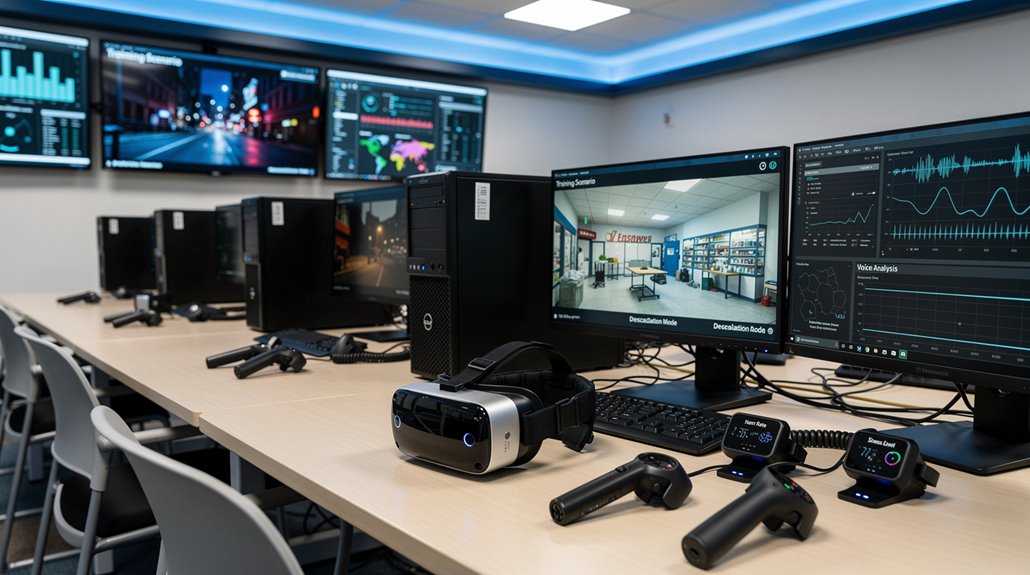
Enter Virtual Reality, stage left, promising to revolutionize medical training through “immersive learning experiences” that allow students to practice clinical scenarios without patient risk. The pitch glitters with Silicon Valley vocabulary: scalable solutions, reduced costs, enhanced retention.
Virtual Reality arrives bearing promises of revolutionary transformation while India’s healthcare infrastructure crumbles beneath the weight of actual human suffering.
Medical education, apparently, suffers not from India’s physician-to-patient ratio of 1:1,511—substantially below WHO recommendations—but from insufficient gamification. Meanwhile, digital pathology platforms enable AI-based slide analysis and collaboration across laboratories, a technological marvel that presumes laboratories exist and function in regions where electricity remains aspirational.
The eSanjeevani telemedicine platform claims 200 million consultations, a statistic requiring either profound faith or deliberate ignorance regarding what constitutes medical care. Remote villages now enjoy hub-and-spoke connectivity, permitting doctors in metropolitan comfort zones to diagnose ailments via smartphone screens while patients lack clean water, functional toilets, or medications.
But they possess ABHA Mobile Apps, technological marvels facilitating record-sharing with verified providers who remain conveniently hypothetical.
This VR integration represents India’s healthcare philosophy crystallized: substitute actual medical infrastructure with digital simulacra, replace physicians with headsets, transform systemic failures into opportunities for tech sector enrichment. XRHealth deploys VR headsets for immersive therapy, suggesting the future involves medicating through pixels rather than pills.
The Ministry promotes “hands-on practice in realistic clinical scenarios” for medical students while rural Indians experience hands-off neglect in unrealistic survival scenarios.
Perhaps the ultimate VR application involves government officials experiencing simulated poverty and preventable death—immersive learning cultivating empathy without risk to their comfortable delusions.
References
- https://www.pharmabiz.com/NewsDetails.aspx?aid=178085&sid=1
- https://www.tandfonline.com/doi/full/10.1080/23288604.2024.2392290
- https://acr-journal.com/article/digital-health-for-all-building-a-patient-centered-public-health-framework-through-telemedicine-1575/
- https://abdm.gov.in:8081/uploads/ndhb_1_56ec695bc8.pdf
- https://www.nature.com/articles/s41599-024-03081-7