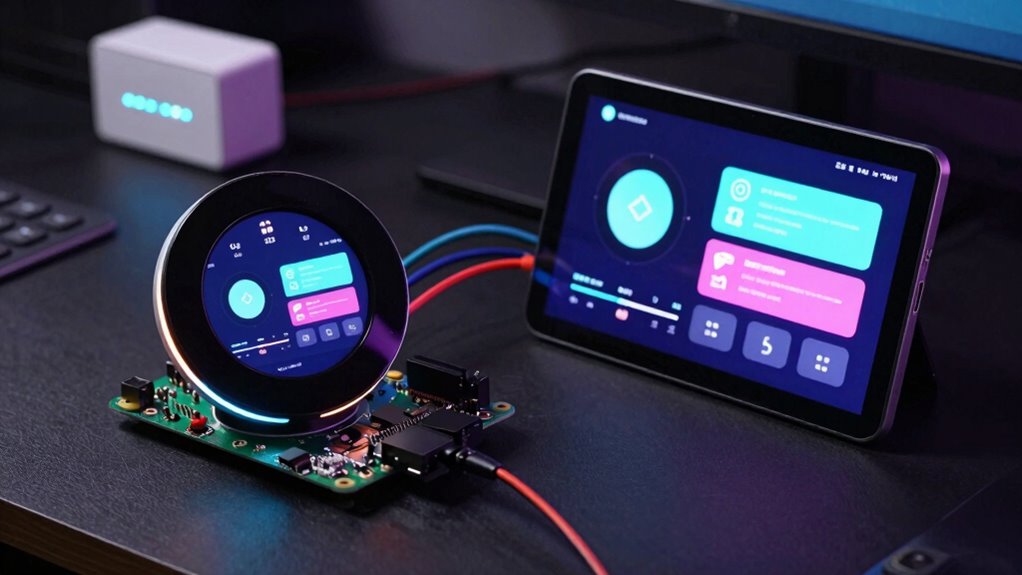
While most screens these days are stuck in the rectangle rut—like toast that never seems to fall butter-side up—one quirky little display is here to spin things around, literally. It’s the round display, a cheeky little rebel in a world where everything from phones to fridges insists on right angles.
For Raspberry Pi tinkerers who want their projects to stand out, this circular screen is like a mic drop in visual form. Picture your Pi-powered smart mirror or retro gaming handheld, but instead of looking like every other DIY build, it winks at you with a circular face, like a futuristic monocle that knows it’s cool.
A circular screen for your Pi is a mic drop in visual form—winking at the world like a cool, futuristic monocle in a sea of boring rectangles.
Now, true, the popular HyperPixel 2.1 Round isn’t exactly plug-and-play with an HDMI interface—it runs on DPI, which means a bit more wiring wizardry under the hood. But that hasn’t stopped makers from falling head over heels for its 480×480 pixel charm.
It’s small, just 2.1 inches, but packs enough punch for dashboards, audio visualizers, or a tiny digital pet that orbits rather than walks. Sure, you won’t find a mainstream 4-inch round HDMI touchscreen just yet—Motherboard hasn’t blessed us with that combo—but the desire is there, bubbling in forums and Reddit threads like a pot of nerd stew. These specialized displays could soon power the interfaces for household robots that are expected to become common in homes between 2028 and 2035.
Drivers installed via terminal and a reboot are required before the HyperPixel 2.1 Round can access the desktop, adding a small hurdle for beginners.
Honestly, it’s kind of poetic. While Apple and Samsung chase bigger, borderless rectangles, the Raspberry Pi community whispers, “What about circles?” It’s like bringing a disco ball to a black-tie event—unexpected, a little flashy, but undeniably fun.
And let’s be real, half the joy of Pi projects isn’t perfection—it’s the weird, the wobbly, the “why did I think this was a good idea?” moments. So while HDMI might not handshake with a round 4-inch screen today, the dream spins on, pixel by pixel, in perfect loops. The new Raspberry Pi Touch Display 2 offers a much larger (1280 x 720) resolution, showing how far mainstream Pi displays have come in comparison.
References
- https://magazine.raspberrypi.com/articles/hyperpixel-2-1-round-review
- https://www.tomshardware.com/raspberry-pi/raspberry-pi-touch-display-2-review-a-touch-of-class
- https://bret.dk/raspberry-pi-touch-display-2-launched/
- https://www.youtube.com/watch?v=rkSyrKwSP8w
- https://www.howtogeek.com/raspberry-pi-5-inch-touch-screen/