
Augmented reality technology is reshaping the physical retail landscape as storefronts integrate digital overlays that transform static window displays into interactive consumer touchpoints, a shift underpinned by market projections positioning the global AR sector to approach or exceed 50–200 billion USD by the mid-2020s across sectors including retail and advertising.
The AR in retail segment alone reached approximately 19.9 billion USD in valuation during 2024, with forecasts indicating expansion to over 60 billion USD by 2030, driven by interactive shopping modalities and virtual storefronts that leverage the estimated 1.4–1.7 billion mobile AR-enabled devices already in consumer hands.
Behavioral data quantifies the commercial impact of augmented experiences, with studies documenting roughly 17% increases in purchase intent when consumers engage AR-enabled product visualizations, while approximately 61% of shoppers express preference for retailers offering such capabilities, establishing AR as a competitive differentiator.
Conversion metrics prove particularly compelling, as AR interactions yield up to 90% higher conversion rates compared with traditional digital experiences, and around 71% of consumers indicate willingness to shop more frequently when AR tools remain accessible, suggesting sustained engagement beyond novelty-driven adoption curves.
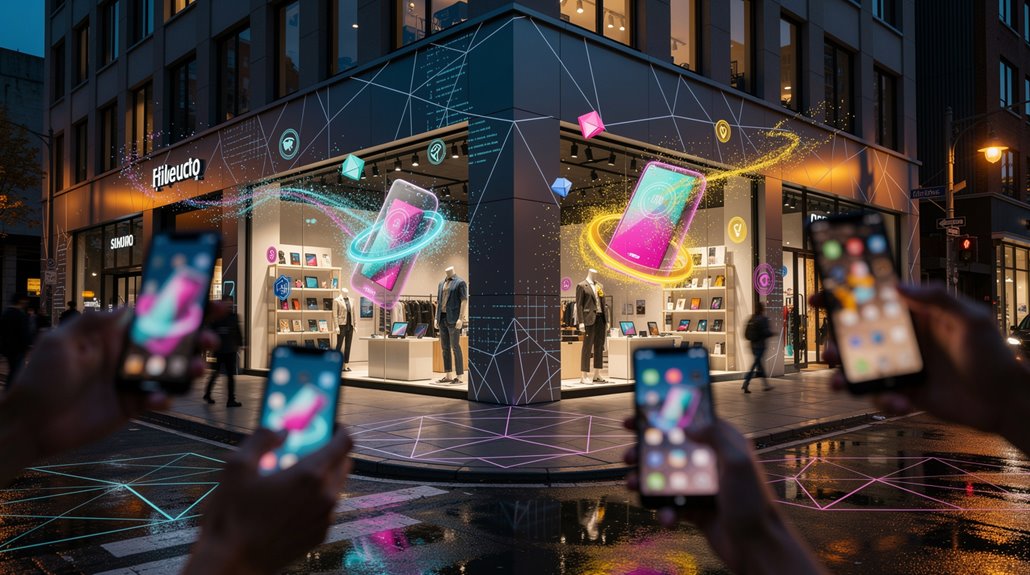
Implementation architectures for storefront AR typically employ marker-based or markerless tracking systems anchored to window displays, signage, or building geometry, overlaying digital art, narrative content, and product information visible through smartphones or emerging AR glasses. Notably, 70% of consumers believe AR applications actively influence their shopping frequency, reinforcing the technology’s role as a behavior-shaping retail mechanism beyond passive engagement.
Common experience patterns include animated murals, character-driven storytelling, gamified scavenger mechanics, and tap-to-learn product hotspots, though lighting conditions, window reflections, and pedestrian flow dynamics impose significant constraints on tracking reliability and interaction design for street-facing deployments. The Asia-Pacific region demonstrates particularly accelerated adoption trajectories, expanding at rates exceeding 35% annually as retailers integrate AR capabilities into physical and digital touchpoints.
Entry-point strategies favor QR codes, shortened URLs, and social media filters to minimize app-download friction and enable immediate sidewalk activation. Similar to how voice assistants enhance smart home experiences, AR technologies create seamless interactions between physical and digital retail environments without requiring specialized hardware.
Documented business outcomes extend beyond engagement metrics, as retailers report measurable reductions in product return rates attributable to improved pre-purchase visualization and expectation alignment, while virtual showrooms and AR-enhanced journeys correlate with higher basket sizes relative to conventional e-commerce pathways.
These performance indicators, combined with approximately 40% of consumers expressing willingness to pay premium prices for AR-visualized products, position immersive storefront experiences as strategic revenue and margin drivers within omnichannel retail frameworks.
References
- https://scoop.market.us/augmented-reality-statistics/
- https://treeview.studio/blog/ar-vr-mr-xr-metaverse-spatial-computing-industry-stats
- https://bestcolorfulsocks.com/blogs/news/augmented-reality-fashion-statistics
- https://resources.imagine.io/blog/2025-ar-trends
- https://www.reydar.com/augmented-reality-retail-stats-benefits-examples/
- https://learn.g2.com/augmented-reality-statistics
- https://www.statista.com/statistics/1270070/ar-use-forecast-in-buying-online/
- https://www.flyerssoft.com/our-blogs/how-ar-vr-is-revolutionizing-the-retail-industry-in-2025