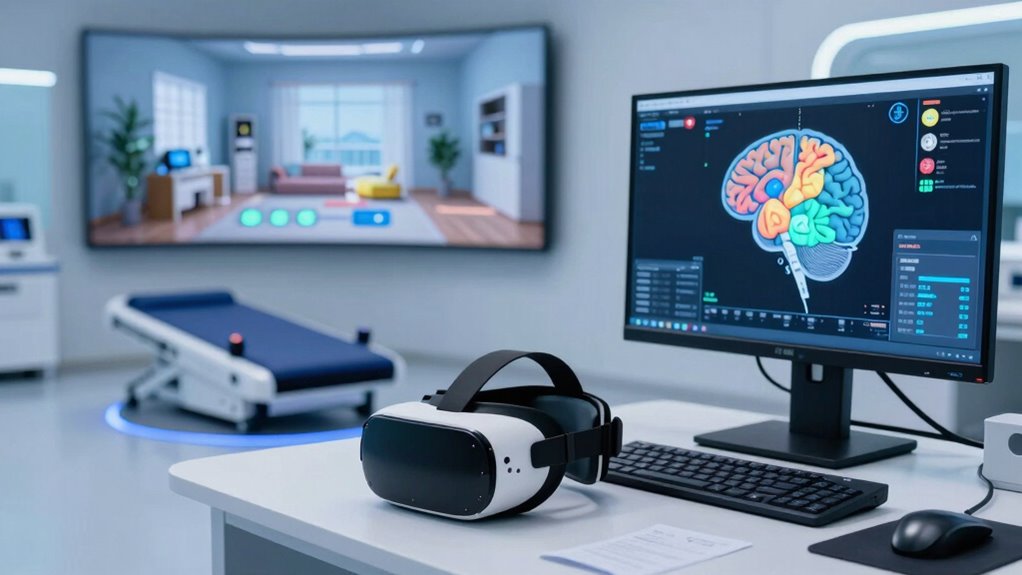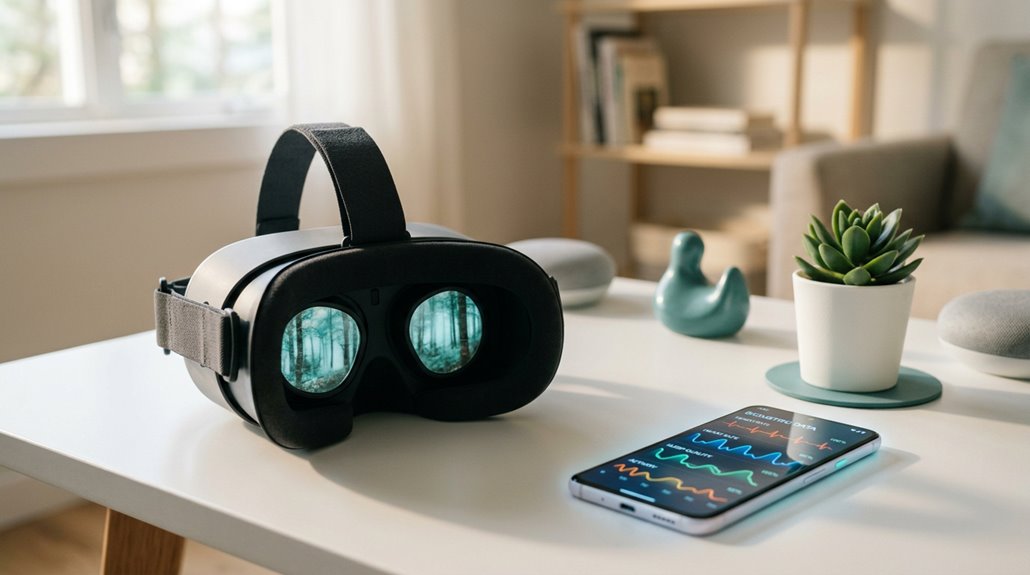
The buzz around VR therapy is hard to ignore, and for good reason. Imagine slipping on a headset and finding yourself on a beach, a bustling street, or a calm forest, all while a therapist watches your heart rate and breath. Those immersive experiences aren’t just cool—they’re proven tools for anxiety reduction. Studies show virtual reality exposure therapy (VRET) cuts anxiety symptoms faster than waiting on a list, and it matches other treatments after the program ends. When VRET teams up with cognitive‑behavioral therapy (CBT), social anxiety shrinks even more, like a dynamic duo in a superhero movie.
VR therapy transforms anxiety care, merging immersive worlds with real‑time biometric monitoring for faster, lasting relief.
For people wrestling with PTSD, VR acts like a safe rehearsal space for painful memories. Instead of diving into a nightmare, patients can replay a traumatic scene in a controlled setting, learning new emotion‑regulation tricks. The result? Less distress, better coping, and a feeling of control that traditional talk therapy sometimes can’t deliver. Even those who didn’t respond to classic methods find hope in the virtual world, where trauma reenactments become practical rather than impossible.
Psychotic disorders get a high‑tech upgrade too. Avatar‑based VR lets patients “talk” to the voices they hear, turning abstract hallucinations into concrete conversations. This interaction can boost self‑esteem and lower momentary anxiety, especially when paired with CBT. Some trials even report that VR‑CBT beats regular CBT on paranoid thoughts, offering a multi‑sensory boost that feels more real than a textbook.
Depression isn’t left out. Short VR sessions that focus on behavioral activation have been linked to steady drops in depressive scores, with over half of participants noticing real improvement. The virtual environment encourages self‑compassion, cuts self‑criticism, and does it all without a therapist hovering in the room. It’s like having a personal cheerleader that also tracks your mood and heart rate.
The big picture? VR creates personalized, controllable spaces that keep patients engaged, collect useful data, and can be delivered remotely, reducing therapist workload. While costs, motion sickness, and tiny study sizes are hurdles, the evidence keeps stacking up. Researchers are already dreaming of AI‑driven VR that adapts in real time, making therapy feel like a video game that actually heals. Much like how direct-to-consumer models have disrupted traditional industries by cutting out the middleman and lowering costs, VR therapy platforms are increasingly exploring similar approaches to make mental health care more accessible and affordable.
In short, virtual reality isn’t just a gimmick—it’s reshaping mental health care, one headset at a time.
VR exposure therapy is supported by systematic reviews showing positive outcomes for anxiety disorders.VR‑CBT shows promise for *depression* reduction.
References
- https://www.imrpress.com/journal/AP/26/5/10.31083/AP47536
- https://www.frontiersin.org/journals/psychiatry/articles/10.3389/fpsyt.2024.1480788/full
- https://www.phoenixpointepsychiatry.com/post/exploring-virtual-reality-therapy-for-mental-health
- https://pmc.ncbi.nlm.nih.gov/articles/PMC10360019/
- https://www.ebsco.com/research-starters/psychology/virtual-reality-alternative-therapy
- https://www.medicalnewstoday.com/articles/vr-therapy