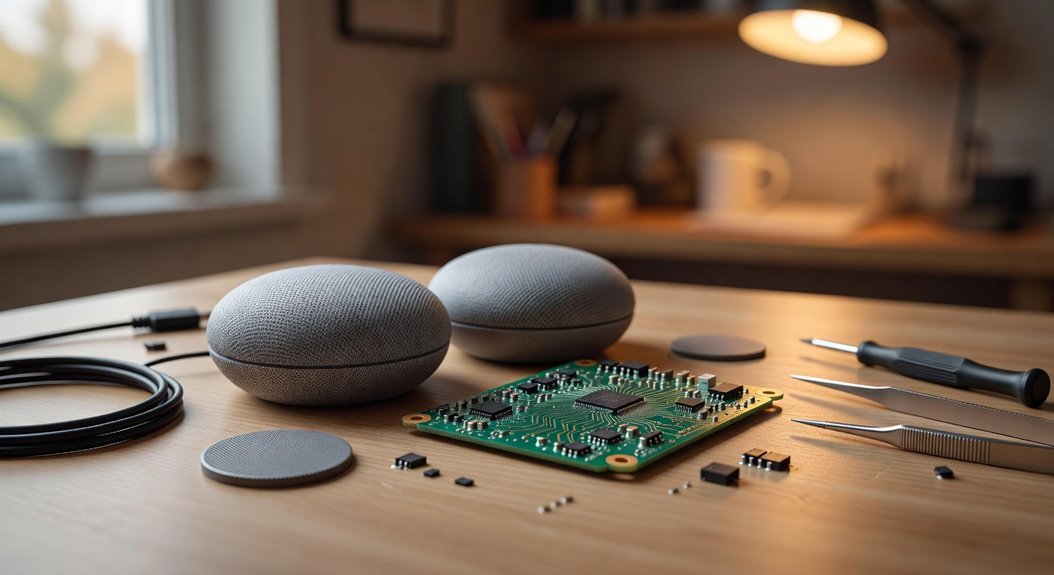
Turn your dusty Google Home Mini into a snappy, totally private sidekick with a simple PCB swap, and you’ll feel like you’ve just given an old car a turbocharged engine. The trick is a DIY Modifications adventure that replaces the cramped Google guts with a custom board like the Onju Voice Project or the MiciMike Replacement Board. Both fit snugly into the original enclosure, keep the speaker, touch sensors, and power board, and need no fancy soldering—just pull out the old internals, slip in the new PCB, and snap everything back together.
The result is a device that talks only to you, not to some cloud server, thanks to local Voice Processing pipelines built on ESPHome, openWakeWord, and Whisper.
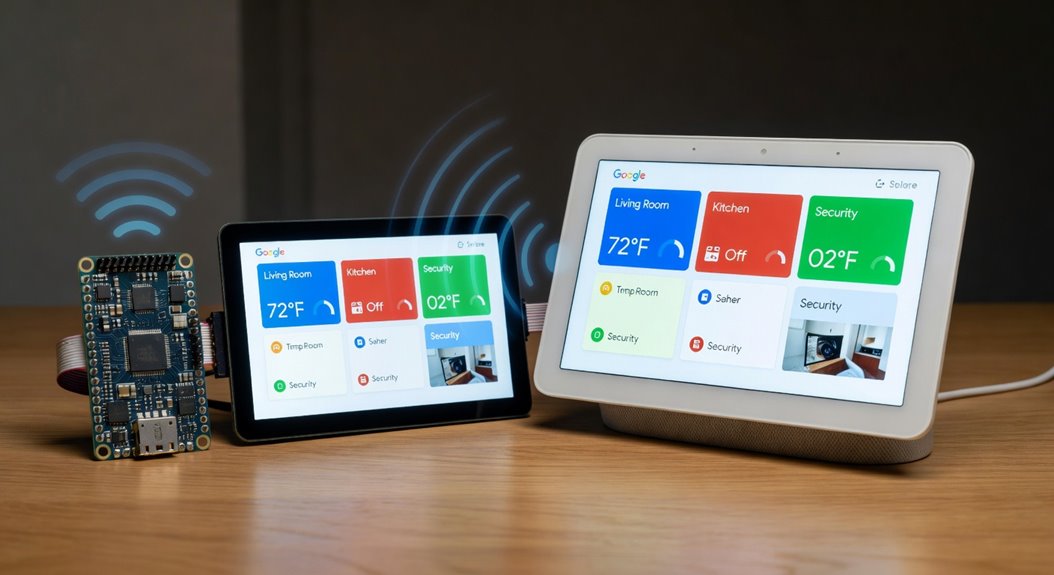
The Onju board targets the second‑generation Nest Mini, swapping the proprietary chip for an ESP32‑S3 that runs Home Assistant Assist locally. It talks to Home Assistant via the Wyoming protocol, so every command stays inside your home network. Meanwhile, the MiciMike board revives the first‑gen Home Mini with an ESP32‑S3 and an XMOS XU316 voice processor, handling wake‑word detection and audio preprocessing before handing the sound off to Home Assistant for speech‑to‑text and text‑to‑speech.
Both boards keep the original touch panel, so you can still tap to mute or change volume, and the speaker sounds just as punchy as before.
Original touch panel stays intact, letting you tap to mute or adjust volume while the speaker remains punchy.
Integration is a breeze: install the Whisper add‑on for STT, Piper for TTS, and openWakeWord for wake detection, then point Home Assistant’s voice assistant settings at the local instances. Choose a fun wake word like “Hey Jarvis” or “Hey Nabu,” and the device shows up in Devices & Services, ready for the final encryption key step.
No audio ever leaves the house, which means you’ve reclaimed a cheap smart speaker from a proprietary ecosystem and turned it into a privacy‑first hub. Once set up, you can even use voice commands to control smart thermostats like Nest and other compatible devices entirely within your local network.
There are a few quirks. Music playback needs a separate media player, and deep integrations like Spotify aren’t built‑in, but most users find the trade‑off worth it for the peace of mind. Some early builds reported volume hiccups, yet the community quickly shared tweaks.
The humor comes from the fact that you’re basically giving a relic a second life, like swapping a horse‑drawn carriage for a sleek electric scooter—still familiar, but way cooler. In the end, the transformation feels like a party trick you can actually use every day, proving that with a little curiosity and a couple of cheap parts, you can ditch Google forever and keep your conversations truly private. The board is powered by an ESP32‑S3 microcontroller, enabling local processing without cloud reliance. The project requires a custom PCB ordered from PCBWay and assembled to avoid self‑soldering.
References
- https://www.youtube.com/watch?v=m_cP53UGB8M
- https://www.hackster.io/news/100-local-0-cloud-a-privacy-first-brain-for-your-google-home-mini-50065c2e72e6
- https://www.youtube.com/watch?v=RArpkdDEDmY
- https://www.kunalganglani.com/blog/self-hosted-voice-assistant-home-assistant-2026-guide/
- https://www.youtube.com/watch?v=CJwUvPFH_-w
- https://www.alibaba.com/product-insights/the-ultimate-guide-to-setting-up-a-privacy-first-ai-home-assistant-without-google-or-amazon-cloud.html
- https://community.home-assistant.io/t/best-replacement-for-google-home-minis/714067
- https://www.xda-developers.com/replaced-google-home-home-assistant-local-llm/