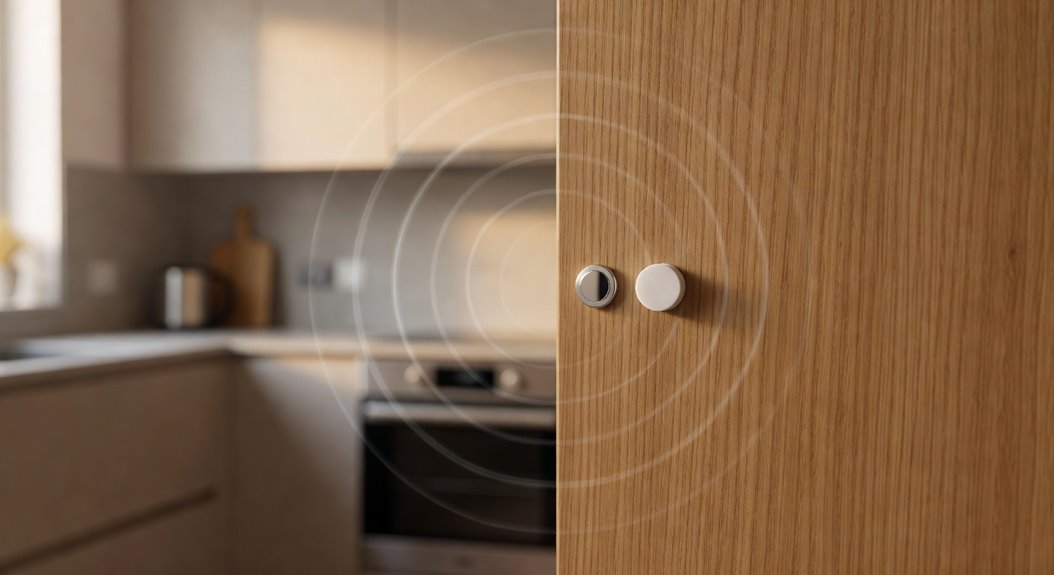
Smart door sensors have become a key piece of modern home security. With options like long-range connectivity, quick installation, and customizable alerts, they fit seamlessly into daily life.
From the Aqara sensor’s ease of use to YoLink’s impressive five-year battery life, these devices offer peace of mind without fuss.
But choosing the right sensor depends on your needs and existing systems, so what features really matter for keeping your home safe in 2026?
At a Glance
- Offers diverse connectivity options including Wi-Fi, Zigbee, LoRa, and proprietary ecosystems for flexible integration.
- Features long battery life, some exceeding five years, reducing maintenance and ensuring continuous security.
- Easy, tool-free installation using adhesive or quick setup QR codes, suitable for various home layouts.
- Provides instant alerts via app, SMS, or email, enabling prompt response to door/window activity.
- Compatibility with popular smart home platforms (Alexa, Google, Apple HomeKit) enhances automation and user control.
| Aqara Door & Window Sensor 3-Pack for Home Automation | 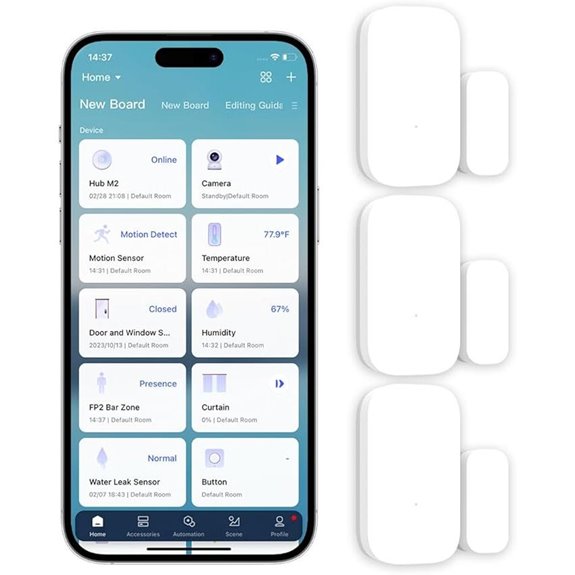 | Best for Apple & Alexa Users | Connectivity Protocol: Zigbee | Power Source: Batteries | Installation Method: Adhesive | VIEW LATEST PRICE | Read Our Analysis |
| YoLink LoRa Smart Door Sensor Kit with Alerts | 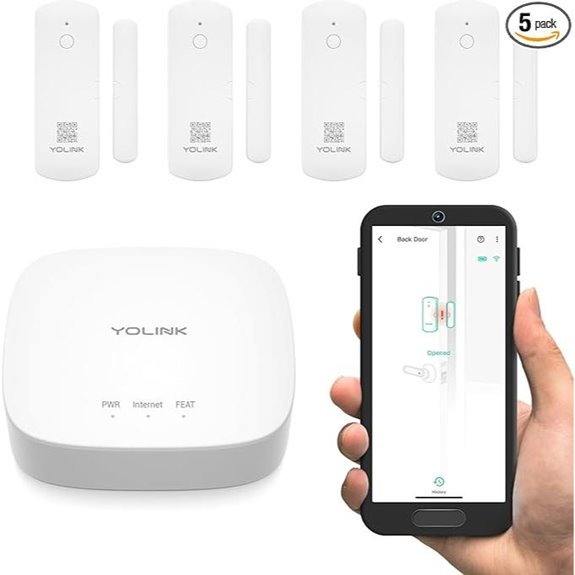 | Long-Range Reliability | Connectivity Protocol: LoRa | Power Source: Batteries | Installation Method: Pre-applied Tape | VIEW LATEST PRICE | Read Our Analysis |
| WiFi Door & Window Sensor with App Alerts (4-Pack) | 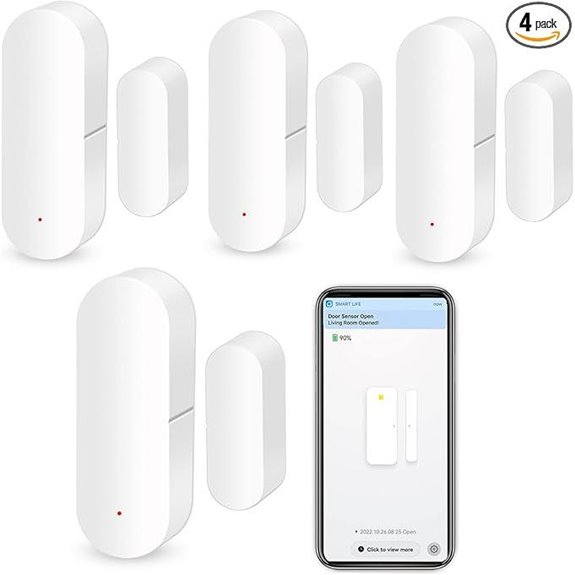 | No Hub Needed | Connectivity Protocol: WiFi | Power Source: Batteries | Installation Method: Adhesive | VIEW LATEST PRICE | Read Our Analysis |
| Ring Alarm Contact Sensor (2nd Gen) for Windows & Doors | 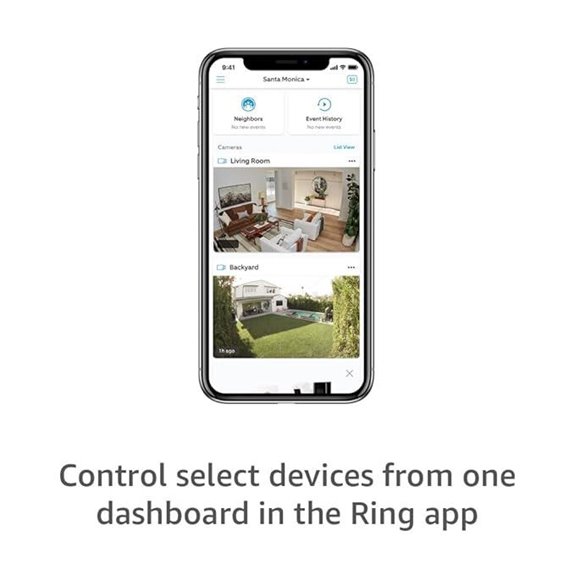 | Best Ring Integration | Connectivity Protocol: WiFi | Power Source: Batteries | Installation Method: Sticky Mounting | VIEW LATEST PRICE | Read Our Analysis |
| THIRDREALITY Zigbee Contact Sensor for Home Automation | 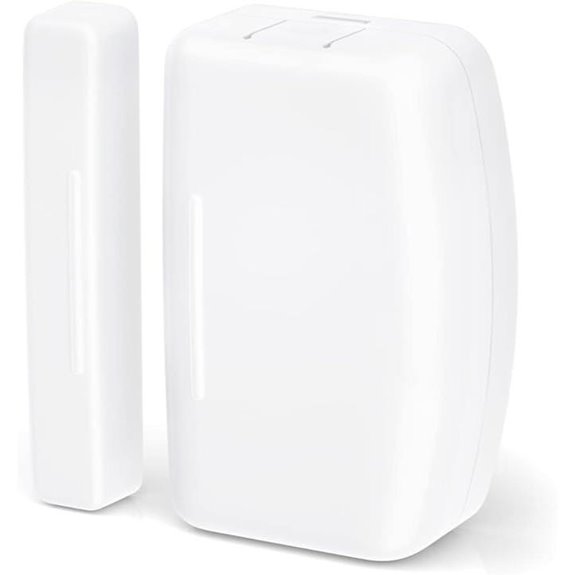 | Best Zigbee Compatibility | Connectivity Protocol: Zigbee | Power Source: Batteries | Installation Method: Adhesive | VIEW LATEST PRICE | Read Our Analysis |
| GoveeLife Wireless Door/Window Sensor for Smart Homes | 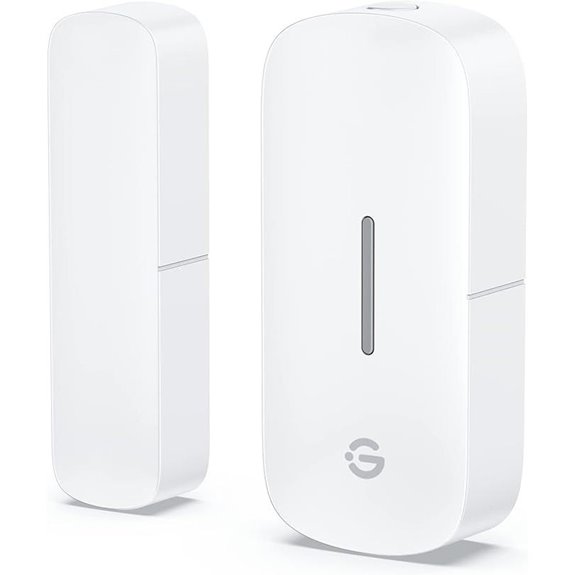 | Budget-Friendly Choice | Connectivity Protocol: WiFi | Power Source: Batteries | Installation Method: Adhesive | VIEW LATEST PRICE | Read Our Analysis |
| Zigbee Door Sensor Pack for Home Automation | 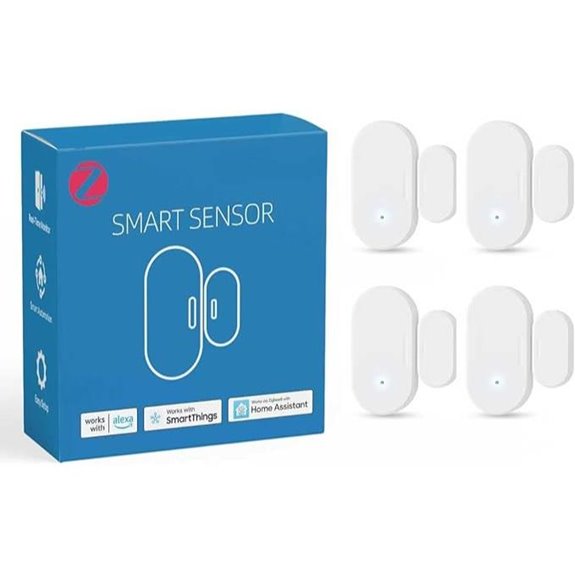 | Best for Smart Home Expansion | Connectivity Protocol: Zigbee | Power Source: Batteries | Installation Method: Adhesive | VIEW LATEST PRICE | Read Our Analysis |
More Details on Our Top Picks
Aqara Door & Window Sensor 3-Pack for Home Automation
For homeowners who rely on Apple HomeKit or Alexa, the Aqara Door & Window Sensor 3-Pack offers a smart, seamless way to monitor entry points. This wireless mini contact sensor is perfect for keeping tabs on doors, windows, or even cabinets—up to about 0.86 inches apart.
Just guarantee you have the Aqara Hub (sold separately) within 400 inches and a stable 2.4GHz Wi-Fi connection. Once set up, it alerts your phone instantly if a door or window is opened—plus, it can trigger other Aqara devices, creating a cohesive smart home system.
Dimensions are compact, and installation is straightforward with a flat surface and adhesive.
- Connectivity Protocol:Zigbee
- Power Source:Batteries
- Installation Method:Adhesive
- Monitoring Type:App & Hub Alerts
- Compatibility:Apple HomeKit, Alexa
- Additional Features:Controls other Aqara devices
- Additional Feature:Compatible with Apple HomeKit
- Additional Feature:Alerts phone and triggers alarm
- Additional Feature:Works with drawers/cabinets
YoLink LoRa Smart Door Sensor Kit with Alerts
The YoLink LoRa Smart Door Sensor Kit shines in long-range reliability, making it a smart choice for larger or sprawling homes. With a 1/4 mile open-air range, this kit uses LoRa technology operating at 900 MHz, ensuring signals reach even the most distant corners.
It includes a hub plus four sensors—perfect for multiple entry points—and supports over 300 YoLink devices. Setup is straightforward: scan a QR, name sensors, and use pre-applied tape for quick mounting.
With alerts via SMS, email, or app, plus 5-year battery life, it’s a dependable, high-tech solution for extensive home security.
- Connectivity Protocol:LoRa
- Power Source:Batteries
- Installation Method:Pre-applied Tape
- Monitoring Type:App & Cloud Alerts
- Compatibility:Alexa, IFTTT, HA
- Additional Features:Long-range, multi-app integration
- Additional Feature:LoRa long-range communication
- Additional Feature:Up to 5 years battery life
- Additional Feature:Supports device-to-device pairing
WiFi Door & Window Sensor with App Alerts (4-Pack)
A versatile choice for tech-savvy homeowners, the WiFi Door & Window Sensor (4-Pack) operates without the fuss of a hub, making setup straightforward and hassle-free. It’s compatible with Amazon Alexa and Google Assistant, which means you can check door statuses with just your voice—no extra devices needed.
Managing the sensors is simple through the Tuya Smart or Smart Life app, where you can receive instant alerts when doors or windows are opened or closed. Installation involves just sticking these small sensors (measuring 2.73L x 0.63W x 2.74H inches) with included 3M stickers. Plus, batteries last about a year, with low power alerts sent to your phone, keeping security seamless.
- Connectivity Protocol:WiFi
- Power Source:Batteries
- Installation Method:Adhesive
- Monitoring Type:App Alerts
- Compatibility:Alexa, Google
- Additional Features:No hub needed
- Additional Feature:No hub required setup
- Additional Feature:Manage with Tuya/Smart Life app
- Additional Feature:Supports Alexa and Google
Ring Alarm Contact Sensor (2nd Gen) for Windows & Doors
The Ring Alarm Contact Sensor (2nd Gen) stands out for those seeking seamless integration with Ring’s smart home ecosystem, making it a smart choice for homeowners who prioritize connected security. This slim, discreet sensor is designed to alert you instantly when doors or windows are opened—no more surprises!
Setup is a breeze: just stick it in place—no tools needed—and it works with the Ring Alarm Base Station. With a battery life of about three years (thanks, CR2032 batteries!), you’ll enjoy continuous security without frequent replacements. Paired with Ring’s app, users receive quick notifications, ensuring peace of mind whether at home or away.
- Connectivity Protocol:WiFi
- Power Source:Batteries
- Installation Method:Sticky Mounting
- Monitoring Type:App & Mobile Alerts
- Compatibility:Ring Base Station
- Additional Features:Video & subscription options
- Additional Feature:Requires Ring Base Station
- Additional Feature:Compatible with Ring subscription
- Additional Feature:Slim, discreet design
THIRDREALITY Zigbee Contact Sensor for Home Automation
Boasting compatibility with a wide range of Zigbee hubs and smart home ecosystems, the THIRDREALITY Zigbee Contact Sensor shines for those who want smooth, integrated automation. This little device is straightforward to install—just seconds to set up, and it works with popular hubs like SmartThings, Hubitat, and even Apple HomeKit if you’ve got the right bridge.
It runs on two AAA batteries, promising up to two years of use—so no constant battery swaps. You can easily create Alexa routines, like turning on lights or sending alerts when doors open, or monitor it via the Third Reality app. All in all, a reliable and easy-to-use sensor for home protection and automation!
- Connectivity Protocol:Zigbee
- Power Source:Batteries
- Installation Method:Adhesive
- Monitoring Type:Alexa & App Alerts
- Compatibility:Alexa, HomeKit, Google
- Additional Features:Alexa routines & OTA updates
- Additional Feature:Compatible with HomeKit, SmartThings
- Additional Feature:Works with Alexa, Google, Homey
- Additional Feature:Supports OTA firmware updates
GoveeLife Wireless Door/Window Sensor for Smart Homes
For budget-conscious homeowners seeking reliable home security, the GoveeLife Wireless Door/Window Sensor provides an affordable yet effective solution. This compact device, measuring just 2.16 by 2.44 inches, easily attaches to doors, windows, or even cabinets—thanks to its adhesive backing.
Compatible with up to 50 GoveeLife devices, it connects via a 2.4 GHz Wi-Fi network and operates within an impressive 80-meter range. Powered by a CR2 lithium battery lasting around four months, it sounds an audible alert at 65 decibels when triggered.
With straightforward installation and a 30-day return policy, this sensor is a practical addition for smarter, safer homes.
- Connectivity Protocol:WiFi
- Power Source:Batteries
- Installation Method:Adhesive
- Monitoring Type:App & Audible
- Compatibility:Alexa, Smart Life, Tuya
- Additional Features:Audible alert and compact
- Additional Feature:Operates within 80m range
- Additional Feature:Compact and portable design
- Additional Feature:Audible alert of 65dB
Zigbee Door Sensor Pack for Home Automation
Zigbee door sensors are ideal for those looking to expand their smart home security seamlessly. These compact, mini contact sensors, sold in handy packs like the 4 Pack Zigbee Door Sensor, integrate effortlessly with popular platforms such as SmartThings, Alexa (via a built-in Zigbee hub), Home Assistant, and others.
Installation is simple—no drilling needed—thanks to adhesive backing, and pairing is quick with a few taps. Once set up, homeowners get real-time notifications when doors or windows move, perfect for monitoring activity in critical areas or children’s rooms. Plus, automation routines—like turning on lights—become as easy as a voice command.
- Connectivity Protocol:Zigbee
- Power Source:Batteries
- Installation Method:Adhesive
- Monitoring Type:App & Voice Alerts
- Compatibility:SmartThings, Alexa, HA
- Additional Features:Voice & routine integration
- Additional Feature:Ideal for cabinets or rooms
- Additional Feature:Quick to install no tools
- Additional Feature:Voice alerts via Alexa
Factors to Consider When Choosing Smart Door Sensors
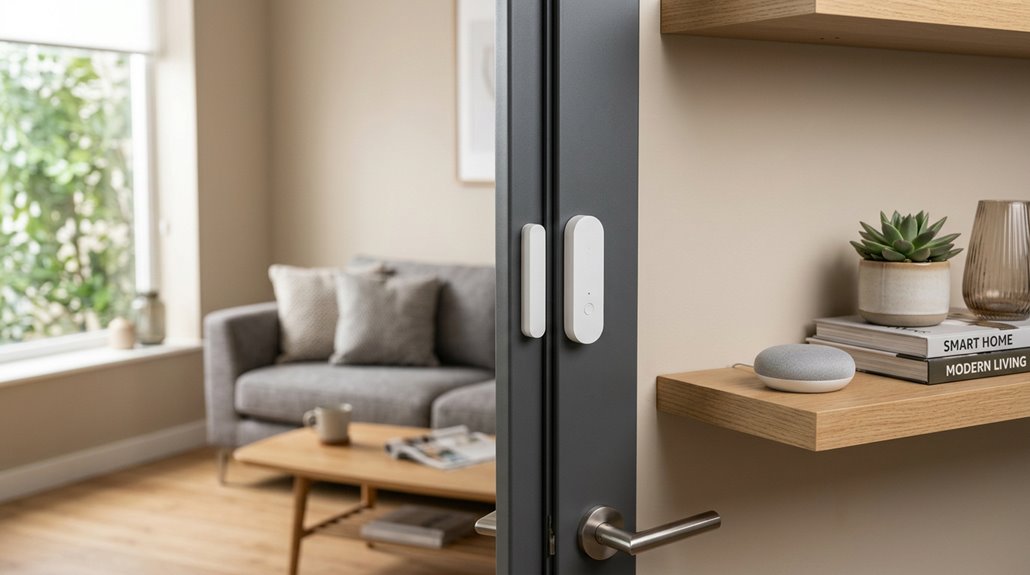
When selecting a smart door sensor, it’s important to evaluate how well it integrates with your existing smart home ecosystem. Think about compatibility with your preferred smart hub or voice assistant. Connectivity protocols like Zigbee, Z-Wave, or Wi-Fi each have their own implications for reliable performance and setup, so understanding these can save headaches later.
Plus, factors such as battery life, ease of installation, and alert customization can make all the difference in keeping your home secure without adding unnecessary complexity.
Compatibility With Ecosystem
Ever wondered if your new smart door sensor will play nicely with your existing smart home setup? Compatibility matters, and it’s worth a close look. First, check if the sensor works with common protocols like Zigbee, Z-Wave, or Wi-Fi—they’re the backbone of many smart homes. Supporting popular voice assistants such as Alexa, Google Assistant, or Apple HomeKit can make hands-free control a breeze.
Be aware if the sensor needs a specific hub; certain models only work with particular brands, which might limit future expansion. Also, consider how many devices your ecosystem can handle; some sensors support more integrations, offering broader home automation. Finally, guarantee smooth communication—reliable notifications and automation routines depend on effective device pairing without lag or dropout.
Connectivity Protocols Used
Choosing the right connectivity protocol for a smart door sensor is an essential step in ensuring your home security system runs smoothly and reliably. Different protocols—like Zigbee, Wi-Fi, or LoRa—offer unique benefits tailored to various needs.
Zigbee, operating at 2.4 GHz, forms a mesh network that allows devices to communicate over longer distances without a central hub. This setup is perfect for larger homes. Wi-Fi sensors connect directly to your existing internet, simplifying setup and integration with other smart devices.
LoRa, on the other hand, is geared for long-range communication, up to a quarter mile in open areas. This makes it ideal for sprawling properties or remote locations. Keep in mind, compatibility with specific protocols may limit options, so choose a protocol that seamlessly fits your eco-system and coverage needs!
Power and Battery Life
Power and battery life play a significant role in the overall performance and convenience of smart door sensors. Many operate on batteries like CR2032, AAA, or CR2, each impacting how often replacements are needed. Some sensors last up to two years on a single charge, while others might only go four to six months, depending on usage and efficiency features.
User-friendly design for battery replacement is key. Some models make access simple, while others involve more effort. Sensors with low battery alerts via apps or notifications keep owners in the loop, preventing unexpected downtimes.
And remember, choosing between battery-powered and wired sensors affects installation complexity and convenience. Think of power options as the backbone of reliable, maintenance-friendly smart security.
Installation Ease
When evaluating the installation ease of smart door sensors, the process should feel straightforward, not like assembling furniture without an instruction manual. Look for sensors with adhesive backing—no tools required! These are perfect for quick, clean setups on doors or windows. Some sensors offer QR code scanning for setup: just scan, connect, and go—no fiddling with wires or unclear instructions.
Size and design matter too: slim, discreet sensors won’t block door functions or look out of place. Compatibility is key—ensure they work smoothly with existing smart home hubs, avoiding a tech standoff. Also, check battery requirements and how easy replacements are. No one wants to wrestle with tiny, hard-to-reach battery compartments.
All these factors make installation effortless, saving time and frustration.
Alert Customization Options
Many smart door sensors come packed with options for customizing alerts, making it easier than ever to tailor security notifications to fit individual routines and preferences. These systems often let users define specific alerts for different scenarios, like being notified if a door stays open for more than five minutes. They also offer multiple notification methods, including SMS, email, or in-app alerts, so you never miss a message. Advanced models can integrate with smart home ecosystems, triggering actions like turning on lights or sounding alarms automatically.
Users typically can:
- Adjust alert sensitivity for false positives.
- Set routines or schedules, think “no alerts during movie nights.”
- Choose preferred notification channels.
Such options help avoid alert fatigue and guarantee timely, relevant updates, making home security smarter and more personalized.
Range and Signal Quality
Range and signal quality are essential factors that can make or break the reliability of a smart door sensor. Think of the sensor as a newsletter: if it can’t reach your home or the hub, that’s a problem. Some sensors use LoRa technology, boasting up to a quarter mile in open air, which is great for sprawling properties. Others rely on Wi-Fi, with effective ranges around 400 inches, but beware: walls, metal objects, and other signals can interfere.
Proper placement matters. Avoid metal surfaces and keep sensors away from thick walls. Battery life also influences range; sensors with longer-lasting batteries may communicate less frequently. Regularly checking signal strength through app alerts can help preempt connectivity issues. Think of it as your system’s check engine light, but for good home security!
Price and Brand Reputation
Choosing the right smart door sensor isn’t just about features, it also involves some thoughtful shopping. Price varies quite a bit: basic models start around $20, while more advanced options can top $50 or more, depending on added features like longer battery life or enhanced compatibility.
Brand reputation matters too. Established brands often deliver reliable products and better customer support, backed by warranties and thoughtful return policies. Lesser-known brands might be tempting but pose risks regarding quality and longevity. High-rated brands, especially those with consistent positive reviews, tend to be safer bets.
And remember, price often reflects extra features such as battery longevity, range, and system compatibility. Do your research—reputation and value often go hand in hand for peace of mind and smarter home security.
Frequently Asked Questions
How Compatible Are These Sensors With Different Smart Home Ecosystems?
These sensors are like universal translators, offering broad compatibility across many smart home ecosystems. They typically integrate with platforms like Zigbee, Z-Wave, or Wi-Fi, ensuring they can work with systems such as Samsung SmartThings, Hubitat, or Alexa.
But for seamless operation, users should verify each sensor’s compatibility list, consider updates, and check whether additional hubs or bridges are needed. Because a good connection makes for a happy, secure home!
What Is the Battery Life Expectancy for Each Sensor Type?
Battery life varies widely among smart door sensors. Typically, wireless sensors last from 1 to 5 years. CR2032 coin cell batteries often keep sensors humming for about two years, while more advanced models with larger batteries or power-saving features can stretch to five.
Wired options, of course, don’t rely on batteries at all but require power outlets or direct wiring—less hassle and more constant. So, pick according to your energy preference!
Do These Sensors Support Integration With Voice Assistants Like Alexa or Google Assistant?
Most smart door sensors support integration with voice assistants like Alexa and Google Assistant, making your home even smarter and more responsive. Features vary: some offer simple voice commands to check status or arm/disarm, while others allow more complex automation routines.
It’s best to verify compatibility in product specs—look for Alexa or Google Assistant logos. This way, you can control your security effortlessly—just ask, and it’s done!
Are the Sensors Resistant to Weather Conditions for Outdoor Use?
Many outdoor smart door sensors are designed with weather resistance, often rated IP65 or higher, meaning they can handle rain, snow, dust, and dirt. These sensors typically feature sealed enclosures and weatherproof materials like silicone or rubber gaskets. But for peace of mind, check the manufacturer’s specifications.
How Easy Is It to Install and Set up Each Sensor Model?
Installation varies, but most smart door sensors are designed for simplicity—think quick setup with minimal tools. Typically, they come with clear instructions, adhesive strips, or screw mounts, making DIY installation straightforward within 10-15 minutes. Some models even offer smartphone-guided setup, reducing guesswork.
Just make certain the sensor aligns properly with the door frame for accurate detection. A handy tip is to double-check battery compartments and Wi-Fi connectivity before finishing up!