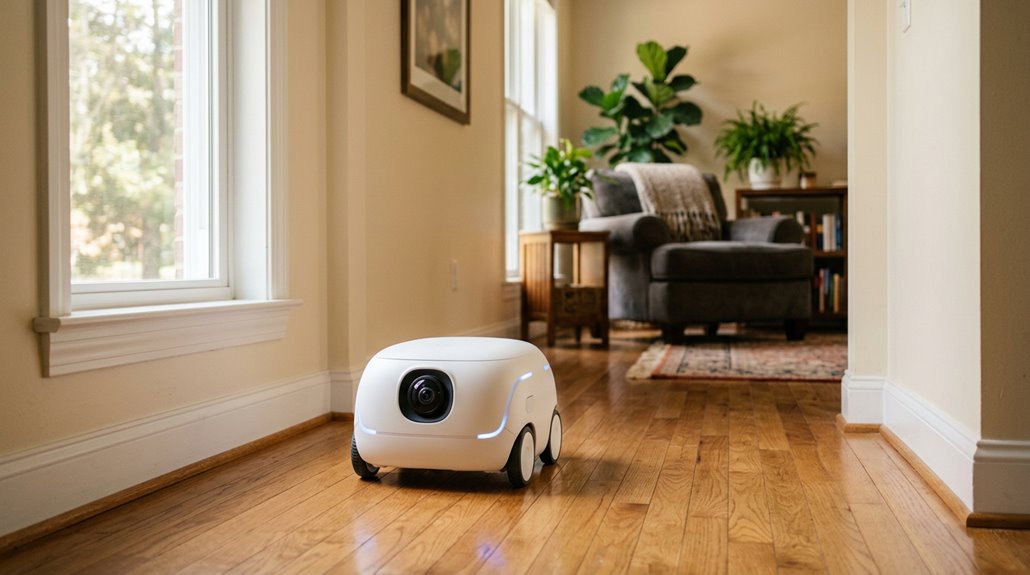
Picture a friendly robot roaming the hallway, eyes scanning for a tumble, yet never actually “seeing” a face. The little crawler, sold for $549, looks more like a toy than a medical device, but it packs a surprisingly serious job: watching for falls without ever storing a picture of your mug. It uses computer vision to read body position, not biometrics, so privacy concerns are kept at bay.
The robot’s brain runs a YOLOv8 model that spots a person’s shape, then PoseNet vectors catch rapid downward motion, while inertial and acoustic sensors add extra clues. When a fall is detected, the system sends an alert through FHIR to a phone app, complete with a short video clip, but no facial data is kept, making it HIPAA and BIPA compliant.
The tech is clever, but it isn’t magic. Technology limitations show up when camera quality drops or lighting gets dim, because the robot relies on existing cameras and a linear regression algorithm that estimates distance and speed. In a cluttered living room, a stray cat or a rolling laundry basket can confuse the AI, leading to false alarms or missed events.
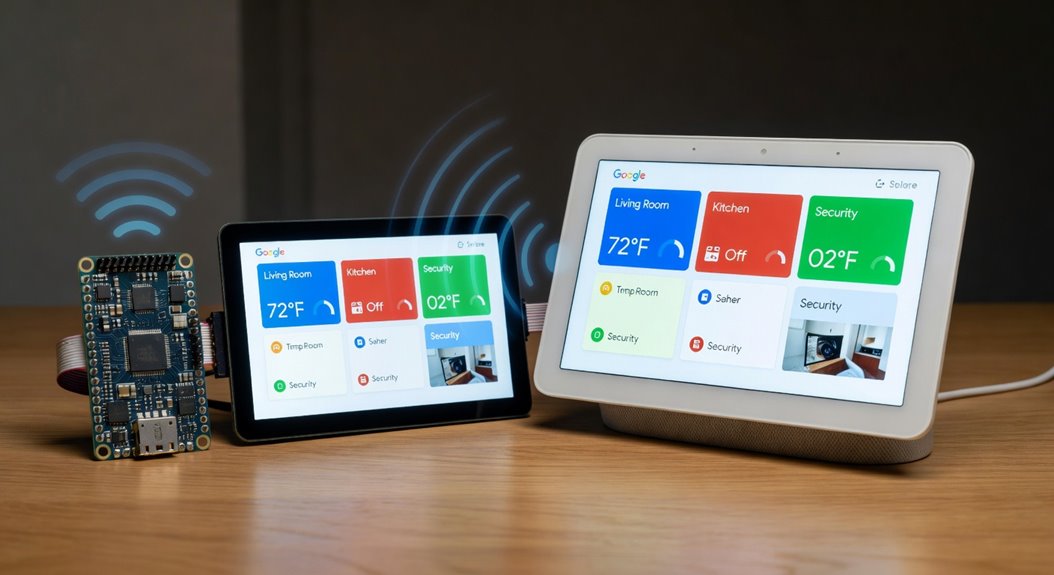
Still, the designers have built in configurable detection zones and sensitivity levels, so users can tweak the robot to ignore a pet’s playful jumps while still catching a real stumble. The robot can even reset itself after a fall, rolling back to its patrol route without human help, which is a neat trick that keeps the monitoring continuous. Much like how smart home devices can be managed with precision through advanced AI platforms, this robot brings that same level of reliable automation to personal safety monitoring.
Friends who have tried the crawler say it feels like having a tiny, vigilant sidekick. One user joked that the robot’s “eyes” are more like a radar that says, “I see you, but I won’t remember your face.” Another shared a story of the robot alerting a caregiver just in time when a grandparent slipped on a wet floor, preventing a trip to the ER.
The device’s low price, non‑invasive nature, and ability to work in low‑light conditions make it attractive for senior living facilities and home care alike. While it still needs better accuracy for real‑world chaos, the $549 crawler offers a fun, affordable way to add a layer of safety without sacrificing privacy, proving that a little robot can be both helpful and respectful of personal space. The system achieves 100% precision in its tests, ensuring that alerts are highly reliable. It can be integrated with existing camera infrastructure, allowing facilities to monitor without new hardware and keep costs low.
References
- https://pubmed.ncbi.nlm.nih.gov/40326648/
- https://jewlscholar.mtsu.edu/items/df2539b0-977d-4def-a77d-66ade049fa47
- https://www.youtube.com/watch?v=zklqW-EtVIY
- https://www.youtube.com/watch?v=7EWfsZmFesU
- https://intellisee.com/solutions/fall-detection/
- https://www.mobotix.com/en/fall-detection-technology-how-ai-reducing-injuries-and-saving-lives
- https://lfaidata.foundation/blog/2021/01/14/people-fall-detection-via-privacy-preserving-ai/