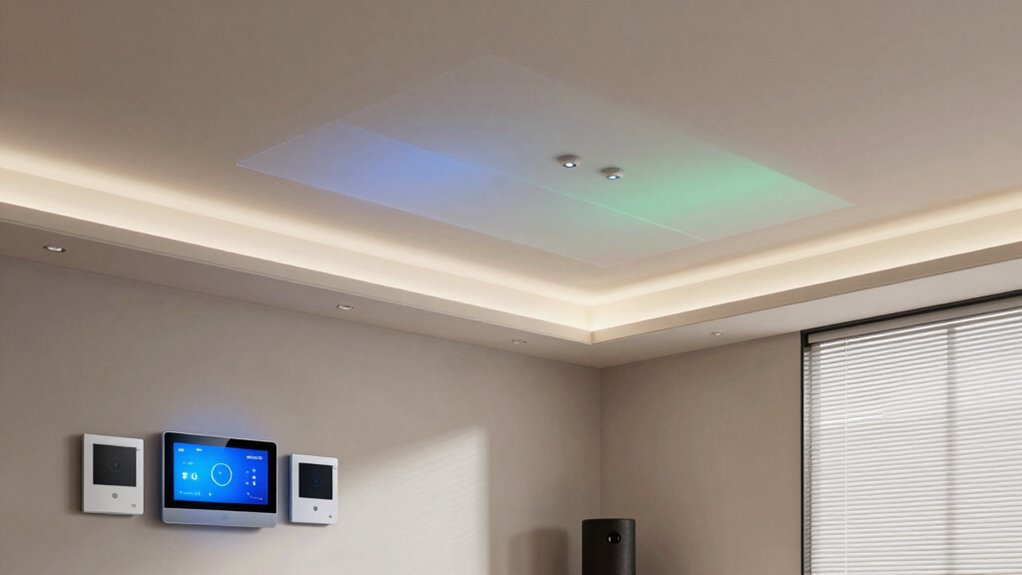
SpatialAware core concept and capabilities
SpatialAware transforms lighting by intelligently placing colors and gradients across your room based on each light’s position, creating immersive, lifelike scenes that feel orchestrated, not random.
Feature type: software-based scene engine that analyzes room layout and Hue light placement to orchestrate lighting scenes spatially rather than randomly.
Objective: create natural, immersive, and dynamic lighting that mimics real-world light behavior such as sunrise, sunset and outdoor atmospheres.
Scope: distributes colors and brightness intelligently across all light points in a room instead of assigning colors without spatial context.
Integration point: operates within the Philips Hue Scene Gallery as an enhanced option for compatible scenes.
Target use cases: nature-inspired ambient scenes, atmospheric living spaces, home cinemas and mood-focused rooms.
How SpatialAware works: scanning and spatial model
Room scanning method: relies on smartphone or tablet camera, iPhone or iPad, with augmented reality to scan the room and detect exact positions of each Hue light.
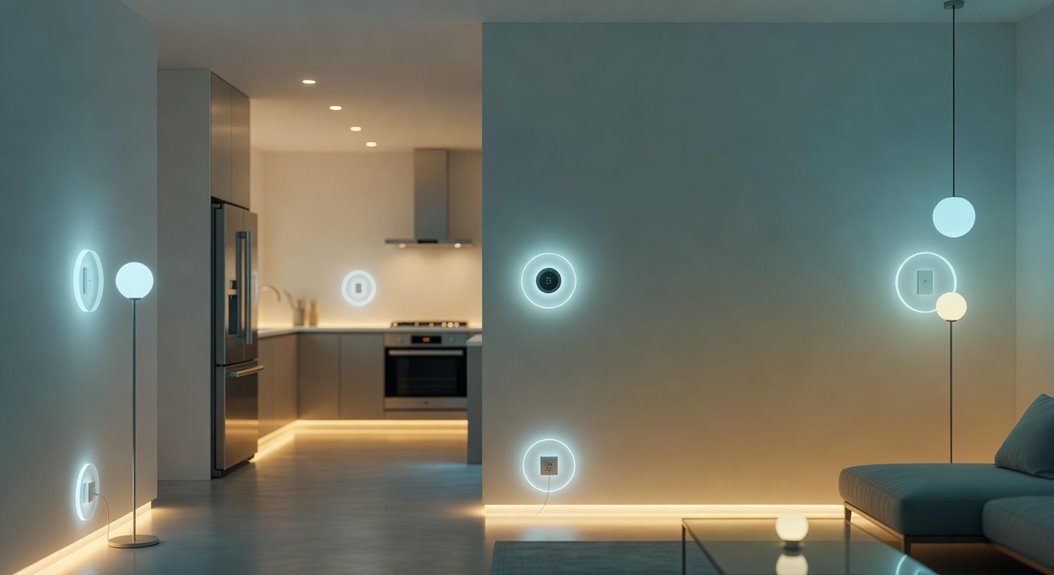
Spatial model creation: AR-based scan builds a 3D spatial model of the room that maps every participating light point relative to walls, furniture and viewer perspective.
Algorithm role: smart algorithm uses the spatial model to assign colors and gradients based on each light’s physical position and orientation.
Model updating: spatial model can be updated whenever new lights are added with rescanning of only the changed part of the room.
Orientation handling: gradient-capable products have orientation-aware color shifts ensuring effects follow physical direction such as left-to-right or top-to-bottom.
Scene behavior and visual effects
Compared to classic scenes: legacy scenes assign palette colors to lights without knowing where lights are are positioned often producing visually random color mixes.
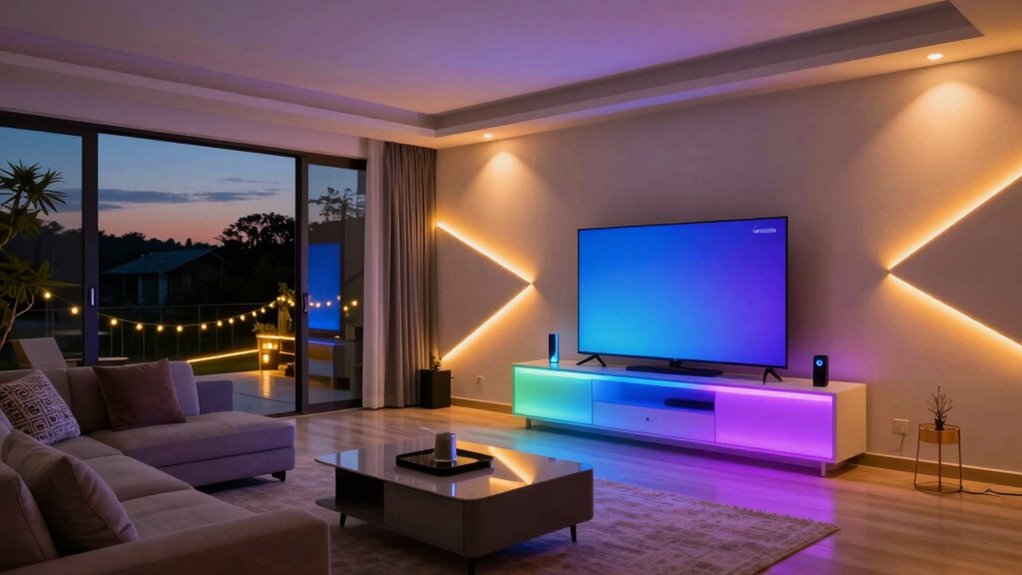
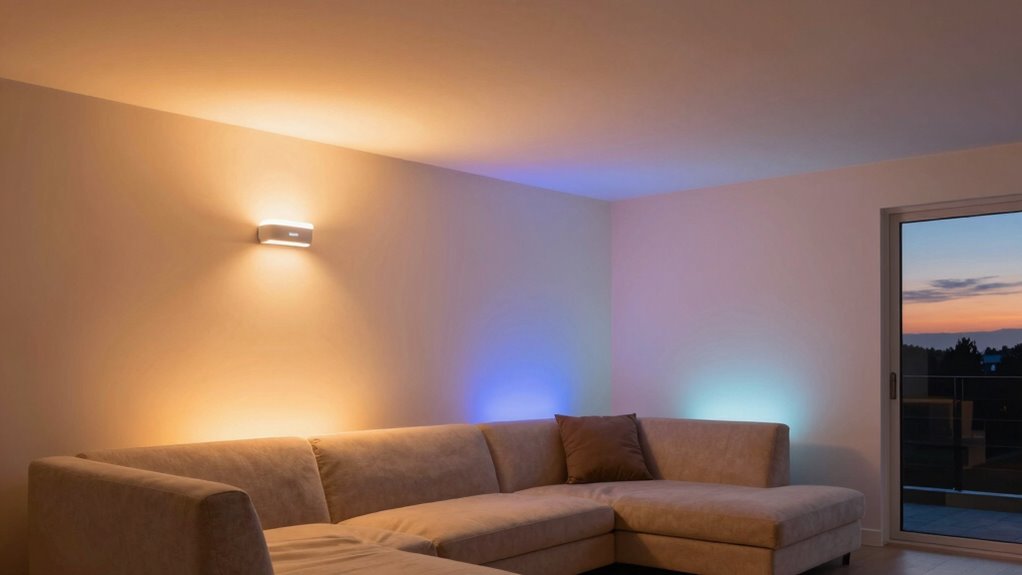
Position-aware distribution: SpatialAware scenes place warmer, brighter tones where a light source would naturally appear and cooler, darker tones elsewhere to increase realism.
Example: in a sunset scene, lamps on one side show warm yellow or orange tones imitating a setting sun while ceiling or opposite-side lights render darker, muted shades.
Example: gradient strips and similar products show smooth, directionally consistent color shifts across their length based on spatial orientation.
Perceived effect: lighting feels more cohesive, cinematic and lifelike with scenes perceived as curated by a professional lighting designer.
Compatibility, requirements and availability
Bridge requirement: exclusive to Hue Bridge Pro not available on standard Hue Bridge.
Device requirement: requires compatible mobile device such as iPhone or iPad capable of running AR scanning within the Hue app.
Scene compatibility: initially works with approximately half of the remastered scenes in the Scene Gallery focused on nature-based scenes.
Highlighted compatible scenes: Lake Mist, which uses spatially coordinated gradients to emulate the subtle color shifts seen across water and sky at dawn.
This advanced functionality is made possible by a guided setup process through the Hue app, ensuring optimal light placement detection and immersive scene rendering.
While the technology commands a premium price point compared to typical smart lighting options, many users find the enhanced realism and immersion justifies the investment.
References
- https://www.engadget.com/home/smart-home/philips-hue-spatialaware-feature-harmonizes-all-the-lights-in-a-room-101843600.html
- https://www.signify.com/global/our-company/news/press-releases/2026/20260107-philips-hue-revolutionizes-lighting-design-with-hue-spatialaware-feature-that-understands-your-space
- https://www.macrumors.com/2026/01/07/philips-hue-spatialaware-scenes/
- https://www.homekitauthority.com/philips-hue-spatialaware-signals-the-next-phase-of-the-smart-home/
- https://www.philips-hue.com/en-us/explore-hue/features
- https://hueblog.com/2026/01/07/spatialaware-philips-hue-announces-new-lighting-feature/