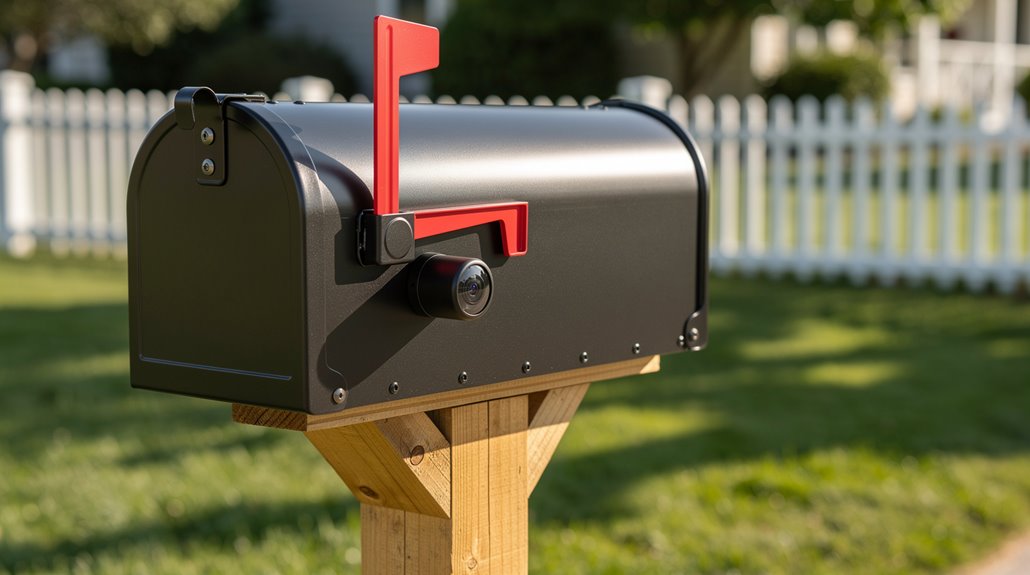
Sure, slap a camera on your *privately owned* mailbox—if you enjoy wading through Kafkaesque labyrinths of contradictory local laws, federal felony mail tampering statutes, and your perpetually offended neighbors’ paranoia orgasms. Forget installing it on a USPS box unless you fancy jail time. The laughable “reasonable expectation of privacy” principle means any snooping might trigger lawsuits faster than “Big Brother” reruns. For those brave souls seeking clarity amidst this legal quagmire, a deeper exposé awaits.
Why would anyone even question the legality of slapping a camera on their mailbox—of all things—when society’s more pressing concerns, like rampant political corruption or the miraculous resurgence of fax machines, go unaddressed? Yet here we are, parsing whether the humble surveillance gadget perched on a suburban mailbox crosses some arcane legal Rubicon.
The truth is, if the mailbox is privately owned, the property owner can generally affix a camera, provided it’s not a Peeping Tom contraption aimed at the neighbors’ private sanctuaries. This benign caveat, blessedly ignored by many a paranoid inspector, underscores society’s dismal descent into privacy fears when the real intruders—corporate data miners, for example—remain untouchable. Mailbox cameras typically legal on private property, though the specifics can depend on state and local laws, so checking those before installation is wise. It is also prudent to confirm the ownership and legal restrictions with local postal authorities.
If your mailbox is yours, slap on that camera—just don’t spy on your neighbors’ secret hideouts.
Neighbors who feel spied upon might drag such “creepy” homeowners to court, but, frankly, with jurisdictional privacy laws that resemble a patchwork quilt sewn by blindfolded toddlers, outcomes are as predictable as a reality TV meltdown.
Of course, the federal government, ever the beacon of clarity, chuckles quietly from its spaghetti bowl of mail laws. Tampering with mailboxes—a sacred federal domain—is punishable by fines up to $250,000 or imprisonment for up to three years. That’s brutal, yet mounting a camera on a public mailbox, which remains USPS property, veers swiftly into treasonous territory of regulations, a delightful Kafkaesque labyrinth few dare to risk.
To avoid such felony-grade idiocy, property owners must verify ownership first, lest their innocent surveillance dreams turn into a nightmarish indictment.
Then, there’s audio recording, the final flavor of legal hell. In states like California, Florida, and Pennsylvania, capturing audio without joyful mutual consent triggers gargantuan fines and prison sentences, revealing just how paranoid the system remains about “eavesdropping” on conversations no one actually cares about.
Furthermore, the sacred doctrine of “reasonable expectation of privacy” eviscerates any hope of aiming cameras where humans expect solitude—no windows, backyards, or private moments. Honestly, if capturing a mail thief sounds so criminal, turn off the news and pick up a book on the Constitution instead.
Frequently Asked Questions
What Types of Cameras Are Best for Outdoor Use?
Battery-powered wireless and solar-powered cameras excel outdoors due to flexible placement and minimal maintenance. Wired, PoE, and plug-in models guarantee continuous operation, while features like wide-angle lenses, 1080p+ resolution, night vision, and smart detection enhance security effectiveness.
How Do I Power a Mailbox Camera?
A mailbox camera can be powered using solar panels with rechargeable lithium batteries for wireless setups, high-capacity lithium-ion battery packs for intermittent use, or hardwired 12V DC power with appropriate gauge wiring for continuous, maintenance-free operation.
Can Mailbox Cameras Capture License Plates Clearly?
Mailbox cameras can capture license plates clearly if positioned within 35 feet and around 9 feet high, using high-quality lenses with proper zoom and angle. However, clarity decreases considerably beyond ideal distances and angles.
Are There Privacy Laws Affecting Mailbox Camera Use?
Privacy laws affect mailbox camera use by limiting audio recording without consent, requiring visible signage to waive privacy expectations, and necessitating landlord or postal service approval to avoid federal violations and maintain compliance with local regulations.
How Do I Connect a Mailbox Camera to Wi-Fi?
Connecting a mailbox camera to Wi-Fi involves powering the device, using its app to scan the QR code, selecting the Wi-Fi network, entering the password, and confirming the connection to guarantee the video feed streams correctly.
References
- https://www.housedigest.com/1818690/mailbox-camera-best-options-legal-explained/
- https://reolink.com/blog/security-camera-for-mailbox-buying-guide/
- https://getsafeandsound.com/blog/apartment-security-camera-laws/
- https://guardianprotection.com/blog/home-video-surveillance-laws-by-state/
- https://nationalmailboxes.com/news/how-to-prevent-mail-theft-using-a-mailbox-camera/
- https://www.security.org/security-cameras/legality/
- https://www.safehome.org/home-security-cameras/best/outdoor/
- https://www.consumerreports.org/home-garden/home-security-cameras/best-home-security-cameras-without-a-subscription-a1077107880/
- https://www.youtube.com/watch?v=HYUY61ZFZAs
- https://www.hunttalk.com/threads/best-home-security-cameras-without-subscription-experts-recommendations-to-choose.330124/