Materials
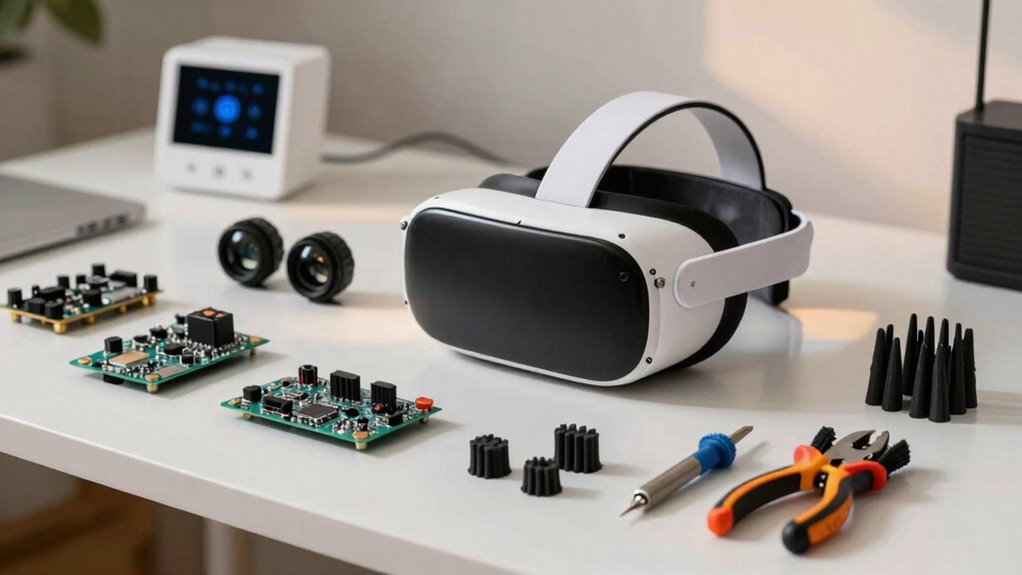
Cardboard serves as primary sturdy material for frame construction.
Lenses sourced online, from binoculars, or cameras for image magnification.
Rubber bands secure lenses and create head straps.
Smartphone provides display screen for VR content.
Glue, tape, scissors enable cutting, assembly, and attachment.
Like local storage options in subscription-free security cameras, this DIY approach avoids recurring costs.
Construction Steps
Measure and cut cardboard to smartphone screen dimensions with lens space.
Align and attach lenses using rubber bands for clear image focus.
Create centered slot for secure smartphone insertion.
Form head strap from cardboard pieces secured with rubber bands or tape.
Test assembly with VR app launch and strap adjustment.
3D Printed Designs
Fully 3D printed headset uses cheap Aliexpress components under $150 total.
Install M3 threaded inserts in eyeboxes for IPD adjustment mechanism.
Mount screens into eyeboxes with stainless rod for alignment.
Assemble main body with nose-side-up printing to avoid support issues.
Add front cover with five M3 inserts and HDMI driver soldering.
SteamVR Extras
Cardboard VR adapts for SteamVR via additional software like RiftCat.
Dimensions optimized at 7.5cm x 15cm x 11cm for most smartphones.
Nose gap cut 2cm above center, 3cm horizontal for comfort.
Lens board placed 4.5cm from screen with tape or glue fixation.
Persephone 3 Lite model includes motion tracking for SteamVR.
Tracking Features
SteamVR supports inside-out tracking with DIY setups.
IPD adjustment via threaded inserts and thumb screws.
Head tracker module integrates with soldered wires.
Hand tracking compatible in VRChat on $100 DIY headset.
Wires route through cutouts to external laptop or mini PC.
Inside-out tracking now includes hand tracking capabilities for enhanced interaction.
Cost Savings
Total build cost under $150 using Aliexpress parts.
$100 DIY headset runs VRChat and SteamVR.
Avoids premium prices of Oculus Quest 2 or PlayStation VR.
Leverages existing smartphone or PC hardware.
Free software like RiftCat enables Vive-compatible tracking.
Limitations Challenges
Quality lower than commercial headsets like HTC Vive.
Precise lens alignment critical to avoid offset ruin.
Soldering required for HDMI driver and head tracker.
Tinker dimensions for individual fit, e.g., 1cm phone adjustments.
Wires may need external routing to laptop or mini PC.
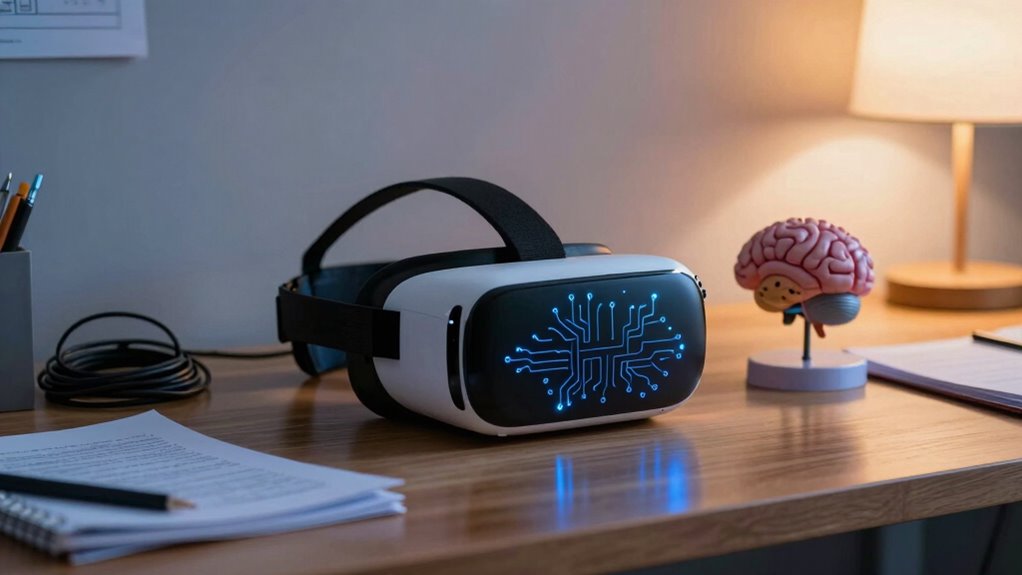
A homemade VR headset can provide an immersive gaming experience without high costs.
References
- https://moonvrhome.com/blog/16/diy-guide-how-to-make-a-vr-headset-at-home-for-immersive-gaming
- https://www.youtube.com/watch?v=pbNyW5GsUQc
- https://www.youtube.com/watch?v=V3kVsqO9YTY
- https://www.instructables.com/Cardboard-VR-for-SteamVR/
- https://hackaday.com/2026/02/01/a-diy-headset-for-steamvr/
- https://steamcommunity.com/sharedfiles/filedetails/?id=537624099
- https://www.youtube.com/watch?v=s_4Qejsxxag
- https://www.youtube.com/watch?v=Y07pv7hplpg