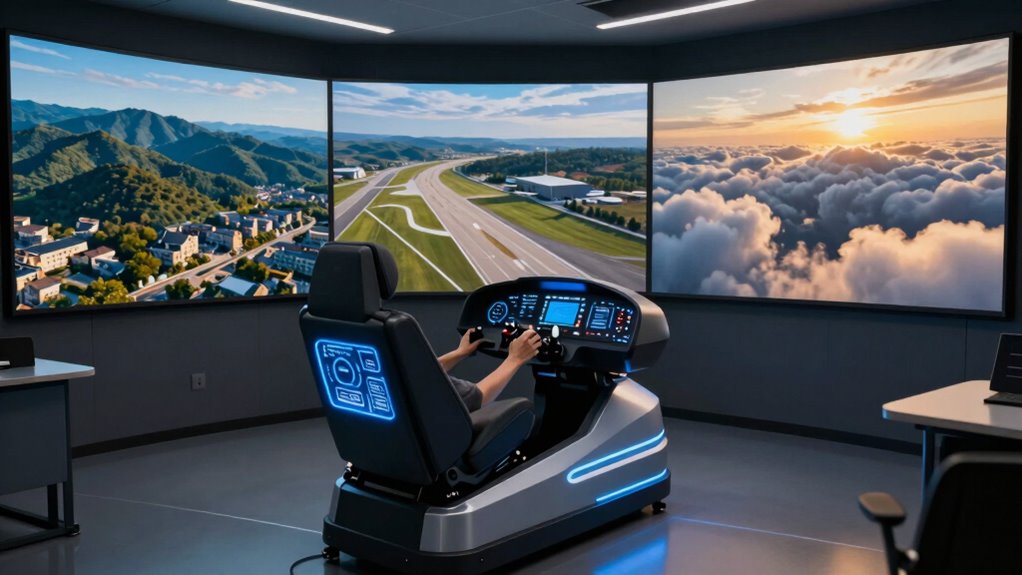
Tuturally, Tennessee students are getting a high-tech head start on flight—without leaving the ground. True Course Simulations has just inked a big move in Franklin, bringing four VR immersive flight simulators and one mixed reality setup to Williamson County Schools’ Entrepreneurship & Innovation Center. The idea is simple and bold: hands-on exposure to aviation environments that sharpen real skills, but with zero risk of sky-high mistakes.
Tennessee students dive into flight with four VR simulators and mixed reality in Franklin’s innovation center.
Arizona-based True Course Simulations did the heavy lifting, and the result sounds like something out of a sci-fi class, except it’s real life for curious teens.
In the Franklin buzz, the VR gear isn’t the only thing catching attention. The Franklin Special District Aerospace Program added a Redbird LD flight simulator for middle schoolers at Poplar Grove and Freedom Middle Schools, flagged as an FAA-approved Advanced Aviation Training Device. Kids get a 200-degree field of view and a worldwide terrain database, which means they can pretend to fly anywhere from a suburban runway to a remote mountain strip.
Even cooler, high school credit can ride along for eighth-graders who engage, turning class time into real-world momentum toward aviation paths.
Funding rounds out the picture. A $1 million Innovative School Models grant from the Tennessee Department of Education covers four years, lifting the local financial burden and amplifying access to immersive tools. The grant complements existing Redbird fleets—14 Jay Velocitys and four TDs—plus the new LD, valued around $55,000.
The mix creates a layered, scalable approach to flight training that fits both middle and high school schedules, keeping students in a fun, safe learning loop.
Siegel High School adds its own spark, too. Aviation teacher Scott Myers heads a growing program near Nashville in Rutherford County, with 70 students finishing the latest term and new aviation rooms housing actual flight simulators that mimic realistic cockpit controls.
FAA-qualified VR gear, like Loft Dynamics’ Airbus H125 at Level 7, promises a true trainee path from private licenses to airline transport ratings, complete with a 360-degree terrain and lighting view. It’s wild, it’s practical, and it’s all about making aviation education feel accessible to every curious kid in the state. Much like how Amazon Echo devices rely on Alexa’s voice assistant software to function, these flight simulators depend on sophisticated software to deliver realistic, fully interactive training experiences for students.
References
- https://www.afm.aero/true-course-simulations-installs-vr-and-mixed-reality-flight-simulators-at-tennessee-schools-innovation-center
- https://williamsonsource.com/franklin-special-district-expands-aerospace-program-with-advanced-flight-simulation-technology/
- https://www.loftdynamics.com/loft-dynamics-faa-level-7-qualification-powers-first-faa-approved-virtual-reality-university-program-redefining-pilot-training-from-the-ground-up/
- https://aviation.gleim.com/2019/06/07/tennessee-aviation-teacher-helps-students-find-their-path/
- https://www.joyfullarcade.com
- https://www.adventuresci.org/exhibit/full-motion-simulator/