While hospitals have been conducting the same soporific infection control training sessions for decades—ten hours of PowerPoint purgatory followed by five hours of watching someone demonstrate proper hand-washing technique as though the assembled healthcare professionals were particularly dim kindergarteners—healthcare-associated infections continue to ravage patients with the reliability of a Greek tragedy.
The numbers reveal institutional dysfunction worthy of Kafka. Traditional training methods produce a measly 20% improvement in hand hygiene compliance, knowledge scores that plateau faster than a cardiac arrest patient’s essential signs, and satisfaction ratings hovering at 71%—the academic equivalent of a participation trophy.
Healthcare workers sit through these mandatory sessions like prisoners enduring re-education programs, nodding along to lectures that accommodate neither their professional experience nor their learning styles, then promptly forget everything because theory retention collapses without practical application opportunities beyond passive observation.
The assessment methodology deserves particular scorn. Conventional approaches rely on self-reported compliance data—because nothing guarantees honest evaluation quite like asking people to grade their own performance—and single post-training evaluations that capture competency development about as effectively as a photograph captures motion.
Real-time clinical scenarios remain woefully absent from these theatrical demonstrations, feedback arrives retrospectively when it’s already useless, and the entire charade operates on attendance-based compliance rather than actual behavioral change. Much like the gradual adoption of household robots predicted between 2028-2035, healthcare institutions remain frustratingly slow to embrace technological solutions that could transform infection control practices.
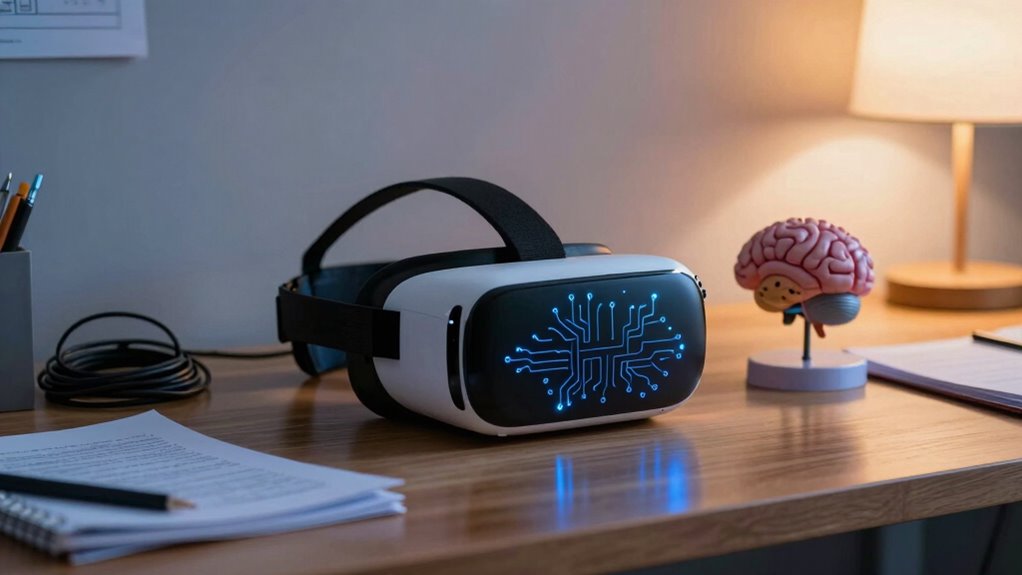
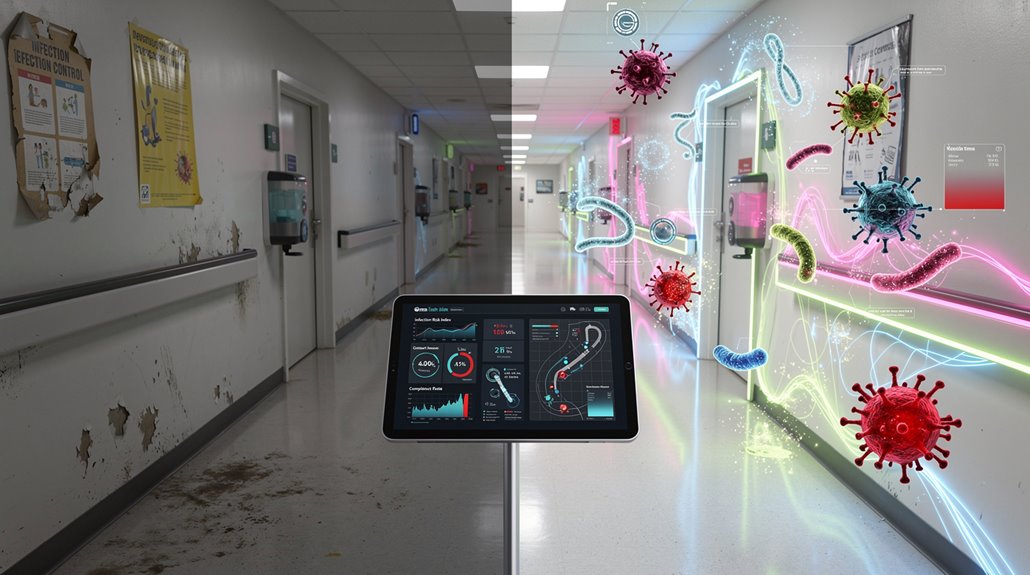
Enter augmented reality, which succeeds precisely where traditional methods fail because it provides continuous, targeted feedback during skill performance rather than after the damage is done. AR creates interactive environments that simulate high-pressure clinical situations, accommodates diverse learning styles, and delivers iterative feedback cycles that enable systematic improvement. Studies utilizing direct observation approaches have demonstrated theoretical knowledge scores nearly eight times higher than conventional training methods when combined with regular practical assessments.
Most importantly, it forces participants into hands-on practice rather than the somnambulant observation that characterizes conventional training.
The fundamental problem remains institutional inertia masquerading as tradition. Hospitals continue deploying demonstrably ineffective training programs because changing established protocols requires acknowledging past failures, and administrators would apparently rather patients suffer healthcare-associated infections than admit their cherished lecture-based instruction has been wasting everyone’s time for generations.
Meanwhile, AR technology sits available, proven effective, and perpetually ignored by institutions committed to performative compliance over actual results.