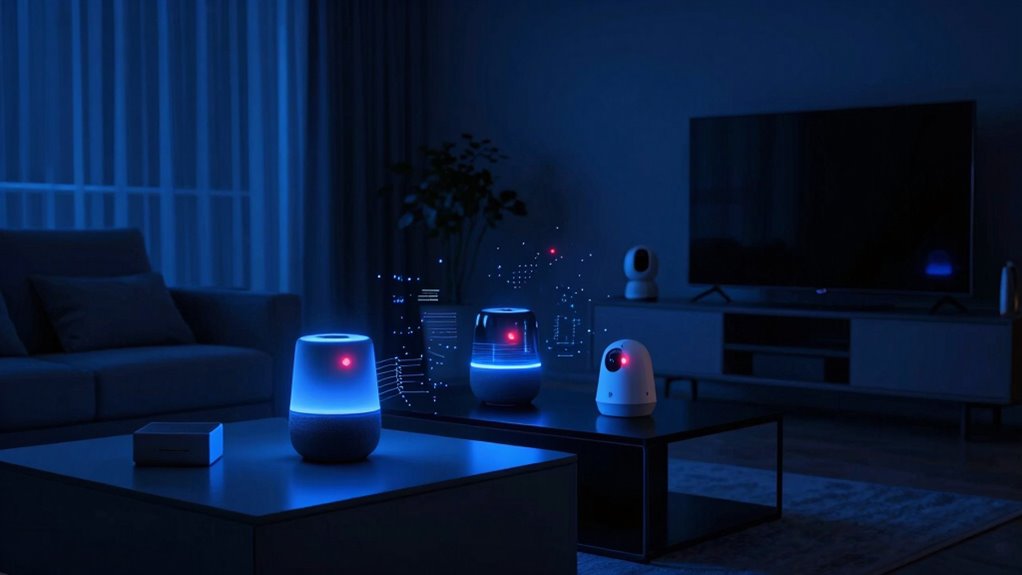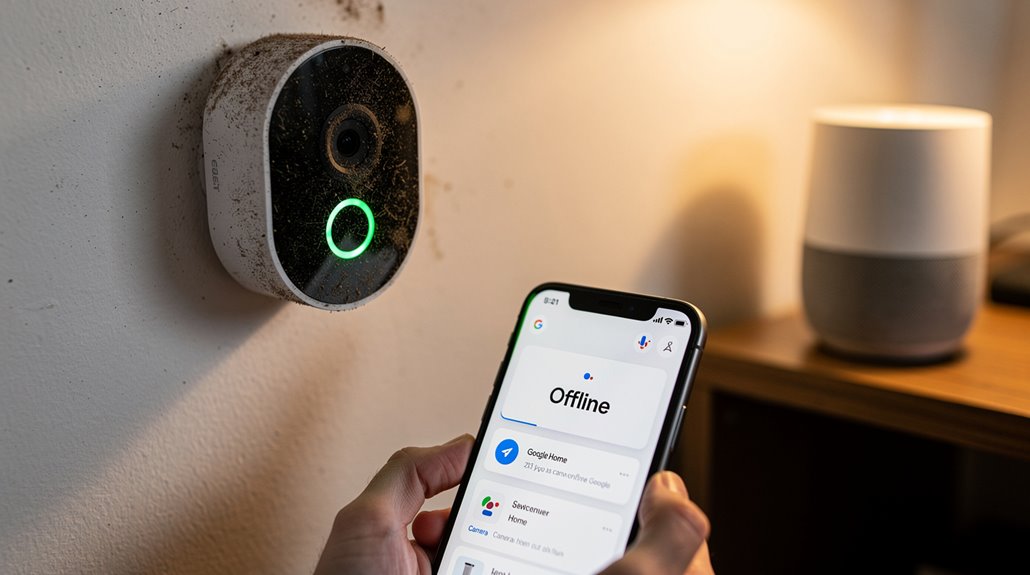
While Google executives certainly congratulate themselves on their visionary leadership in the smart home arena, thousands of customers who purchased first-generation Nest Cam Indoor units—devices still well within reasonable operational lifespans—now find themselves staring at persistent “offline” notifications in the Google Home app, a particularly galling indignity considering these cameras continue drawing power, displaying cheerful green status lights, and occasionally deigning to send motion alerts like technological poltergeists haunting their own infrastructure.
Cameras displaying green lights and sending ghost notifications while simultaneously declaring themselves offline—a masterclass in quantum dysfunction.
The catastrophe traces directly to Google’s 2023 migration initiative, which herded first-generation Nest cameras from the legacy Nest app into the Google Home ecosystem with all the grace of a drunk shepherd. First-gen Nest Cam Indoor models and older Nest Hello doorbells immediately began displaying offline status upon transfer completion, rendering live video feeds inaccessible while somehow maintaining the capacity to record clips and dispatch notifications—a technical achievement rivaling Schrödinger’s cat in its quantum absurdity.
Users discovered that power cycling provides temporary relief before devices inevitably revert to their catatonic state within days or weeks, a Sisyphean maintenance ritual that Google apparently considers acceptable customer experience. Factory resets accomplish nothing except erasing configurations and wasting time, though they do offer users the privilege of reconfiguring devices they already configured once, because what modern consumer doesn’t cherish redundant administrative tasks?
The company’s response embodies corporate accountability at its most inspiring: complete radio silence. Despite community forum posts proliferating throughout 2025 and a July promise of fixes that evaporated faster than Google Reader, official acknowledgment remains conspicuously absent. Google instead devoted resources to enhancing other products while customers with $200 cameras watched their security infrastructure decay into decorative wall ornaments. Notably, Nest Cam Outdoor and Nest Cam IQ owners have escaped this particular debacle, suggesting the problem stems from specific firmware limitations rather than systemic platform failures. The migration even crippled connected speaker functionality, preventing doorbells from triggering ringers through Google Home devices that previously announced visitors reliably.
The situation grows particularly rich considering the simultaneous federal class action lawsuit against Google regarding malfunctioning Nest Hub, Nest Hub Max, Nest Mini, and Nest Audio devices—filed by Lieff Cabraser Heimann & Bernstein, LLP and Kaplan Gore, LLP—suggesting a pattern of planned obsolescence masquerading as innovation.
One might cynically observe that supporting legacy hardware conflicts with quarterly sales projections, though surely such mercenary calculations never influence decisions at a company whose motto famously championed not being evil.
References
- https://www.androidcentral.com/accessories/smart-home/older-nest-cameras-struggle-terribly-with-offline-issues-in-google-home
- https://9to5google.com/2025/12/01/google-home-nest-cam-offline-issue/
- https://www.hollyland.com/blog/tips/nest-camera-offline-but-wifi-working
- https://community.tp-link.com/en/home/forum/topic/735550
- https://www.youtube.com/watch?v=HUGuuADLuPo
- https://support.google.com/googlenest/answer/9239727?hl=en
- https://www.googlenestcommunity.com/t5/Cameras-and-Doorbells/Nest-Cam-keeps-going-offline/m-p/447084