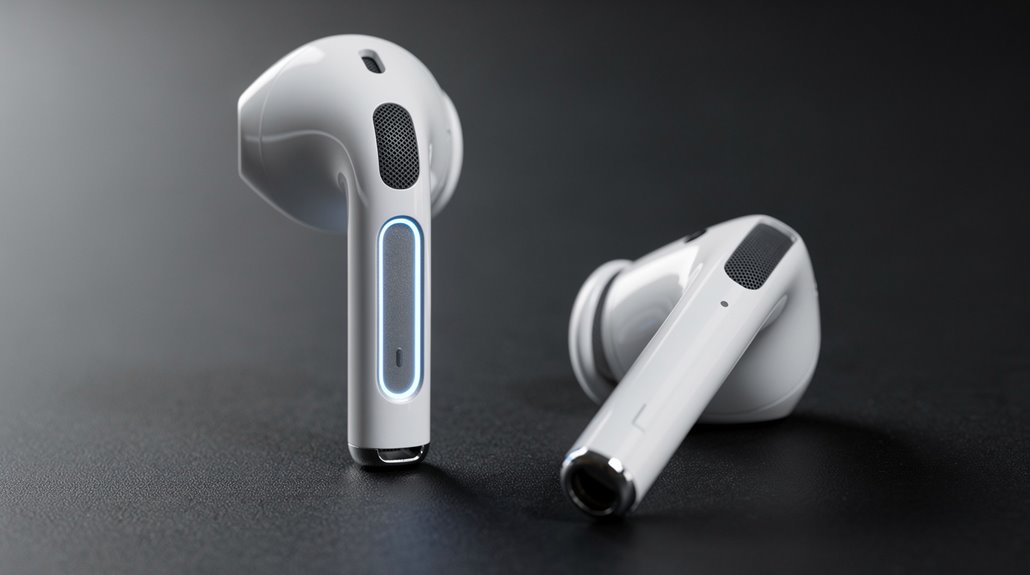
The force sensor on AirPods lurks identically on both the left and right stems, cunningly disguised as a flattened area with slightly different texture—Apple’s sadistic tribute to user confusion. This pressure-sensitive indentation demands not a simple tap but a “pinch and squeeze” maneuver worthy of safecracking, transforming basic audio controls into an esoteric ritual. Apple’s commitment to bewilderment guarantees even veteran users occasionally purchase AppleCare+ through accidental triple-clicks. The stem’s mysteries unfold for those who persevere.
The sacred ritual of AirPods operation demands not just a tap, heavens no—that would be far too intuitive. Instead, users must perform the hallowed “pinch and squeeze” maneuver, applying just enough pressure to activate the sensor without crushing the delicate stem between their fingers.
Mastering AirPods requires the dexterity of a safecracker and the patience of a meditation guru.
Too light a touch? Nothing happens. Too forceful? Congratulations, you’ve just purchased AppleCare+. This pressure-sensitive indentation differs fundamentally from conventional touch controls, because God forbid Apple create anything resembling industry standards.
Once mastered—likely after several days of muttering profanities into the void—users can perform a veritable symphony of commands: single press for play/pause, double-press to skip tracks, triple-press to return to previous selections, and press-and-hold to switch between listening modes.
The stem-mounted force sensor operates independently from traditional controls, creating a unique mechanical design that guarantees maximum confusion for first-time users and smug superiority for AirPod veterans. The sensor is identically placed on both the left and right AirPods, ensuring consistent confusion regardless of which ear you favor.
The flattened area on the stem allegedly provides “tactile feedback,” a generous term for “slightly different plastic texture.”
Apple’s commitment to this design across AirPods 3, 4, and Pro models demonstrates their unwavering dedication to consistency in user bewilderment—a corporate value that has served them well in maintaining their status as technological overlords of our increasingly wireless existence. AirPods 4 with Active Noise Cancellation introduces an additional layer of complexity by allowing users to control noise control modes by pressing and holding the stem.
Frequently Asked Questions
How Do I Clean the Force Sensor Without Damaging It?
Users should gently clean the force sensor with a microfiber cloth or lightly dampened cotton swab with isopropyl alcohol, avoiding excess moisture and pressure that could damage internal components.
Can I Customize the Force Sensor’s Sensitivity Settings?
Yes. Users can adjust force sensor sensitivity through AirPods settings. Options include modifying press speed, press-and-hold duration, and volume swipe sensitivity on compatible models via connected Apple devices.
Why Does My Force Sensor Sometimes Stop Responding?
Force sensor unresponsiveness commonly results from improper technique (pinching vs tapping), moisture/debris buildup, physical damage to stems, or incorrect sensitivity settings in the Accessibility menu.
Do Both Airpods Have Force Sensors or Just One?
Both AirPods have individual force sensors. Each earbud features its own dedicated sensor positioned on the stem, allowing users to control audio playback from either the left or right AirPod.
Will Sweat or Rain Damage the Airpods Force Sensor?
Sweat and light rain shouldn’t damage AirPods force sensors due to their water-resistant design. However, prolonged exposure to moisture or heavy rainfall could eventually compromise sensor functionality over time.
References
- https://www.youtube.com/watch?v=fQh3fKU-79k
- https://support.apple.com/guide/airpods/use-controls-and-gestures-with-your-airpods-devb2c431317/web
- https://www.youtube.com/watch?v=2GgboYd2aEU
- https://www.businessinsider.com/reference/airpod-pro-controls
- https://support.apple.com/guide/airpods/change-force-sensor-touch-control-button-dev68116dd52/web
- https://support.apple.com/en-us/102628
- https://support.apple.com/en-us/108764
- https://support.apple.com/en-us/108918