Robots in homes remain futuristic pipe dreams, thanks to consumers gripped by “safety paranoia” (76%—not a typo), an industry churning overpriced gadgets as if autonomy grew on trees, and bureaucrats delighting in sinking innovation under certifications. Despite a $14.54 billion market begging for multifunctional bots, adoption crawls at dial-up speed. China and India hustle while the U.S. lumbers behind affluent skepticism. Expect a robot-filled home by 2030—if the stars align and institutions stop sabotaging progress. Curious how deep the rabbit hole goes?
Though the promise of robots liberating humanity from the drudgery of household chores has danced tantalizingly on the horizon for decades, the reality remains distressingly banal: robotic takeover in homes inches forward with all the urgency of a bureaucratic snail on sedatives. The global market for household robots hit a supposedly impressive USD 14.54 billion in 2025, projected to balloon to a jaw-dropping USD 71.26 billion by 2034. One might expect robot butlers and automatons to be elbowing their way into kitchens nationwide at this rate, yet the pace is reminiscent of dial-up internet in the age of fiber optics—slow, awkward, and frustratingly behind.
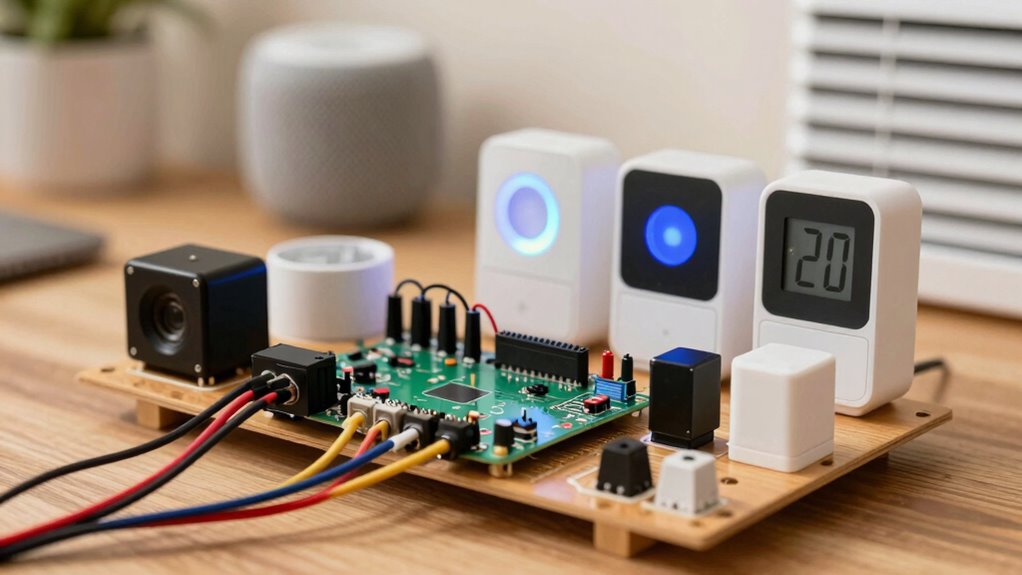
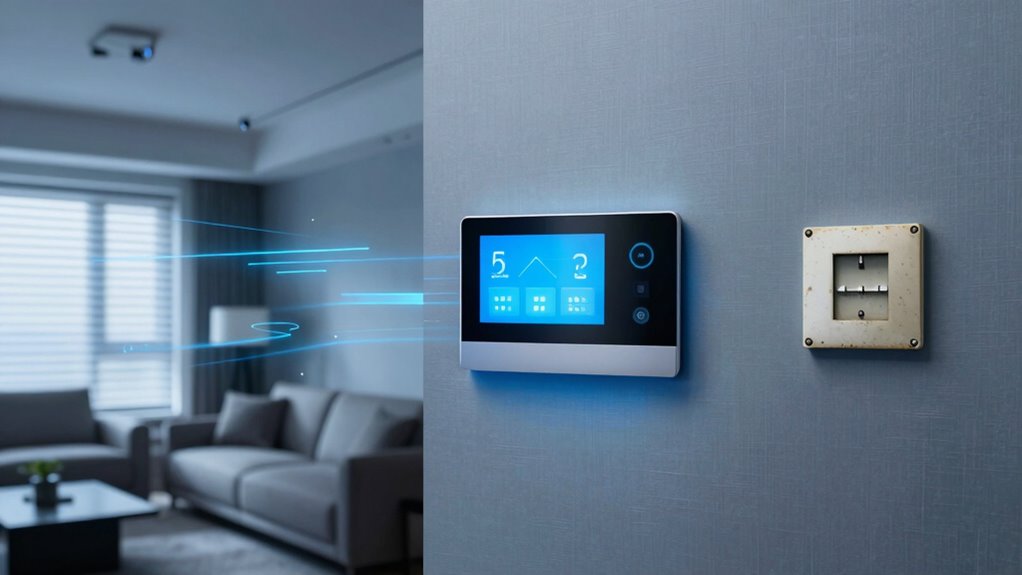
Despite a feast of technological innovations—AI and machine learning giving robots a supposed edge in maneuvering our complex abodes—the consumer ain’t quite eating it yet. Sure, 58% of households fiddle with smart home gizmos like digital doorbells and thermostats, but ask about fully autonomous robots? Cue the universal safety paranoia expressed by 76% of users, as if every Roomba is plotting to overthrow humanity, or at minimum, sabotage Sunday brunch. Innovative safety solutions are desperately needed to alleviate these widespread concerns and boost acceptance.
Aging demographics and dual-income families are purportedly fueling demand for these time-saving saviors, yet skeptics remain steadfastly clinging to their brooms—why, one wonders, is convenience still such an uphill battle? The demand for multifunctional robots is particularly strong in urban areas due to urbanization and smaller living spaces.
Regional dynamics read like a bad sci-fi novel: China, the supposed robot overlord of Asia, commands half the continent’s industrial mechanical minions, spurred by urban sprawl and swelling paychecks. The US, flushed with disposable income and a laziness that’s practically patriotic, edges forward in robot adoption, while India, with its burgeoning middle class, presses ahead at breakneck double-digit growth.
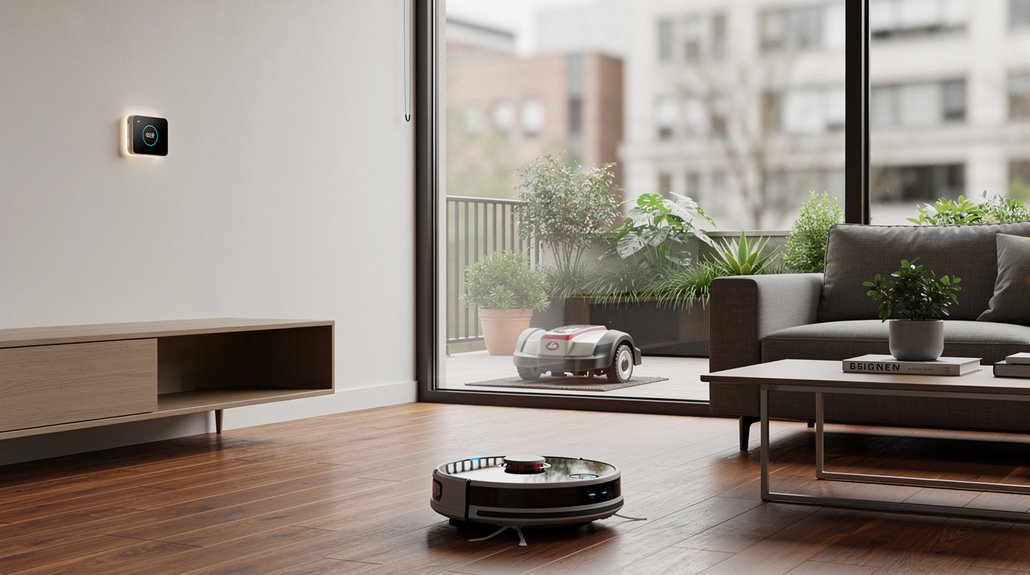
Still, home robots account for a chunky 72.8% of multifunctional robot demand, mostly vacuum cleaners and lawnmowers—because nothing screams “progress” like a robot that sweeps your floor but can’t yet fetch a beer. Early projections suggest that by 2030, the average early adopter household will possess 3-7 specialized robots for different domestic tasks.
But barriers loom like disgruntled office managers. High price tags curb market access among less affluent consumers, and safety certifications frustrate 34% of the industry’s players like Kafkaesque Red Tape incarnate. Technology complexity only widens the gap, alienating the less tech-savvy folk who’d otherwise embrace domesticated robots.
Frequently Asked Questions
How Much Do Home Robots Typically Cost?
Home robots typically range from $1,000 to $20,000. Basic models like Amazon Astro cost around $1,000, while more sophisticated humanoid robots can reach $20,000, reflecting varying functionality and technological sophistication.
What Safety Features Do Domestic Robots Have?
Domestic robots feature obstacle detection, advanced vision systems, and autonomous path planning for collision avoidance. They possess sturdy, soft-edged designs, emergency stop controls, real-time monitoring, regular software updates, and robust cybersecurity to guarantee safety in home environments.
Can Robots Be Customized for Specific Household Tasks?
Robots can be customized for specific household tasks through modular designs, interchangeable tools, and adaptive software. They adjust cleaning modes, security features, and care functions based on individual home layouts, preferences, and user interaction patterns.
How Do Robots Learn and Adapt to User Preferences?
Robots learn and adapt to user preferences through adaptive machine learning algorithms, human-in-the-loop feedback, and embodied AI. Continuous data assimilation, interactive reinforcement learning, and real-time environmental interaction enable personalized, evolving behaviors suited to household dynamics.
Are There Privacy Concerns With Using Home Robots?
Yes, home robots raise privacy concerns due to continuous data collection, storage without explicit consent, susceptibility to hacking, unauthorized access, and opaque data-sharing practices, compounded by users’ reduced privacy awareness from anthropomorphized robot appearances.
References
- https://3laws.io/pages/Autonomous_Robots_and_the_Future_of_Private_Households.html
- https://www.futuremarketinsights.com/reports/multifunctional-household-robot-market
- https://www.precedenceresearch.com/household-robots-market
- https://www.fortunebusinessinsights.com/household-robot-market-113393
- https://www.statista.com/chart/9089/worldwide-personal-robot-sales-forecast/
- https://ifr.org/ifr-press-releases/news/global-robot-demand-in-factories-doubles-over-10-years
- https://www.morganstanley.com/insights/articles/humanoid-robot-market-5-trillion-by-2050
- https://standardbots.com/blog/future-of-robotics-predictions
- https://blog.bccresearch.com/from-hospitals-to-homes-how-robotics-will-change-your-life-in-2025
- https://standardbots.com/blog/how-much-do-robots-cost