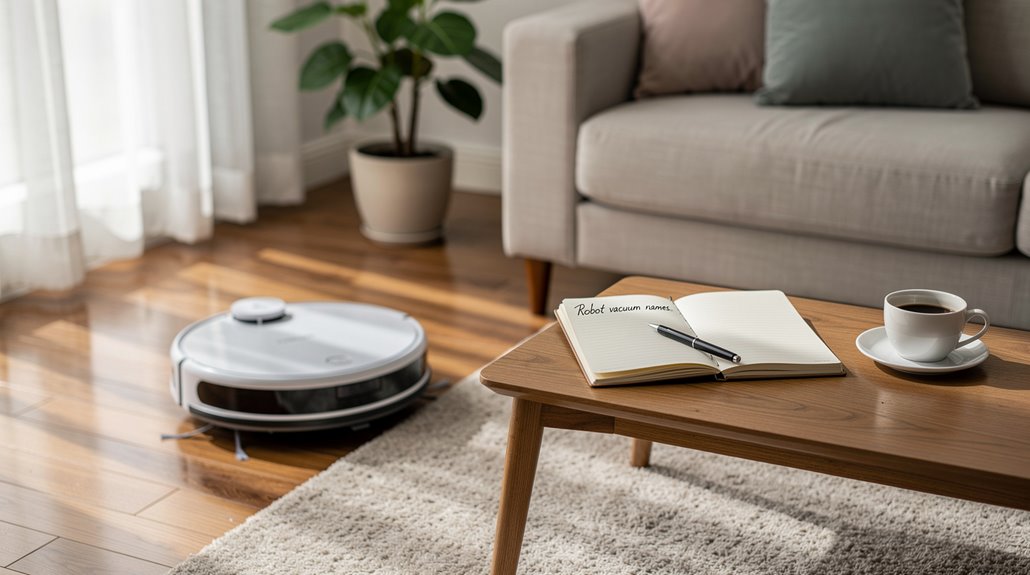
Naming a robot vacuum? How original—choose between the soul-crushingly bland “Bob,” “Robbie,” or the painfully literal “Mr Cleaner,” because why bother with actual human contact in this dystopian era? This trend, a numb manifestation of screen addiction and social decay, elevates a mindless gadget to ersatz family status. It’s capitalism’s gift wrapped in robotic autopilot, offering affection where empathy falters. For the curious, there’s a deeper exploration into why vacuum names reveal so much more.
Who would have guessed that in an age where humanity’s finest achievements include wielding smartphones adeptly enough to ignore each other at dinner, we have now stooped to christening our robot vacuums as if these glorified dust puppeteers were long-lost relatives?
Yes, amid a cultural wasteland cultivated by relentless screen addiction and social decay, individuals in the UK have embraced absurd rituals like naming their robotic dust collectors—often reverting to unoriginal derivatives of “Robert” (Bob, Rob, Robbie) or the thrillingly imaginative “Mr Cleaner.” Interestingly, the most popular name for UK robot vacuums is indeed “Robert” and its variations, showing a striking preference across the country for this particular moniker. This trend coincides with the rapid growth and adoption of robotic vacuums, which are now the fastest-growing segment in the vacuum cleaner market.
In a screen-obsessed culture, UK users pet-name their robot vacuums with uninspired classics like “Bob” and “Mr Cleaner.”
Surely, this is progress. Others opt for more flamboyant nods to pop culture, memorializing their circular servants with monikers like “Tony Shark,” presumably invoking the fierce predator lurking beneath discarded Cheetos crumbs.
This phenomenon, heavily skewed toward Gen Z and Millennials, reveals that roughly two-thirds of these so-called “tech-savvy” youngsters graft personalities onto their appliances—81% of Millennials didn’t just name their devices, they forged emotional connections.
Apparently, the ennui of vacuuming unceremoniously transforms into nightly soap opera with the help of a given name. Data cruelly confirm that 83% of users report increased enjoyment, 77% savor their device’s newfound comedic value, and a staggering 63% ascribe distinct personalities to these inanimate objects.
One can only imagine the domestic tableaux: a vacuum called “Robbie,” serenading dust bunnies to oblivion, while its human overlords oscillate between affectionate sentimentality and a desperate grasp for control amidst technological omnipresence.
Beneath this mockery lies a darker truth: naming these machines transmutes them from mere dirt-devouring tools into ersatz family members, mirroring the pathological anthropomorphism found in pet naming.
This misdirected sentimentality amplifies when juxtaposed with the robot vacuum’s unexpected market ascendancy—poised to eclipse traditional vacuum types by 2030 and reaching USD 6.21 billion globally by 2025.
Meanwhile, innocent owners imbue their hybrid vacuum-mop hybrids with personal identities, as if these gadgets’ relentless mechanical monotony demands an existential makeover.
Elsewhere, this naming frenzy invades laptops and coffee machines, underscoring a disturbing trend: humanity’s desperate grasp for intimacy amidst the cold efficiency of domestic technology. Only 18% of people have named their laptops and just 13% their coffee machines, emphasizing a unique bond with robot vacuums in particular in naming technology.
Frequently Asked Questions
How Often Should I Clean My Robot Vacuum’s Brushes?
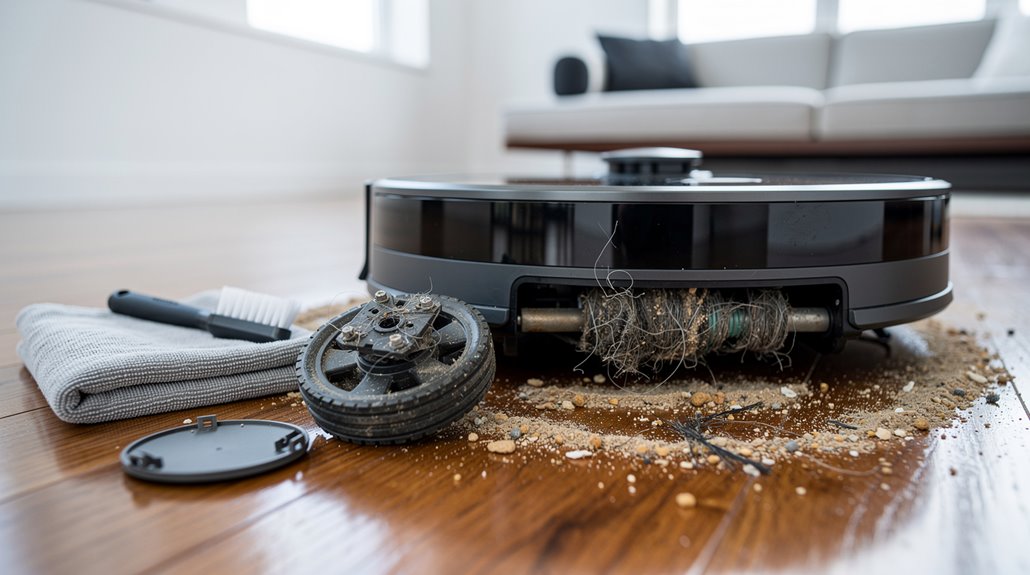
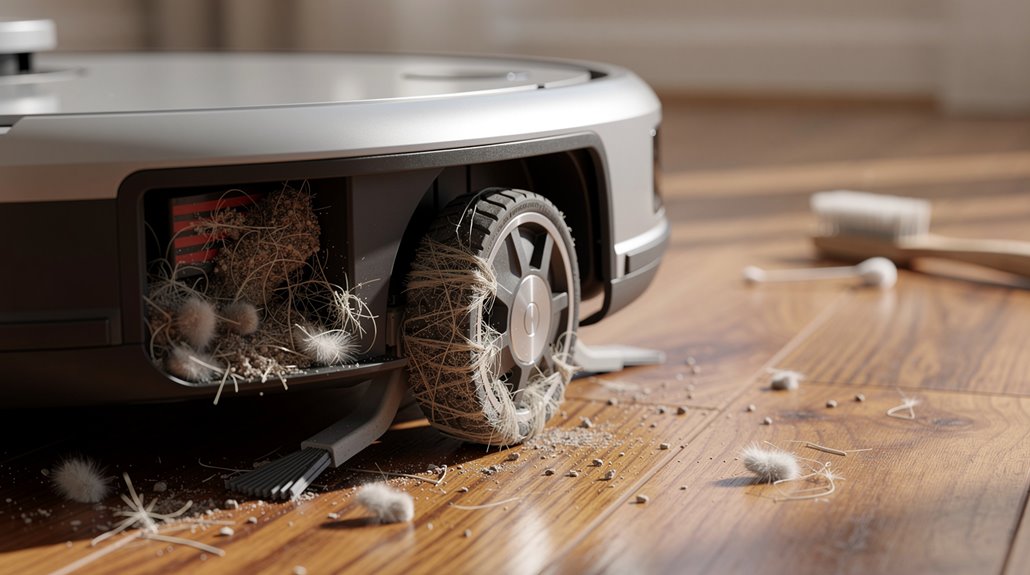
The robot vacuum’s brushes should be cleaned weekly or bi-weekly, with twice-weekly cleaning recommended for homes with pets. Immediate cleaning is necessary if hair tangles, odors, or unusual noises are detected to maintain performance and prevent damage.
Can Robot Vacuums Work on Thick Carpets?
Robot vacuums can effectively clean thick carpets by automatically increasing suction power and using specialized brush designs. Advanced models detect carpet types, adjust cleaning modes, and prevent tangling, ensuring deep fiber penetration and thorough debris removal on plush surfaces.
Do Robot Vacuums Require Wi-Fi Connection?
Robot vacuums typically require Wi-Fi for initial setup and remote control, usually needing 2.4GHz networks. However, some models can operate offline post-setup, though Wi-Fi enhances scheduling, app control, and mapping functionalities greatly.
Are Robot Vacuums Safe for Pet Hair Removal?
Robot vacuums are generally safe for pet hair removal, especially on hard floors and low-pile carpets. Their advanced brush and suction technology reduce tangling, but manual grooming and supplementary cleaning remain necessary for thorough pet hair management.
How Long Does a Robot Vacuum’s Battery Usually Last?
A robot vacuum’s battery typically lasts 2–5 years under regular use, with about 400–500 full charge cycles. Capacity declines noticeably after 2–3 years, causing reduced runtime and requiring eventual battery replacement for peak performance.
References
- https://ierdaily.co.uk/what-do-you-call-your-robot-vacuum-sharks-new-naming-survey-reveals-robert/
- https://vacuumwars.com/robot-vacuum-market-trends-are-traditional-vacuums-falling-behind/
- https://www.mordorintelligence.com/industry-reports/robot-vacuum-cleaners-market
- https://www.vacmux.com/blog/key-reason-why-brits-are-giving-their-robot-vacuums-pet-names/
- https://us.3itech.com/blogs/news/50-best-robot-vacuum-names-to-make-cleaning-more-fun
- https://honiture.com/blogs/home-cleaning/daily-maintenance-guide-for-robotic-vacuums
- https://us.narwal.com/blogs/robot-vacuum/clean-vacuum-brush-roll
- https://us.3itech.com/blogs/news/robot-vacuum-maintenance-how-often-to-empty-and-keep-it-clean
- https://vacuumwars.com/robot-vacuum-maintenance/
- https://maticrobots.com/blog/matic-maintenance-and-care