A smart irrigation system, in all its technological smugness, exposes humanity’s abject failure to water plants without drowning them or leaving them parched. It combines sensors, IoT networks, and automated valves to tailor hydration with surgical precision, shaming decades of wasteful negligence and bureaucratic laziness. Real-time soil moisture data and leak detection mock the archaic “spray and hope” method. For anyone hungry to witness modern horticultural salvation amid institutional collapse, understanding the mechanics reveals even deeper ironies.
Though humanity has mastered the lacework of countless technological triumphs—from satellites pinging Mars to AI composing sonnets—it somehow still couldn’t manage a simple concept like watering plants without drowning them in excess or parching them through neglect. Enter the “smart” irrigation system, an allegory of human inefficiency masked as innovation, employing the Internet of Things (IoT), LORA, and remote sensing to deliver microscopic precision in hydration—because, apparently, plants need Netflix-level streaming data to survive.
When watering plants went from guesswork to streaming data—because even ferns demand bespoke hydration algorithms now
This method marries sensor technology, automatic controls, and computer wizardry to mete out water amounts adjusted for soil type and those pesky, unpredictable weather conditions, all while pretending this complexity is not a tacit admission of collective horticultural failure. By reducing water waste by 20%-40%, smart irrigation systems significantly cut unnecessary water usage and costs, demonstrating a practical solution to global water shortage issues. These systems utilize a combination of sensors, controllers, and data analysis to ensure precise and efficient water delivery tailored to plant needs.
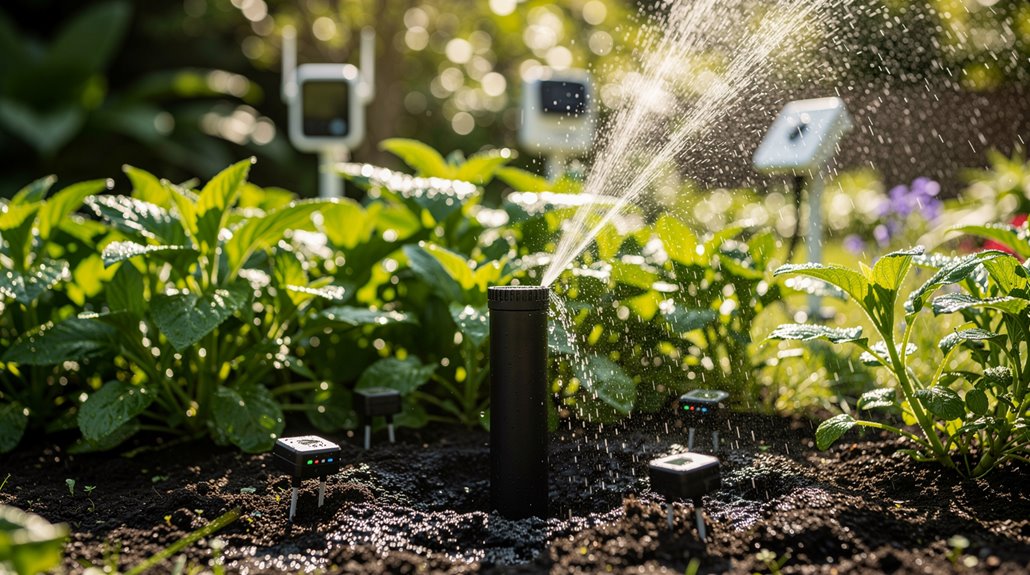
These systems parade a cavalcade of sensors—weather, soil moisture, atmospheric conditions—gleefully tracking everything from raindrop logistics to evapotranspiration rates, as if plants had Yelp reviews with water preferences. Real-time data collection supposedly fuels continuous adjustment, accommodating not just generic greenery but specific plant species, because who wouldn’t want their pet fern to sip water tailored like a bespoke suit?
Controllers act as the “brains,” presumably outthinking decades of gardening blunders by processing streams of sensor data to orchestrate perfectly timed irrigation through valves and emitters with the dignity of a NASA launch sequence.
The automated decision-making process is nothing short of Orwellian: wireless transmissions deliver soil and weather intel to a platform calculating exact volumes, then dispatching commands to solenoid valves managing discrete irrigation zones. These controllers—programmed and semi-autonomous—adjust watering regimens on the fly, responding to meteorological tantrums, thereby sparing humans the burden of that age-old task: turning a tap.
Of course, remote access via mobile apps and WiFi guarantees that one can micromanage their garden’s hydration status from a beachfront or a bunker, complete with bidirectional sensor data, making overwatering and drought emergencies quaint relics of a pre-smart era.
Flow sensors monitor leaks—because nothing screams progress like a device alerting you to a broken hose, which, incidentally, was technologically straightforward decades ago.
Frequently Asked Questions
Can Smart Irrigation Systems Integrate With Home Automation Platforms?
Smart irrigation systems integrate effectively with home automation platforms like Home Assistant, allowing centralized control and automation. They support voice assistants, weather-responsive scheduling, and real-time soil moisture monitoring to optimize watering and conserve water efficiently.
What Is the Average Installation Cost for a Smart Irrigation System?
The average installation cost for a smart irrigation system typically ranges from $2,540 to $3,530 for standard residential properties. Larger, complex systems can exceed $10,000, while costs vary by features, zones, and property size.
Are Smart Irrigation Systems Compatible With All Types of Sprinkler Heads?
Smart irrigation systems are not universally compatible with all sprinkler heads. Traditional heads generally work across brands, but proprietary digital smart heads require specific controllers, limiting interchangeability and necessitating matched manufacturer components for proper operation.
How Often Do Smart Irrigation System Sensors Require Maintenance or Replacement?
Smart irrigation system sensors require maintenance periodically: rain sensors annually, soil moisture sensors semi-annually, and weather sensors during each professional service visit. Rain sensors typically need replacement every 3-7 years, while backup batteries are changed each spring.
Can Smart Irrigation Systems Work in Areas With Low or Inconsistent Wi-Fi?
Smart irrigation systems can operate in low or inconsistent Wi-Fi areas using Bluetooth or hub-based setups. However, these solutions limit remote features, often requiring manual control or additional equipment like Wi-Fi extenders for full functionality.
References
- https://www.renkeer.com/smart-irrigation-technology-and-system/
- https://prism.sustainability-directory.com/term/smart-irrigation-systems-future/
- https://extension.psu.edu/introduction-of-automatic-irrigation-systems-for-tree-fruit-orchards/
- https://smartearthsprinklers.com/what-are-the-basic-components-of-smart-sprinkler-systems/
- https://www.greenindustrypros.com/irrigation-water-management/article/22914818/all-systems-go-a-guide-to-smart-irrigation-systems
- https://www.yellowstonelandscape.com/blog/smart-irrigation-water-conservation-and-efficiency
- https://extension.okstate.edu/fact-sheets/smart-irrigation-technology-controllers-and-sensors.html
- https://terryslandscape.com/blog/irrigation/water-saving-solutions/
- https://www.sensoterra.com/news/sensoterra-integrates-with-home-assistant/
- https://www.dovit.com/en/blog/smart-watering-a-sustainable-garden-with-home-automation/