
The Nest Learning Thermostat, a sleekly packaged panopticon, promises effortless home comfort while cunningly cataloging your every mundane temperature whim for Big Data’s ravenous ledger. Marketed as an energy savior with snazzy features like Adaptive Eco and Soli-powered Farsight, it deftly replaces your ancient analog sanity with relentless surveillance disguised as convenience. Compatible with nearly all HVAC systems and demanding no C-wire—because simplicity masks control—it turns your living room into a data goldmine. Curiosity about the price of “smart” convenience awaits exposure beyond this introduction.
The Nest Learning Thermostat, a gleaming demonstration to Silicon Valley’s endless quest to monetize every flick of the finger, parades itself as the savior of home comfort and energy efficiency—because clearly, humanity could not be trusted to adjust a thermostat without some gleaming oracle spying on one’s every sneeze and awkward midnight fridge raid.
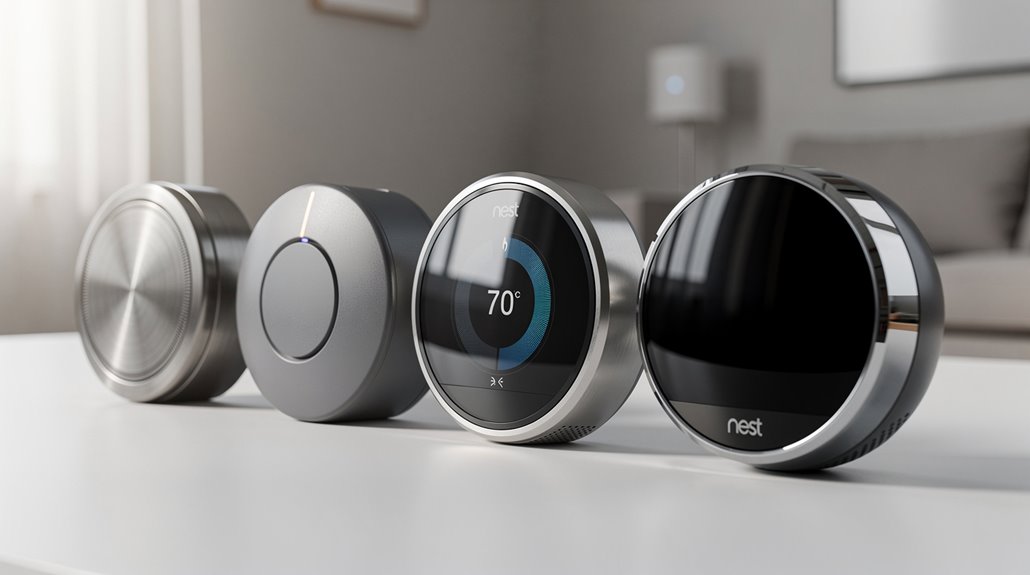
This sleek device, swaddled in polished steel finishes so it might feel at home in any millennial’s Instagram-ready den, promises to “learn” user routines and autonomously tweak temperatures like some HVAC clairvoyant. It claims jurisdiction over heating, cooling, and ventilation across residential and commercial battlegrounds alike, boasting compatibility with nearly every 24-volt system out there—even the relics gasping for relevance like oil and radiant heat setups. The package even includes a Nest Temperature Sensor to extend its sensing capabilities to other rooms in your home.
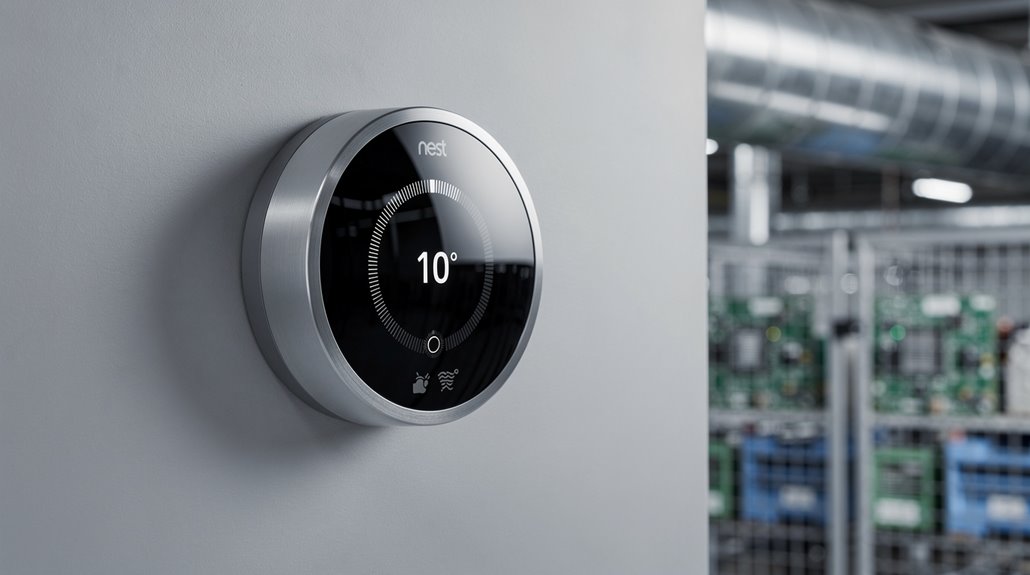
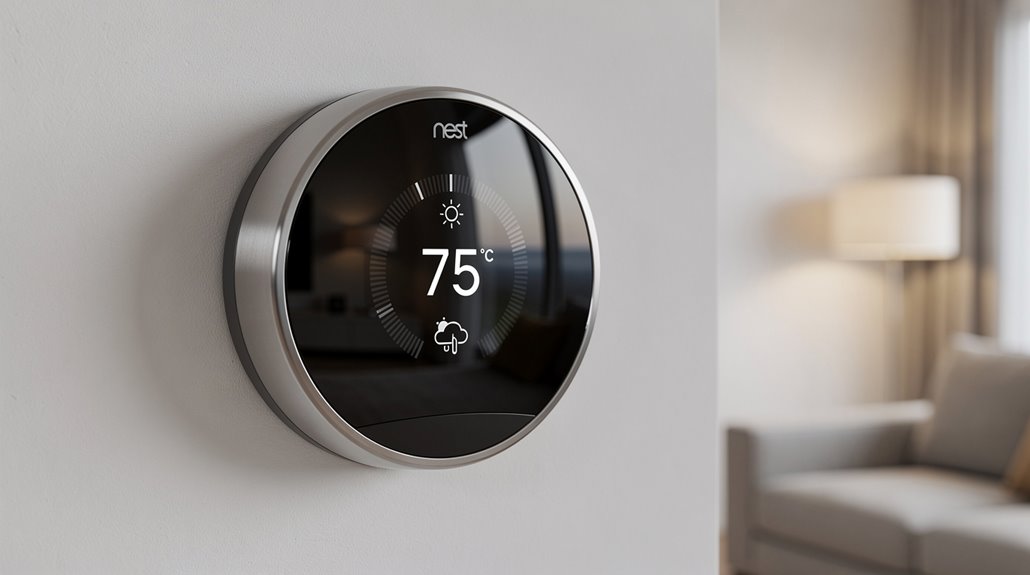
The latest, fourth-generation model flaunts a 2.7-inch circular liquid crystal display with a resolution so crisp it mocks your mushy brain’s attempts at comfort assessment. Sixty percent larger than its predecessor, its Dynamic Farsight feature unflinchingly tracks your presence with an uncanny Soli sensor, effectively turning your thermostat not just into a temperature regulator but a nosy roommate aware of every twitch in the vicinity.
The fourth-gen Nest flaunts a sharper, bigger screen and a Soli sensor that spyingly tracks every twitch nearby.
The device’s customizable home screen parades time, temperature, weather, humidity, and even outdoor air quality—as if your life depended on obsessing over microscopic particulate matter while you debate Netflix choices.
Energy-saving claims, those darling promises Silicon Valley loves to recite like prayers, are bolstered by independent studies citing 10% to 12% savings on heating and an inflated 15% for cooling: savings modest enough to pity those still clutching analog dials yet substantial enough to justify the Orwellian data harvesting.
Its Adaptive Eco and Smart Schedule features exemplify automation run amok, creating heating and cooling patterns based not on your whims but algorithmic cold logic, adjusting for your absence with the zeal of a parent throwing out your leftover pizza.
Wiring hassles are ostensibly quelled: no C wire is required in most installations—a nod to ease veiled as consumer benevolence. The thermostat’s compatibility with a staggering 95% of North American HVAC systems practically mocks those stuck with something off the grid.
Meanwhile, under its shiny hood, it churns with less than 1 kWh power consumption monthly, runs off a rechargeable lithium battery, and maintains Wi-Fi contact so it may boss you around remotely, regardless of whether you want it to or not.
The Nest Thermostat, then, is less a tool and more a quietly gleaming sentinel enmeshed in the very essence of modern domestic intrusion masquerading as energy enlightenment.
Frequently Asked Questions
How Does the Nest Learning Thermostat Save Energy?
The Nest Learning Thermostat saves energy by adapting to occupancy patterns, optimizing heating and cooling schedules, using presence sensing, adjusting for external weather, and shifting energy use during peak demand, resulting in verified significant energy bill reductions.
Can I Control the Nest Thermostat Remotely?
Yes, the Nest thermostat can be controlled remotely via the Google Home app, provided there is an active internet connection. Users can adjust temperatures, receive notifications, and manage schedules from anywhere using compatible devices and voice assistants.
Is the Nest Thermostat Compatible With All HVAC Systems?
The Nest thermostat is not compatible with all HVAC systems. It supports many 24V gas, oil, electric, heat pump, and dual-fuel systems but excludes millivolt, high-voltage, solid fuel, proprietary, and electric baseboard heating systems.
How Easy Is It to Install the Nest Thermostat?
The Nest thermostat is relatively easy to install for users with basic DIY skills. Clear instructions, included components, and wire labeling simplify the process, while compatibility checks and setup guides aid successful installation and configuration.
Does the Nest Thermostat Require a Subscription Service?
The Nest Thermostat does not require a subscription service for basic operation. Full functionality is available after purchase with no monthly fees. Optional programs like Nest Renew and Nest Aware apply separately and are not mandatory.
References
- https://s1.img-b.com/build.com/mediabase/specifications/google_nest/2031422/google-nest-ga0-specification-sheet.pdf
- https://partnermarketinghub.withgoogle.com/brands/google-nest-pro/nest-learning-thermostat-1/overview/
- https://store.google.com/product/nest_learning_thermostat_4th_gen?hl=en-US
- https://store.google.com/magazine/compare_thermostats?hl=en-US
- https://shop-decnc.duke-energy.com/Thermostats-and-Temperature/P-NST4THGEN.html
- https://support.google.com/googlenest/answer/9230098?hl=en
- https://www.energystar.gov/productfinder/product/certified-connected-thermostats/details/2350650
- https://www.youtube.com/watch?v=LWxq9ZGZ78U
- https://www.youtube.com/watch?v=g2RSAqu4Ja4
- https://store.google.com/intl/en/ideas/articles/nest-thermostat-savings/