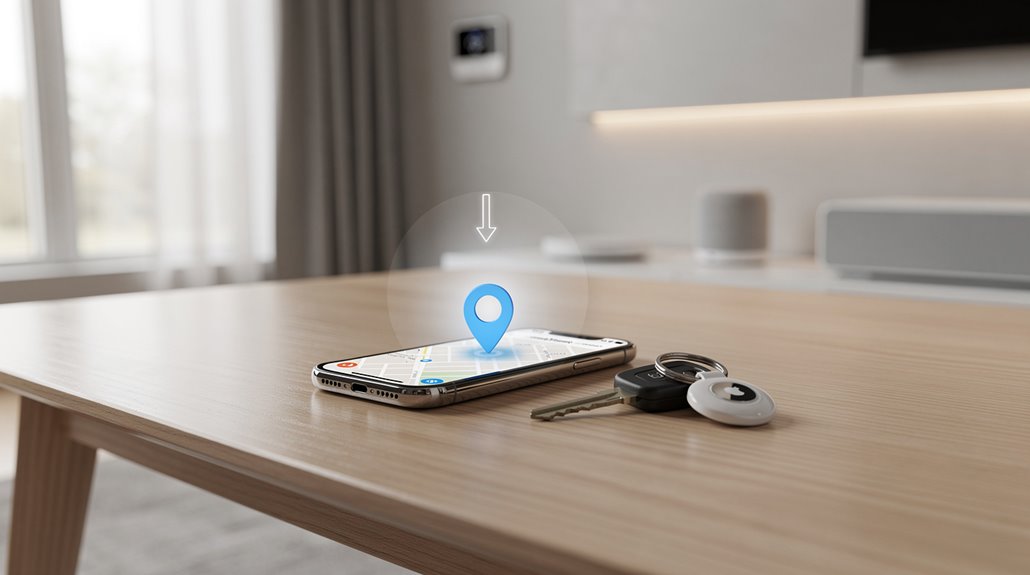
AirTags, Apple’s gleaming panopticon in a shiny shell, masquerade as humble key finders while ushering in an era of consensual surveillance. Sporting a U1 chip and encrypted cloud lockboxes, they track belongings—and by extension, your every clandestine move—via a global hive of hapless iPhones. Their politely termed “privacy architecture” barely conceals the corporate lust for control, wrapped in convenient water resistance and quaint engraving choices. Intrigued? The layers behind this Orwellian bauble are as insidious as they are fascinating.
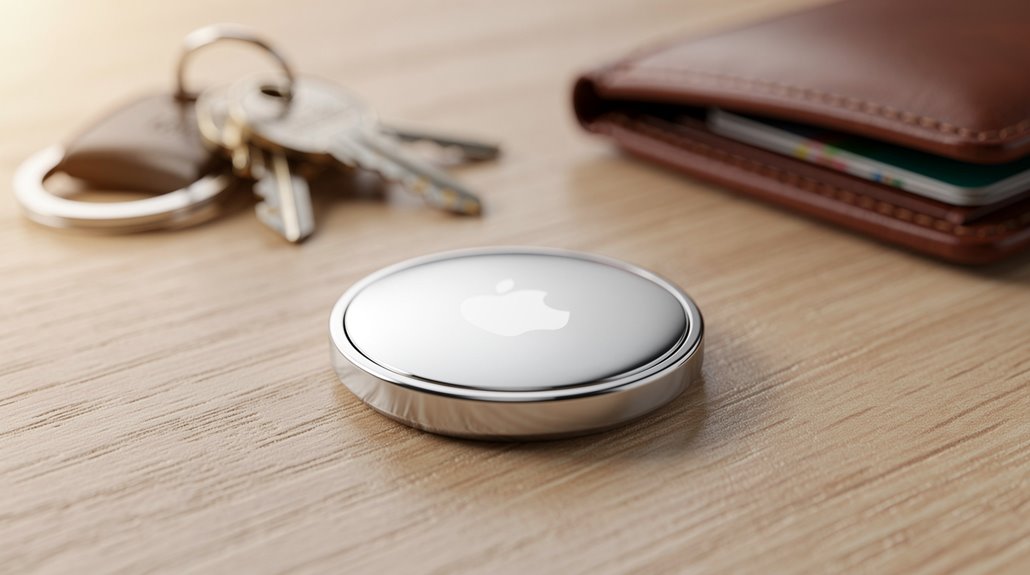
In an era when privacy has become the punchline rather than the premise, Apple’s AirTags emerge as the quintessential symbol of technological hubris masquerading as convenience. These innocuous little discs—precisely 1.26 inches of polished stainless steel arrogance weighing 0.39 ounces—are designed to babysit your forgotten keys or perpetually misplaced wallets. Water- and dust-resistant to glorify durability (because you’ll need that resilience when drowning in existential dread), the AirTags shout their location through a built-in speaker, ensuring even the most stoic couch cushions can’t hide your shameful sloth. They come with personalization options, offering free engraving with text and emoji to make your tracker uniquely yours free engraving. Users can even share an AirTag with close friends or family, allowing a shared tracking of commonly used items to enhance collaborative searching efforts.
Beneath this gleaming veneer lurks the U1 chip, Apple’s pride, wielding Ultra Wideband technology like a magician’s wand to pinpoint your belongings with an obsessive precision that would make Orwell blush. Bluetooth Low Energy connectivity extends the stalking radius to approximately 330 feet, while NFC taps activate Lost Mode—a polite euphemism for the digital leash that binds you to Apple’s omnipresent ecosystem.
Remarkably, these devices eschew GPS and Wi-Fi, relying instead on a global Find My network that turns hundreds of millions of unsuspecting Apple devices into unwitting snitches. Android users can only detect AirTags through Bluetooth and NFC using dedicated apps like Tracker Detect, but cannot utilize the full tracking capabilities exclusive to Apple’s ecosystem.
At the heart of the AirTag lies a user-replaceable CR2032 coin cell battery, promising over a year of uninterrupted surveillance disguised as utility. No chargers clutter your life—just a beep upon activation, a solemn herald of your commodified existence. Exclusive Precision Finding, available only on purportedly advanced iPhone 11 models and later, fuses camera, accelerometer, and ARKit to map your shameful scatterbrain’s wanderings with a creepy vibrational vengeance.
Apple’s vaunted privacy architecture—stored in encrypted cloud coffins, location data eschews physical residence on the device itself, ensuring only owners have privileged access, while Bluetooth identifiers rotate like digital chameleons.
Meanwhile, iOS devices politely warn you if an unknown AirTag tracks your route, a half-hearted gesture in a dystopia already brimming with convenience-bound betrayal. Welcome to the brave new world of AirTags, where losing things means never truly being lost but eternally surveilled.
Frequently Asked Questions
Can Airtags Work With Android Devices?
AirTags have limited compatibility with Android devices, enabling detection via Bluetooth scanning apps and NFC for identification. However, full tracking features, real-time updates, and setup require Apple’s ecosystem, restricting Android users to basic locating functions only.
How Long Does an Airtag Battery Last?
An AirTag battery typically lasts about one year under normal use, including daily sound plays and location requests. Actual lifespan varies due to usage intensity, environmental conditions, and battery quality, with timely monitoring recommended via the Find My app.
Are Airtags Waterproof or Water-Resistant?
AirTags are water-resistant, not waterproof. They withstand splashes, rain, and brief submersion up to 1 meter for 30 minutes. Resistance degrades over time; extended water exposure or deeper immersion increases damage risk considerably.
Can Multiple Airtags Be Used on One Item?
Multiple AirTags can be attached to a single item and tracked simultaneously via one Apple ID. Each AirTag requires individual setup, enabling redundancy and enhanced tracking, but ownership and sharing require separate activation and account management protocols.
What Happens if Someone Finds My Lost Airtag?
When someone finds a lost AirTag, they can tap it with their device to access a custom URL showing contact information. Instructions for disabling tracking are provided, ensuring privacy while enabling the owner to receive location updates through the Find My network.
References
- https://www.apple.com/newsroom/2021/04/apple-introduces-airtag/
- https://www.qvc.com/footers/el/pdf/E320061_AppleAirTag.pdf
- https://www.apple.com/airtag/
- https://www.safewise.com/apple-airtag-faqs/
- https://discussions.apple.com/thread/254768486
- https://en.wikipedia.org/wiki/AirTag
- https://www.youtube.com/watch?v=9lqFxKeMB3I
- https://www.apple.com/shop/buy-airtag/airtag/4-pack
- https://www.airdroid.com/android-tips/can-you-use-airtag-with-android/
- https://www.rokform.com/blogs/rokform-blog/can-you-use-airtag-with-android