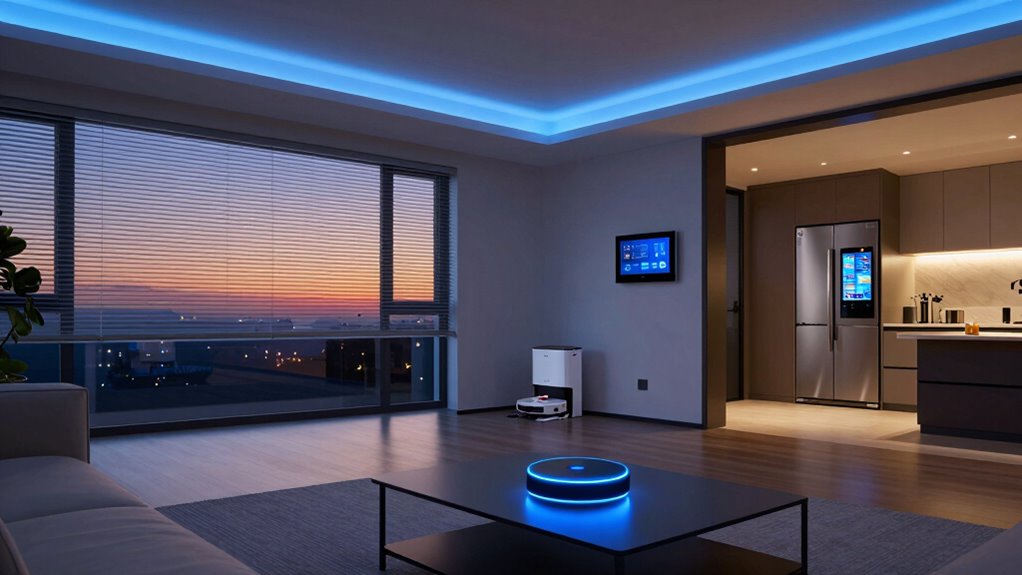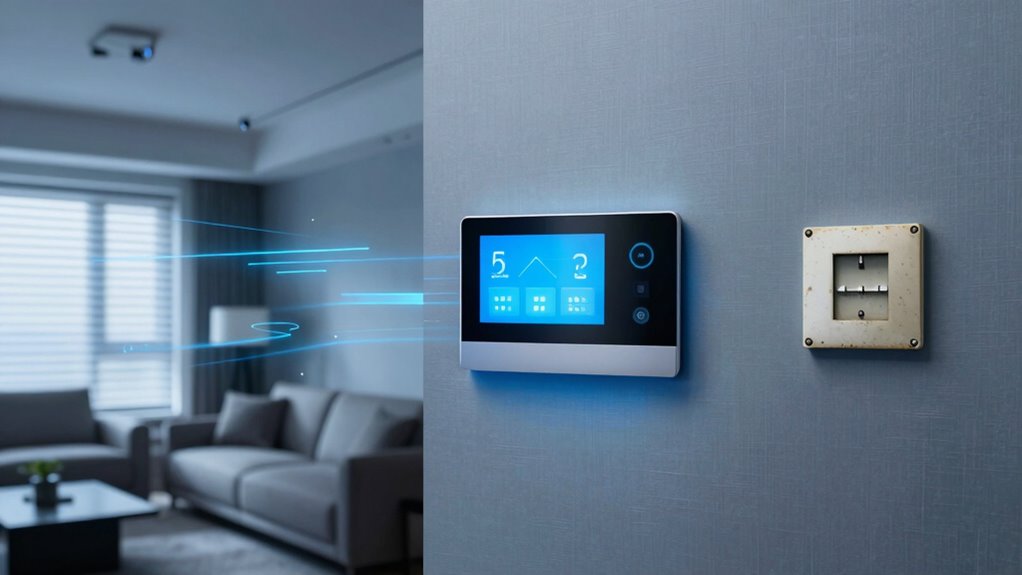

The convergence of IoT infrastructure, artificial intelligence, and consumer demand for automation is propelling the global smart home market through a period of substantial expansion, with 2025 baseline valuations ranging from USD 59.8 billion to USD 216.3 billion depending on methodological scope and segment inclusion.
Industry forecasts project the market will reach between USD 142.2 billion and USD 1.03 trillion by 2035, with compound annual growth rates spanning 8.5 percent to 20.47 percent, reflecting consensus on sustained double-digit expansion despite variance in analytical frameworks and segmentation approaches.
Rising adoption of Internet of Things devices and artificial intelligence integration serves as the primary catalyst for market acceleration, enabling context-aware automation and predictive control across residential environments.
Energy efficiency imperatives are driving replacement cycles for smart meters, thermostats, lighting systems, and irrigation controllers, while enhanced internet penetration, 5G network rollout, and robust Wi-Fi infrastructure provide the connectivity foundation necessary for reliable multi-device ecosystems.
Consumer emphasis on safety and security is simultaneously boosting demand for smart locks, surveillance cameras, and access control solutions that offer remote monitoring capabilities. The safety and security segment is expected to record the highest compound annual growth rate among all smart home device categories during the forecast period.
Entertainment devices and smart televisions are expected to maintain revenue dominance within the device segment, supported by streaming content consumption and gaming applications, while the smart home installation services market is forecast to expand from USD 40.4 billion in 2025 to USD 184.7 billion by 2035 at an 18.4 percent CAGR, underscoring growing complexity requiring professional integration expertise.
The broader smart devices sub-market is projected to surpass USD 389.8 billion by 2035 as sensor costs decline and connectivity standards mature.
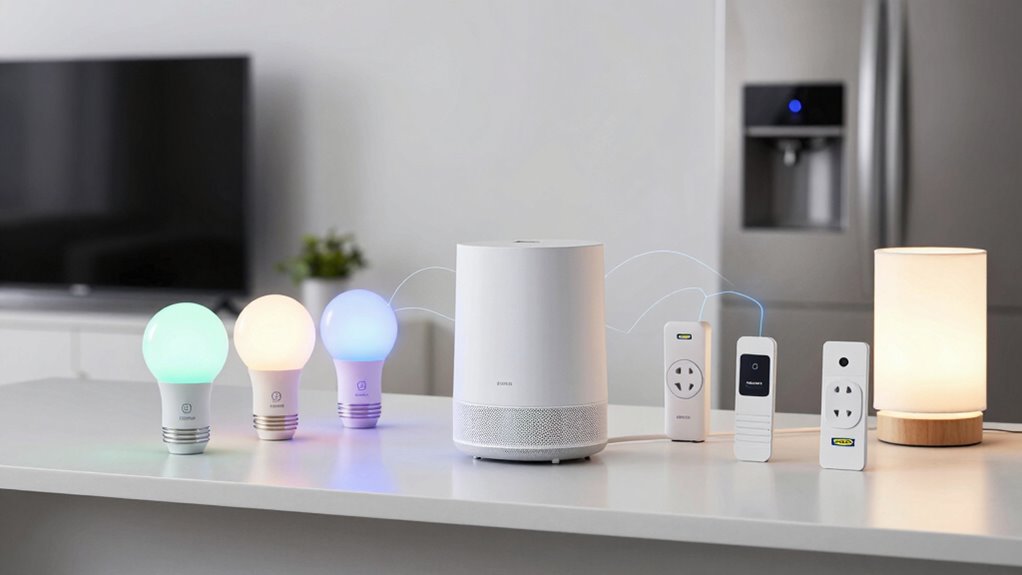
Communication protocol evolution represents a critical enabler, with Wi-Fi, Zigbee, Bluetooth, Matter, and NFC technologies providing the interoperability framework essential for multi-brand device integration.
The Matter standard specifically is anticipated to reduce ecosystem fragmentation and simplify cross-platform compatibility, lowering adoption barriers for mainstream consumers. Matter’s implementation of local-first architecture significantly enhances privacy by minimizing cloud dependency while maintaining robust device security through mandatory encryption protocols.
Advanced sensor technologies and IoT chipsets are enabling automated control of HVAC, lighting, and appliance systems, facilitating the shift from isolated point solutions toward fully integrated, AI-enabled home ecosystems particularly within premium residential and new-construction segments. Wireless protocols are projected to command a 55.8 percent market share in 2025, driven by flexibility, scalability, and cost efficiency advantages over wired alternatives.
References
- https://www.expertmarketresearch.com/reports/smart-home-market
- https://www.futuremarketinsights.com/reports/smart-home-market
- https://www.rootsanalysis.com/smart-home-market
- https://www.vynzresearch.com/ict-media/smart-home-market
- https://www.researchandmarkets.com/report/smart-home
- https://www.globenewswire.com/news-release/2025/06/16/3099626/28124/en/Smart-Home-Market-Industry-Trends-and-Global-Forecasts-Report-2025-2035-Entertainment-Devices-Continue-to-Dominate-Wireless-Protocols-Capture-Majority-Share-Proactive-Software-Lead.html
- https://www.researchnester.com/reports/smart-home-installation-service-market/8251
- https://www.vantagemarketresearch.com/industry-report/smart-home-market-1063
- https://www.iotinsider.com/smart-home/smart-home-devices-market-to-surpass-389-8bn-by-2035/