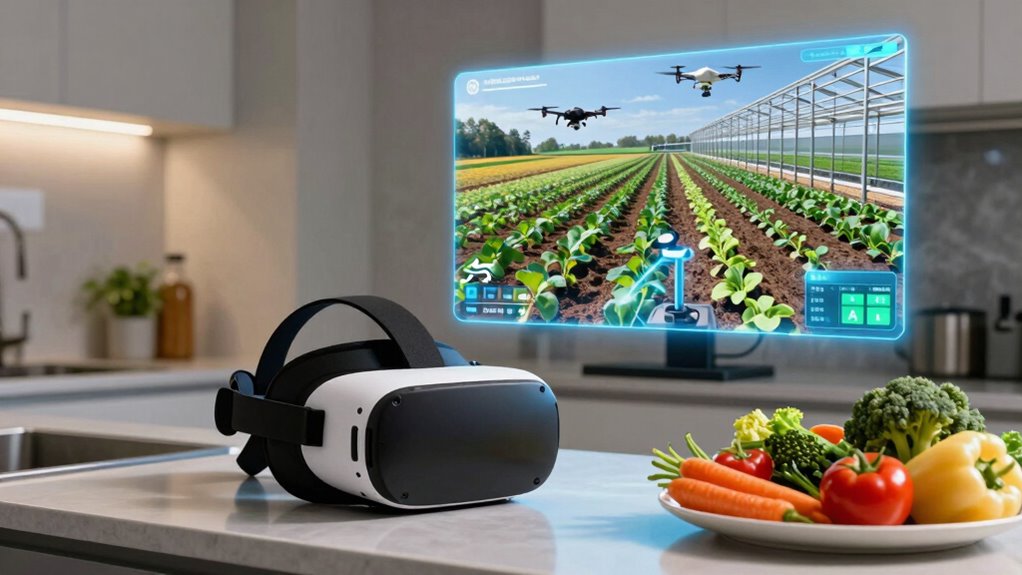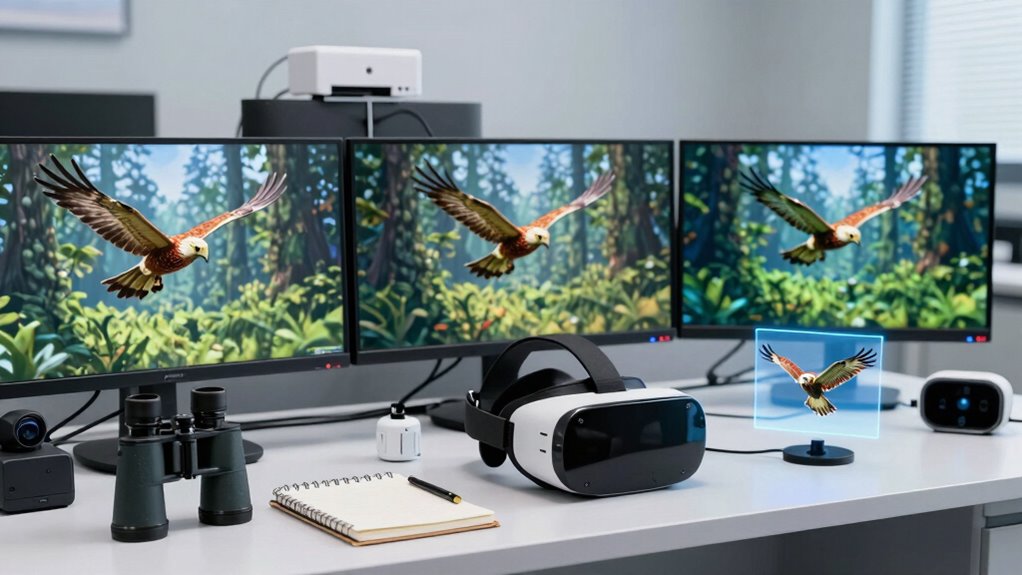
While you’re probably used to slouching on the couch playing VR games about shooting robots or racing dragons, some clever researchers have flipped the script—using virtual reality to help sea turtles, wild dogs, and even forests get a little more love. This isn’t your average gaming session—it’s immersive learning with a mission. Scientists are now turning bird-watching and wildlife research into full-on VR adventures, letting students hop into the lives of animals instead of just reading about them in dusty textbooks. As technology advances, these educational systems might incorporate household robot assistants that help manage and maintain VR equipment in schools by 2030.
Imagine swimming as a loggerhead sea turtle, feeling the ocean currents tug at your flippers—yeah, that’s real, and it actually works. Studies show that when people embody a single endangered animal in VR, they donate more cash to save it. Weirdly, showing seven victims instead of one made people less generous—compassion kinda… fades. But toss them into a turtle body? Boom, empathy spikes. The magic happens through something called body transfer, where your brain goes, “Wait, am I a turtle now?” And suddenly, you care way more.
Swim as a sea turtle, feel the current tug—suddenly, you care. Body transfer doesn’t just trick your brain, it sparks real empathy and action.
It’s not just turtles. At Edinburgh Zoo, teens using VR to visit African wild dogs said it felt like they were right there, breathing the same air. Adults thought it was fun, sure, but also kind of mind-blowing—like a field trip without the smelly bus ride. Interviews revealed that VR beat regular videos when it came to making people feel connected, informed, and ready to act. VR documentaries evoke stronger feelings of presence compared to 2D videos. This enhanced connection may stem from the immersive technology allowing deeper emotional and educational engagement.
And here’s the kicker: combining VR with AI and satellite tech turns conservation into a high-tech detective game. Computers scan forests in 3D, listen for changes in bird calls, even predict wildfires. One AI nailed 93% accuracy spotting blazes from just 200 training pics. Meanwhile, augmented reality in zoos quietly scolds visitors for dropping trash—because apparently, penguins don’t love plastic straws.
Sure, some studies have small sample sizes—blame that on VR headsets being pricey—but the mood boost, the learning gains, the donations? Real. This isn’t just entertainment; it’s conservation technology slipping on a superhero cape.
References
- https://pmc.ncbi.nlm.nih.gov/articles/PMC9019095/
- https://www.nathab.com/blog/ai-and-vr-for-natures-future
- https://www.animalbehaviorandcognition.org/article.php?id=1292
- https://www.frontiersin.org/journals/virtual-reality/articles/10.3389/frvir.2022.952073/full
- https://dukespace.lib.duke.edu/bitstreams/0c11dbd7-6096-4925-b69d-0404eef9fe6c/download
- https://stories.tamu.edu/news/2025/07/29/nature-inspired-virtual-reality-boosts-emotional-well-being-in-older-adults-living-with-dementia/
- https://www.nature.com/articles/s41598-024-78970-7
- https://www.ejmste.com/article/utilization-of-virtual-reality-as-a-learning-tool-to-increase-students-pro-environmental-behavior-at-15654
- https://www.jzar.org/jzar/article/view/821?articlesBySimilarityPage=5