Apple’s design empire—already reeling from Jony Ive’s 2019 defection and reduced to hawking incremental iOS refinements as revolutionary breakthroughs—just hemorrhaged Alan Dye, the VP of Human Interface Design who spent a decade crafting the company’s visual identity, including the Vision Pro headset nobody bought and the “Liquid Glass” interface that was supposed to make us forget Apple hasn’t had an original idea since the AirPods.
Dye officially joins Meta on December 31, 2025, bringing along senior director Billy Sorrentino in what amounts to a talent exodus that would make Tim Cook weep into his turtleneck collection if he possessed human emotions.
Meta installed Dye as Chief Design Officer reporting to Andrew Bosworth, the CTO overseeing Reality Labs, where he’ll command existing design leaders Joshua To, Jason Rubin, and Peter Bristol in a new studio focused on hardware, software, and AI integration.
Meta’s new design studio consolidates hardware, software, and AI under Dye’s command—because fragmented mediocrity apparently wasn’t working fast enough.
The mandate is clear: make Meta’s wearables less embarrassing than the metaverse pivot that torched $46 billion in shareholder value while Zuckerberg cosplayed as a tech visionary.
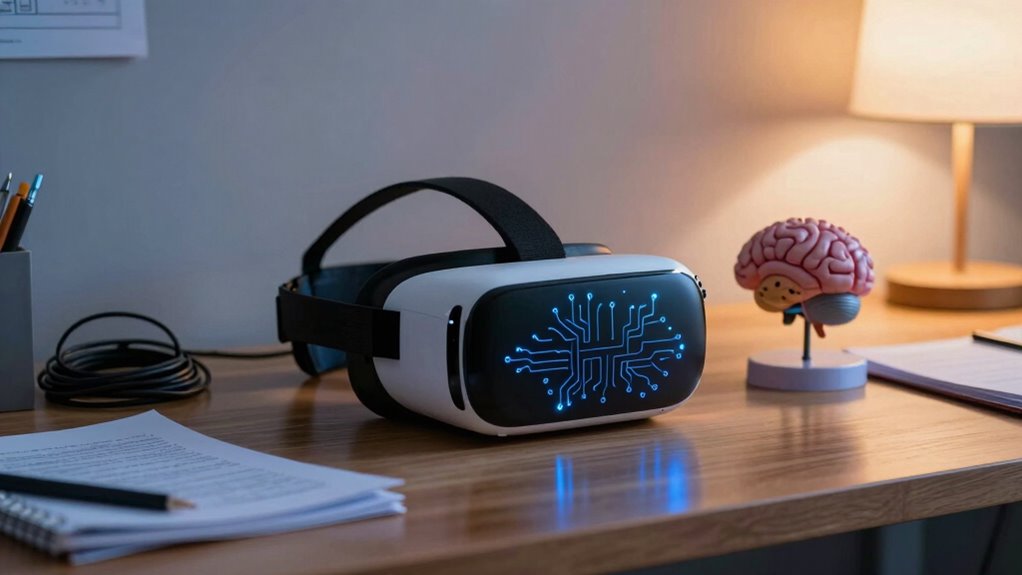
The stakes are substantial given Reality Labs’ $370 million Q2 2025 revenue and 73 percent global market share in wearables, though Meta’s dominance faces Android XR’s expanding ecosystem featuring Samsung’s Galaxy XR headset and smart glasses partnerships designed to challenge Quest’s Horizon OS monopoly. Meta’s current product lineup spans the Quest, Ray-Ban Meta, and Oakley Meta lines, but Google and Samsung’s collaborative assault threatens to erode that commanding position.
Meta allocated $66 billion in 2025 capital expenditure toward AI and hardware R&D, financial commitment that enables strategic talent acquisition like poaching Dye to develop interfaces where mixed reality blends seamlessly with physical environments.
Liquid Glass represents precisely this design philosophy—creating consistency frameworks maintaining familiar interaction patterns across device models while scaling complexity for all-day wearable computing. The company hopes to implement local-first control principles from the Matter standard to ensure reliable device operation without continuous internet dependency.
That Meta requires in-person demonstrations for Ray-Ban Display smart glasses reveals how desperately they need Dye’s expertise translating novel technology into intuitive consumer experiences, the kind Apple once delivered before settling into premium mediocrity.
The exodus compounds Apple’s leadership crisis as remaining executives near retirement age while Johny Srouji and Lisa Jackson reportedly evaluate their futures at a company whose design culture once defined its identity.
Stephen Lemay inherits Dye’s Apple role after twenty-six years at the company, presumably tasked with designing iOS 27’s groundbreaking font size adjustment feature while pretending Cupertino still leads innovation rather than following Samsung’s homework assignments.
References
- https://www.androidauthority.com/meta-hires-apple-design-boss-3621913/
- https://www.hindustantimes.com/business/apples-top-designer-alan-dye-poached-by-meta-platforms-in-major-coup-101764810409872.html
- https://virtual.reality.news/news/meta-recruits-liquid-glass-ar-designers-for-next-gen-ui/
- https://www.bgr.com/2042699/meta-hired-apple-top-design-executive-alan-dye/
- https://siliconangle.com/2025/12/03/apples-longtime-design-head-alan-dye-joins-meta-lead-new-creative-studio/