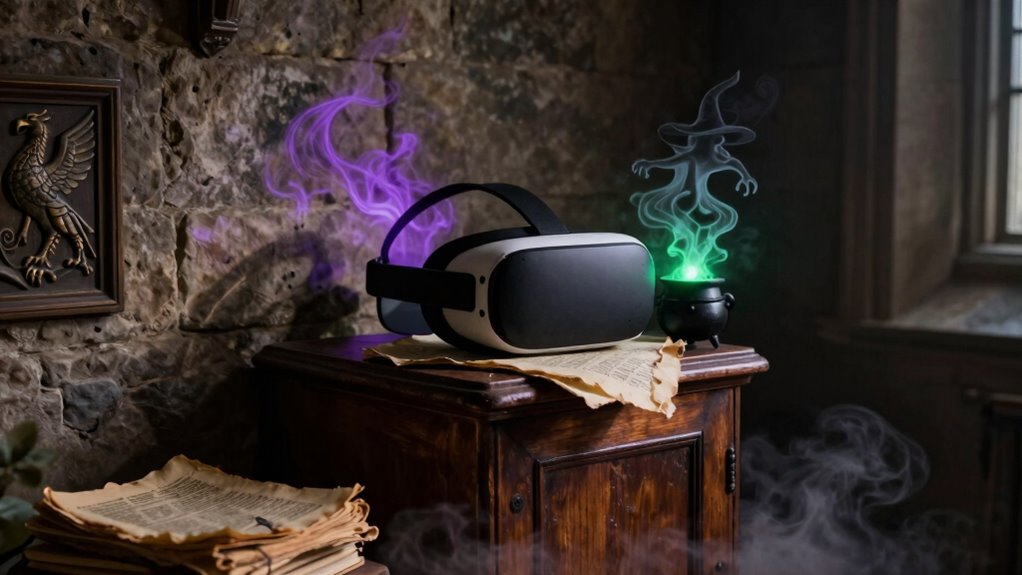

A multidisciplinary team at the University of Guelph, led by theatre professor Kuling, has developed the Macbeth VR Experience, an innovative educational platform that enables users to embody one of the three witches from Shakespeare’s Macbeth through immersive virtual reality technology. Funded by a 2023 eCampusOntario grant and building upon a prior Hamlet VR Experience, this project leverages advanced virtual learning environments to offer a solo, interactive experience. Participants assume the witches’ perspectives, casting spells and engaging directly with the narrative, thereby enriching comprehension of Shakespeare’s work beyond conventional reading or viewing methods. This continuation of the Hamlet VR project signifies an ongoing commitment to blending classic literature with modern technology. The project explores themes similar to those found in Lili, a contemporary game reimagining witches as hackers, reflecting on power and control in both the digital and theatrical realms through modern reinterpretations.
The user experience is designed with meticulous attention to historical accuracy and atmospheric immersion, incorporating environmental details unattainable on traditional theatrical stages. The VR setting situates users within a stone gazebo adorned with gryphon carvings—an homage to the University of Guelph—while a limited color palette and minimalist visual designs mitigate sensory disorientation common in extended VR sessions. Similar to how homeowners must consider privacy regulations when installing security cameras, developers ensured the VR experience respects appropriate boundaries while still providing an engaging perspective.
Meticulous historical accuracy and immersive design transform Shakespeare’s world, balancing rich detail with comfort for extended VR engagement
Dynamic visual elements, such as changing sunrises, support repeated engagement, enhancing cognitive retention and providing varied interpretative angles on Macbeth’s themes and characters.
Under Kuling’s direction, the development team collaborated with SimWave through eCampusOntario’s Ontario Exchange, integrating expertise from theatre practice and new media. Voice acting is supplied by University of Guelph theatre graduates, ensuring professional performance quality.
The design process drew inspiration from 1980s and 1990s video games, merging nostalgic aesthetics with cutting-edge VR hardware to optimize both accessibility and immersion. Technical features include an interactive compass to assist spatial orientation within the virtual environment, demonstrating a deliberate balance between immersion and user navigability.
Educational objectives focus on surmounting the linguistic challenges posed by early modern English, aiming primarily at high school audiences to make Shakespeare’s complex text more accessible and engaging. By embedding learners within the narrative and enabling active participation from the witches’ vantage point, the platform bridges the gap between textual study and theatrical experience, fostering repeated exploration of Macbeth through a compelling, atmospheric medium.
The project anticipates deployment as an online educational tool post-2023, positioning virtual reality as a transformative modality for performance-based learning.
References
- https://news.uoguelph.ca/2022/08/shakespeare-meets-virtual-reality-in-u-of-g-created-hamlet-experience/
- https://openlibrary-repo.ecampusontario.ca/xmlui/handle/123456789/2054
- https://www.rsc.org.uk/news/macbeth-inspired-video-game-lili
- https://www.youtube.com/watch?v=l4MaHs1jXmI
- https://tophermaraffi.com/2023/03/08/ubvr-marionette-theatre/
- https://www.uoguelph.ca/arts/college/news/theatre-studies-prof-reimagines-theatre-through-virtual-reality-experience
- https://www.jsonline.com/story/entertainment/arts/2017/04/07/marquette-3d-lab-adds-virtual-ghosts-and-witches-macbeth/99979910/