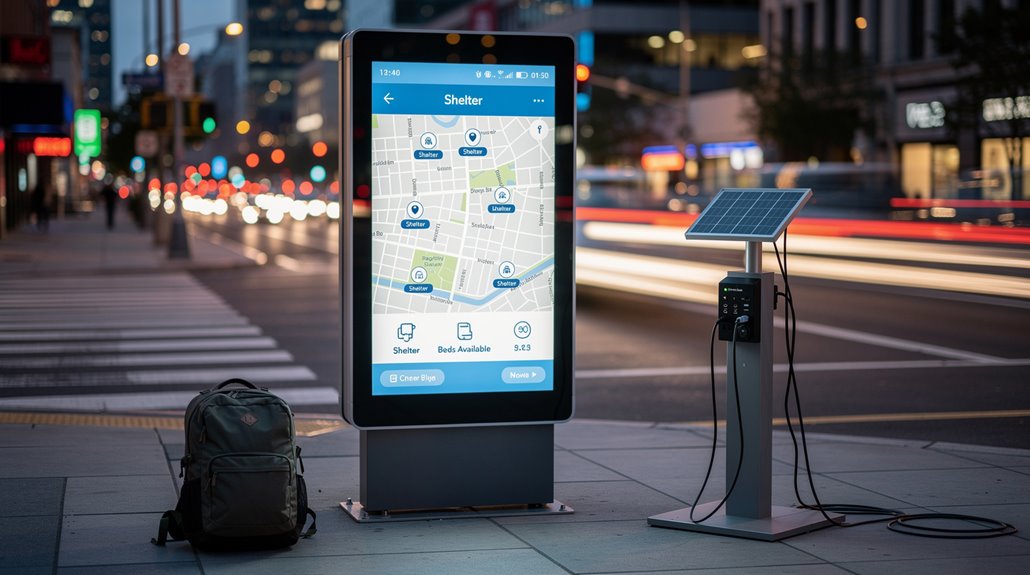

As homelessness in the United States reaches crisis proportions—with the 2023 HUD Point-in-Time count documenting 653,104 people experiencing homelessness, approximately 40 percent of whom are unsheltered—municipal agencies, nonprofits, and federal partners are deploying sophisticated technology platforms to allocate scarce resources more effectively and intervene before families lose stable housing.
Technology platforms are helping cities allocate scarce homeless services more effectively as unsheltered populations approach historic levels nationwide.
Homeless Management Information Systems (HMIS) centralize client records across agencies, enabling longitudinal tracking of service utilization, outcomes, and demographic trends, while integrated data platforms such as San Francisco’s cross-agency system identify high utilizers of emergency, health, and justice systems to enable targeted interventions and evidence-based program design.
AI-enabled homeless services software analyzes patterns to flag households at risk of eviction or housing loss, supporting prevention before street homelessness occurs, and predictive models like Washington, D.C.’s hypothermia shelter demand forecasting tool use historical bed-occupancy data to optimize seasonal staffing and capacity planning.
Digital intake platforms replace paper forms, standardizing vulnerability assessments and reducing data-entry errors to accelerate placement into shelter, housing, employment, and health services. Centralized client histories eliminate the need for individuals to repeatedly share traumatic details, reducing duplicate efforts and allowing case managers to spend less time on paperwork and more time on direct service delivery.
Centralized coordinated entry systems rank vulnerability and match individuals to limited housing resources more transparently and efficiently than fragmented first-come processes, while real-time dashboards provide program managers visibility into performance metrics, service gaps, and seasonal spikes to inform data-driven policy and funding decisions.
Shared electronic care plans allow shelters, outreach teams, health systems, and housing providers to align around common goals and avoid duplicative or conflicting services, with role-based access controls and encryption supporting HIPAA compliance while enabling cross-agency collaboration. Voice-activated technology similar to Alexa+ could offer homeless individuals a more personalized assistant experience for accessing services and maintaining connections with support systems.
Washington, D.C. deployed an ArcGIS Survey123 tool enabling shelters to log hourly bed availability, populating a live dashboard accessible to transport drivers that specifies men-only, women-only, youth, and bunk-type options to improve matching and reduce placement mismatches. The jurisdiction operates under a right-to-shelter mandate that guarantees access to temporary housing regardless of time or location, a policy especially critical during hypothermia season from November through March.
Modernized shelter-operations technology in D.C. produced measurable declines in hotline call volume, reducing dispatcher stress and reallocating staff to higher-priority tasks such as permanent housing navigation, while automation of bed counts eliminates manual tallying, increasing accuracy and freeing shelter staff time for direct client support.
References
- https://www.route-fifty.com/management/2025/02/nations-capitol-taps-data-tech-better-serve-homeless-population/403337/
- https://caseworthy.com/articles/the-growing-homeless-crisis-how-technology-is-driving-solutions/
- https://prudenceb2b.com/blog/evolution-of-technology-in-addressing-homelessness-service/
- https://datasmart.hks.harvard.edu/how-integrated-data-transforming-homelessness-response-san-francisco
- https://www.gsma.com/solutions-and-impact/connectivity-for-good/mobile-for-development/blog/introducing-sheltertech-leveraging-technology-to-support-people-experiencing-homelessness/
- https://pmc.ncbi.nlm.nih.gov/articles/PMC9734763/
- https://thehumanitarianway.org/4-innovative-solutions-paving-the-path-to-a-homeless-free-future/
- https://www.betterangels.la/halo/technology/how-can-technology-be-used-to-help-the-homeless
- https://www.fullerton.edu/bigideas/_assets/pdf/digital-homelessness-initiative.pdf