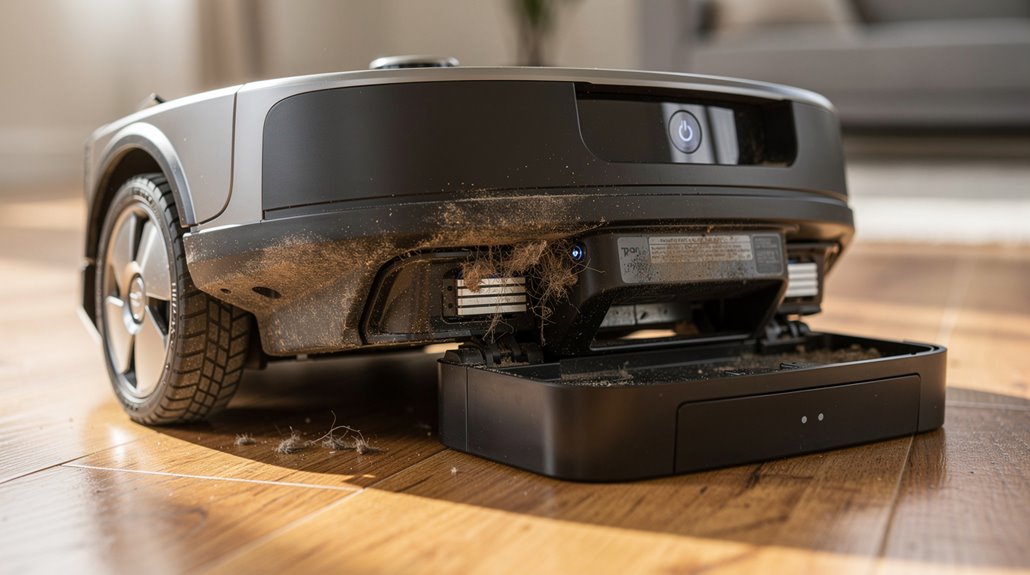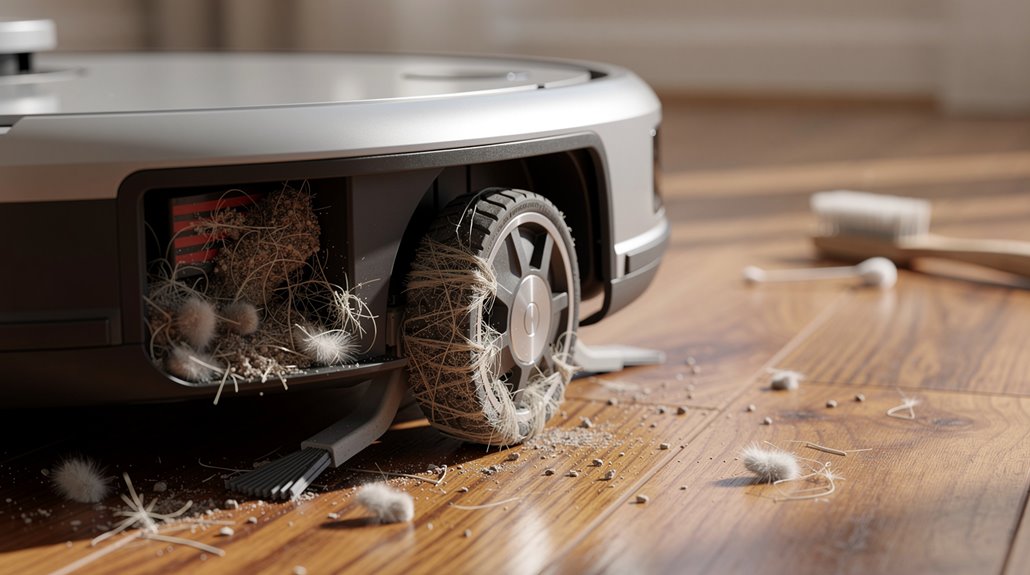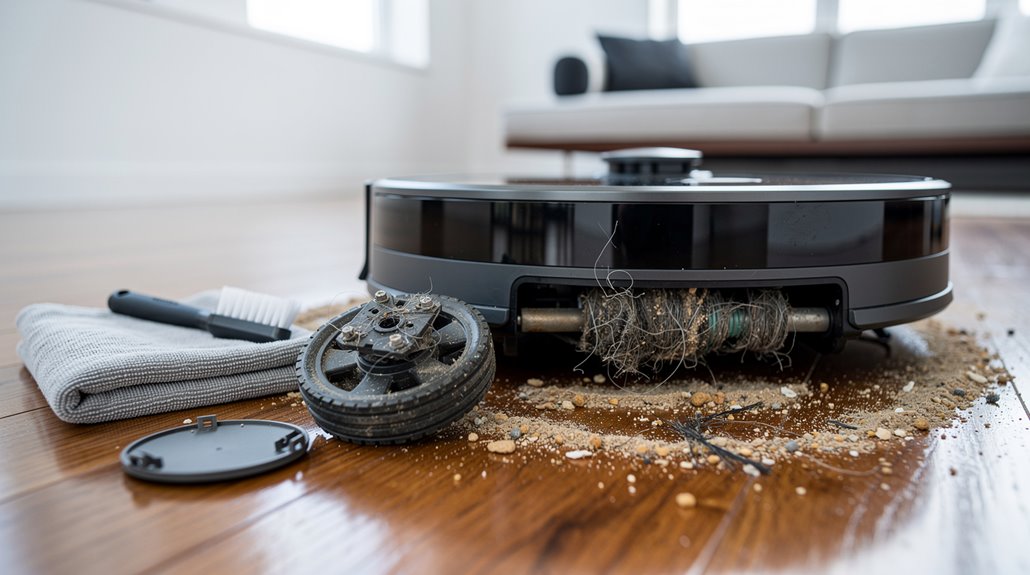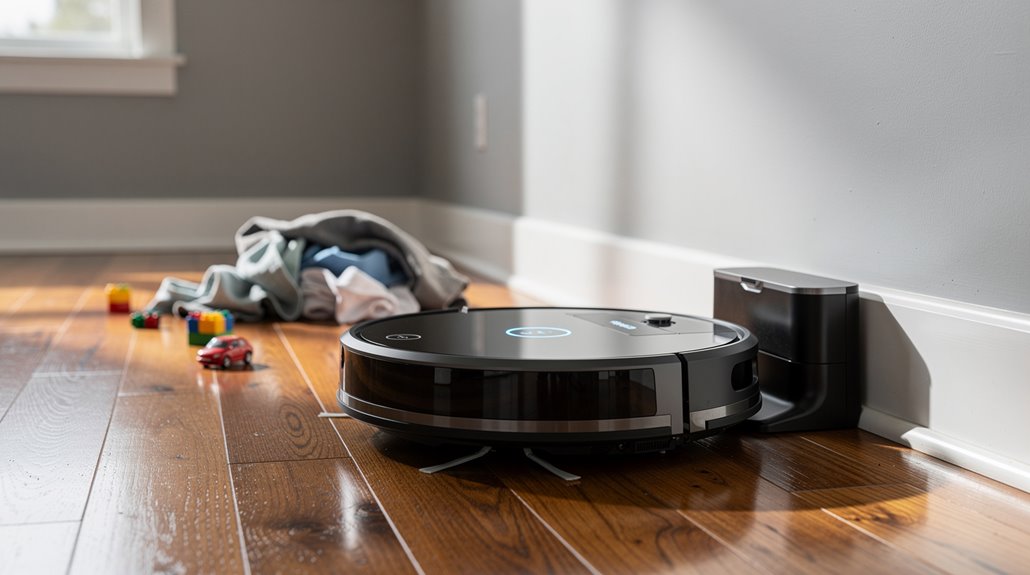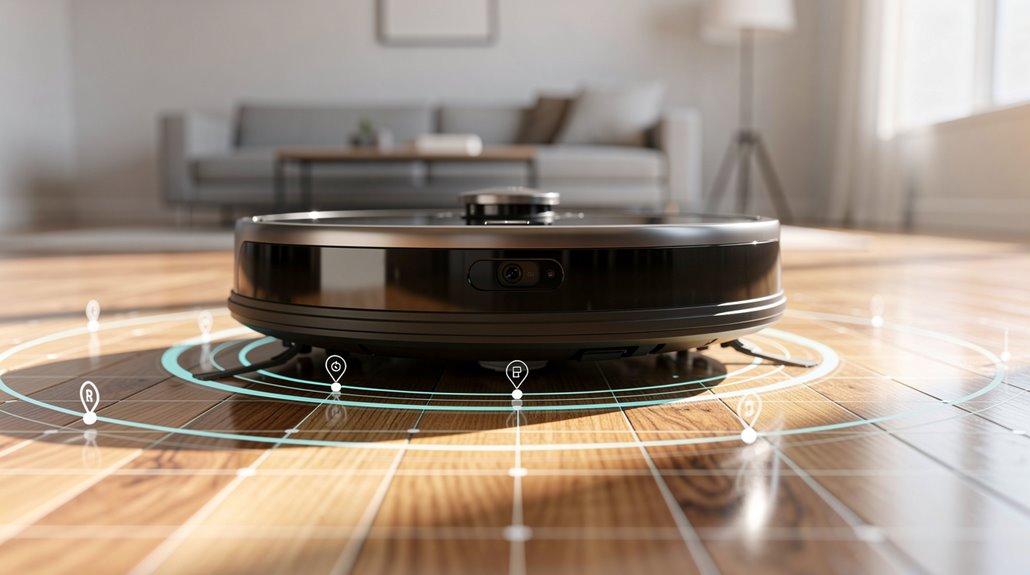
Roombas, those glorified clueless tourists of robotic cleaning, originally relied on embarrassingly simplistic algorithms—random bumbles, aimless spirals, and mindless wall-following. Their “iAdapt Responsive Cleaning Technology” barely masked a complete absence of spatial comprehension, resembling a toddler’s first steps rather than intelligent design. The Roomba 980’s 2015 upgrade—throwing in a pathetic little camera and infrared sensors—was hailed as sophistication, though still soul-free automation. For a bleak tour of this robotic farce’s slow crawl toward intelligent navigation, one need only continue onward.
Early navigation technology, firmly rooted in algorithmic simplicity, relied on iAdapt Responsive Cleaning Technology to meander in spirals and random walk angles, obdurately refusing to grasp the concept of ‘mapping.’
A reinforcing metaphor, this labyrinthine ignorance reflects both the vacuum’s and the user’s bleak capabilities: repetitive cleaning patterns and wall-following behavior that betray a lack of comprehension far more profound than any robot should suffer.
Enter the sixth generation, where upward-facing cameras and infrared floor-tracking sensors labor to enforce spatial awareness, snapping photographs of landmark waypoints like a compulsive tourist hoping to compensate for chronic disorientation—offering less randomness, more efficiency, but still no soul. The Roomba 980, introduced in 2015, was the first to combine this with adaptive navigation and visual localization capabilities using a small camera.
Frequently Asked Questions
How Long Does a Roomba Battery Typically Last?
A Roomba battery typically lasts between 1 to 3 years, depending on usage and maintenance. Runtime decreases over time, often dropping to 45 minutes after 100 charge cycles, with lithium-ion batteries offering better longevity than older NiMH types.
Can Roombas Clean Pet Hair Effectively?
Roombas effectively clean pet hair, achieving up to 99% removal across various floor types. Advanced dual brushrolls prevent tangling, while HEPA filters trap allergens. Frequent brush maintenance guarantees peak performance in homes with shedding pets.
Are Roombas Safe for Hardwood Floors?
Roombas can be safe on sealed hardwood floors with proper preventive maintenance, such as cleaning front wheels and roller brushes. However, wheel malfunctions and water-based mopping may cause scratches or moisture damage, especially on delicate or antique hardwood.
How Often Do Roomba Brushes Need Replacement?
Roomba brushes typically require replacement every 6 to 12 months, depending on wear and cleaning performance. Homes with pets or heavy usage may need more frequent replacement, while regular maintenance can extend their lifespan beyond one year.
Can Roombas Connect to Smart Home Devices?
Roombas can connect to smart home devices via Alexa, Siri, and Google Assistant. Integration requires compatible devices on the same network, enabling voice control, scheduling, and real-time management through the Roomba Home App and select models.
References
- https://en.wikipedia.org/wiki/Roomba
- https://www.therobotreport.com/wifi-enabled-roomba-980-is-irobots-smartest-robot-vacuum-ever/
- https://www.youtube.com/watch?v=VvbjP36z4V0
- https://homesupport.irobot.com/s/article/64103
- https://www.robotreviews.com/chat/viewtopic.php?t=11642
- https://shopsavvy.com/answers/what-is-the-battery-life-of-the-irobot-roomba-combo-j5+
- https://www.large-battery.com/blog/how-to-extend-your-robot-battery-life/
- https://us.narwal.com/blogs/product/how-long-robot-vacuums-last
- https://support.irobot.co.uk/s/article/7273
- https://moderncastle.com/robot-vacuums/best-roomba-for-pet-hair/