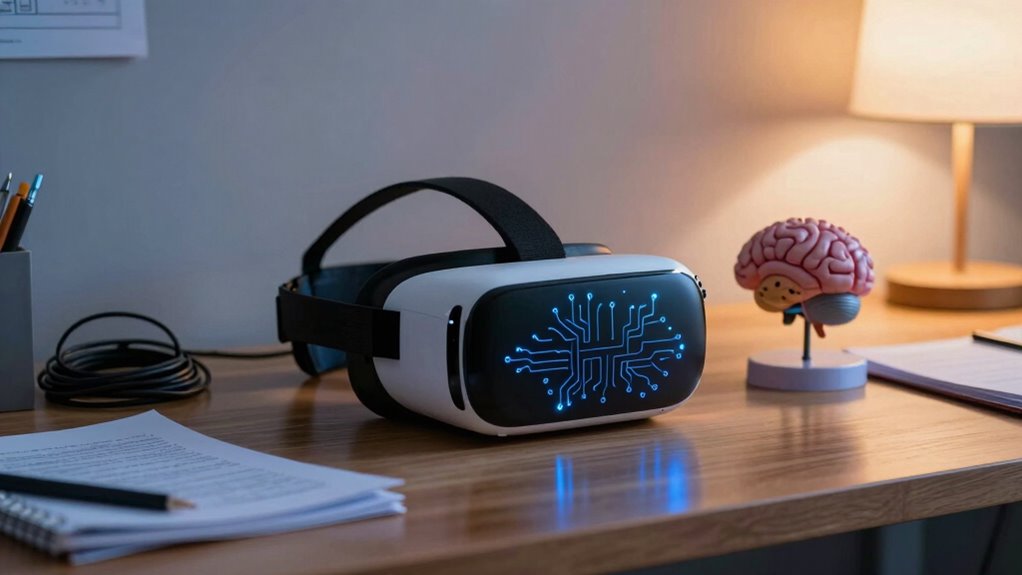
GravityXR Electronics and Technology Co. Ltd. disclosed three spatial computing chips at the Spatial Computing Summit 2025 in Ningbo, because apparently China’s tech sector wasn’t already busy enough humiliating Silicon Valley’s overpriced vaporware.
The company, founded by Wang Chaohao—a Stanford graduate who fled Apple’s extended reality unit, presumably after watching them charge $3,500 for a glorified ski mask—just demonstrated that innovation happens when you stop obsessing over shareholder dividends and actually build something.
The G-X100 flagship processor achieves photon-to-photon latency of 9 milliseconds, compared to Apple’s Vision Pro at 12 milliseconds. That’s right: the company that convinced millions they needed a $1,000 monitor stand now trails a Chinese startup backed by Yongjiang Lab, an incubator supported by Zhejiang’s provincial government.
Manufactured using 5-nanometre technology, this chip represents China’s first all-in-one mixed reality processor meeting international standards, which would be more surprising if American tech giants hadn’t spent the last decade prioritizing logo redesigns over engineering breakthroughs.
China’s first international-standard mixed reality chip: notable only because American competitors got distracted redesigning app icons.
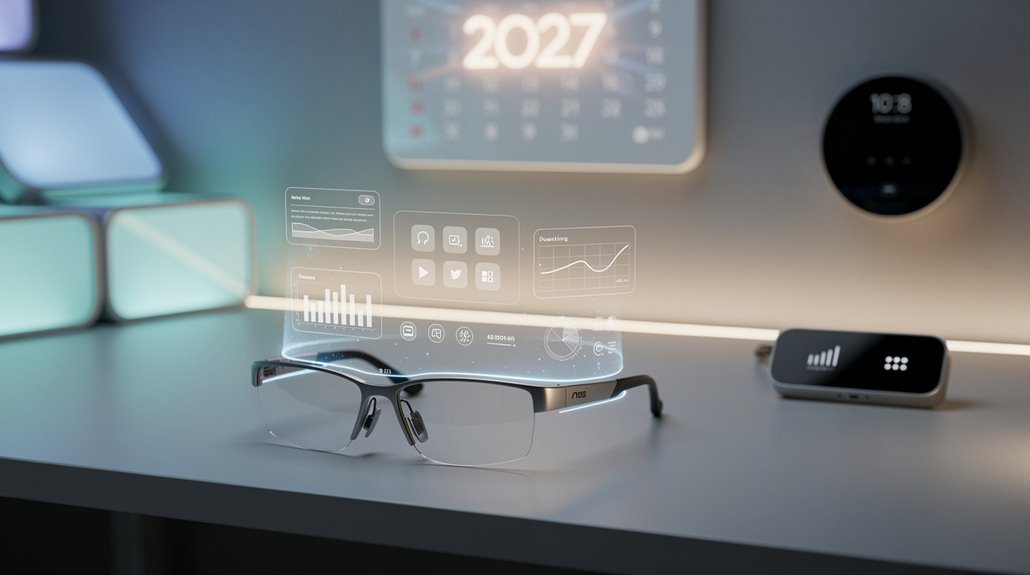
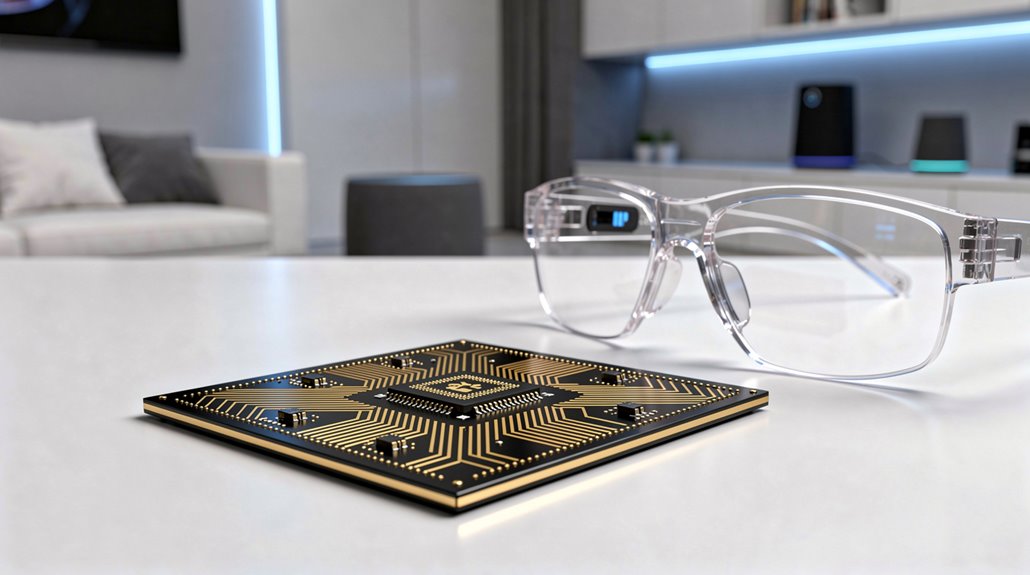
The G-VX100 fits inside standard eyeglass frames, enabling AI glasses without the aesthetic appeal of strapping a toaster to your face. Users might actually wear these devices beyond the initial unboxing Instagram photo, a revolutionary concept apparently lost on every Western headset manufacturer convinced that bulk equals premium quality.
Meanwhile, the G-EB100 specializes in rendering and display enhancement, powering applications from robotics to smart vehicles. Spatial computing—utilizing three-dimensional environmental data for virtual-real integration—finally escapes the constraints of screens that require squinting and existential dread. This technology combines real-world data with virtual environments, fundamentally transforming how computing equipment processes spatial information.
The millisecond-level latency reduces motion sickness, that charming feature plaguing VR headsets since their inception. Edge computing architecture eliminates cloud processing delays, proving that local processing isn’t just faster but perhaps preferable to streaming your visual data through servers controlled by corporations with questionable privacy commitments.
Wang Chaohao’s Stanford education paid dividends, though not for his former employer. Much like how Echo devices need Alexa to function properly, these VR headsets require GravityXR’s breakthrough chips to deliver their promised capabilities. GravityXR’s breakthrough suggests China’s spatial computing capabilities might actually deliver the lightweight, functional devices that Western companies endlessly promise during keynote presentations before shipping another overpriced disappointment. The summit, co-organized by the China Mobile Communications Association and Yongjiang Laboratory, highlighted the rapid growth potential of the country’s spatial computing industry.
References
- https://www.youtube.com/watch?v=HHYIwz_17hM
- https://www.scmp.com/tech/tech-trends/article/3335059/ex-apple-engineer-unveils-chinese-chip-rival-vision-pro-xr-headsets-ai-glasses
- https://english.news.cn/20251128/f31733bf6d57401eb7561e347d47af69/c.html
- https://news.cgtn.com/news/2025-11-28/Chinese-company-reveals-three-new-chips-to-power-spatial-computing-1IFOP6TrFRK/p.html
- https://tspasemiconductor.substack.com/p/hot-chips-2025-meta-driving-arvr
- https://www.youtube.com/watch?v=D7O4TBTM6zY