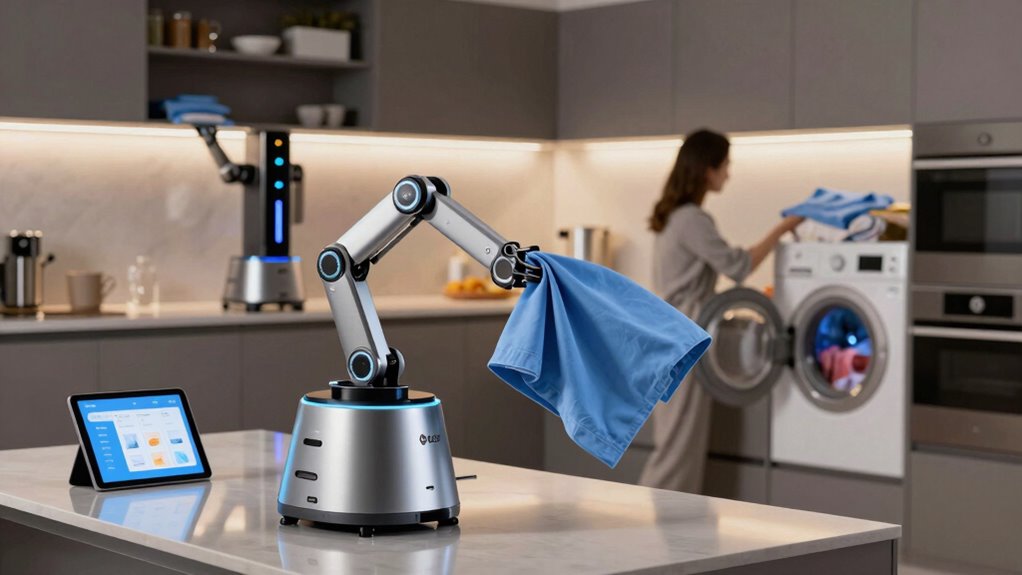
While you’re still figuring out how to fold a fitted sheet without throwing it in the trash, robots are already stepping in to save us from our laundry-induced meltdowns. At CES 2026 in Las Vegas, LG revealed its CLOiD robot, a sleek home assistant engineered to tackle everything from wiping counters to managing laundry loads, all part of a bold “Zero Labor Home” vision. This isn’t just about fancy gadgets—it’s domestic innovation in action, turning once-dreaded chores into background noise. With robot efficiency built into its programming, CLOiD handles multiple tasks, letting people actually enjoy their free time instead of scrubbing floors. Meanwhile, 1X is bringing its NEO robot to American homes starting in 2026, with plans to expand in 2027. Priced at $20,000 or a $499 monthly subscription, NEO folds clothes, tidies shelves, and even remembers your habits thanks to a powerful large language model. It’s like having a slightly overachieving roommate who never complains, streams music through its three-stage speaker, and never leaves wet towels on the bathroom floor. And with Wi-Fi and Bluetooth, it stays connected, learning more over time. Tesla’s Optimus is also leveling up—Optimus 2 is here, and Optimus 3 is on the way, targeting household cleaning with serious robot efficiency. Elon’s team isn’t playing around; these bots could soon handle dishes, lawn mowing, and more. Over at Figure AI, the new Figure 03 model moves at a snappy pace compared to its predecessor, which shuffled along at just 17% human speed. Now with Figure 2, productivity jumps, though presales aren’t open yet. Peter Diamandis predicts humanoid robots will hit public beta in select homes by 2026, costing as little as $10 a day to lease. At 40 cents per hour in labor cost, that’s a steal. With California’s minimum wage at $20/hour and China pushing robot adoption for elderly care, the momentum is real. Research indicates that by 2035, the suburban family will own between 8-15 specialized robots handling various household tasks. And with half of the world’s $110 trillion GDP potentially becoming a robot market, this isn’t just convenience—it’s a revolution. seven degrees of freedom allow LG CLOiD to perform complex household tasks with precision and adaptability. This progress is accelerating as companies adopt vertical integration to build smarter, more affordable robots from the ground up.
References
- https://interestingengineering.com/ai-robotics/lg-new-humanoid-robot-at-ces-2026
- https://johnkoetsier.com/humanoid-robots-in-homes-by-2026-peter-diamandis/
- https://www.euronews.com/next/2025/10/30/sci-fi-meets-chores-this-humanoid-robot-does-your-cleaning-but-human-may-peek-into-your-ho
- https://www.youtube.com/watch?v=Wq0n0duGL8I
- https://www.therobotreport.com/ieee-survey-sheds-light-how-ai-humanoids-will-affect-robotics-2026/