Although the concept of Virtual Agriculture utilizing extended reality (XR) technologies dates back to the early 2000s, the initial lack of sufficiently advanced hardware and software limited the precision of agricultural simulations during that period. Early explorations, such as Li’s 2008 projection of virtual reality environments for crop growing sandboxes and public education, remained largely theoretical until tools like Unity3D emerged in 2005, providing robust platforms for XR content development.
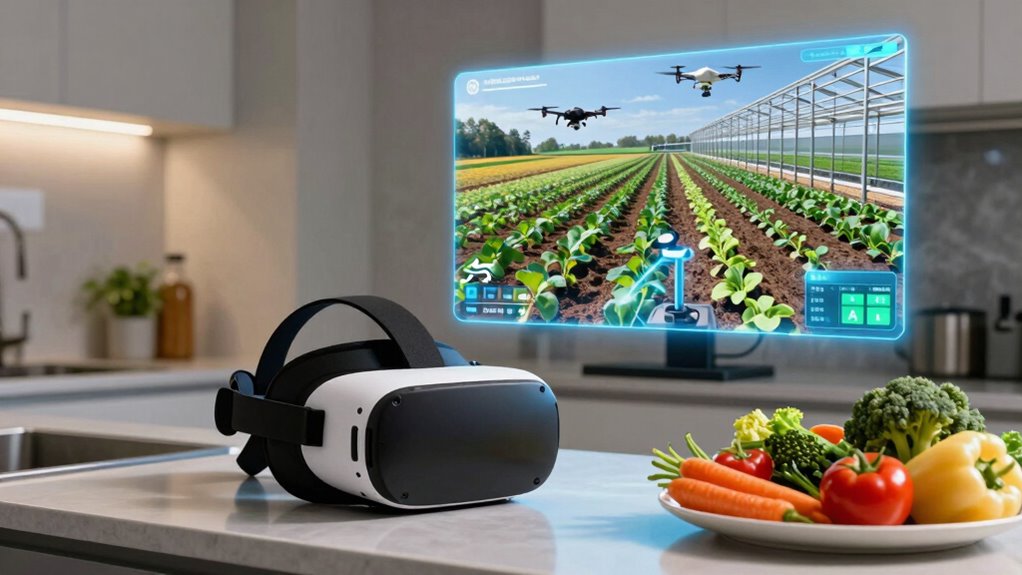
Despite these advances, realistic and immersive farm simulations only began to materialize in earnest with recent hardware improvements, exemplified by the Insta360 Camera Sphere launched in 2022, which enabled extensive 360-degree aerial imagery via drone technology, enhancing contextual agricultural visualization. Advancements in XR headsets, including the Oculus Rift, HTC Vive Focus 2, and HoloLens 2, have driven the development of these immersive agricultural experiences by improving user engagement and interactivity.
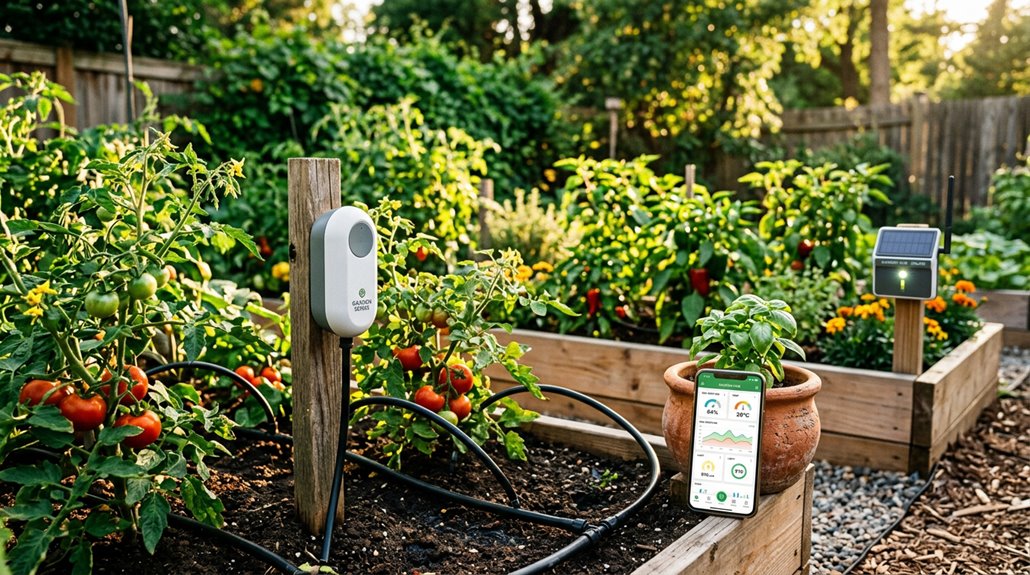
Current Applications of XR in agriculture incorporate immersive farm tours facilitated by 360-degree camera captures and Unity3D-based environments compatible with commercial VR headsets, including Oculus Go and HTC Vive Focus 2. Innovations such as Novus Res’ 2020 VR simulation target specialized training scenarios like Foot and Mouth Disease mitigation, while the Plant Vision prototype integrates mixed reality (MR) and augmented reality (AR) systems for detailed crop management, permitting real-time access to plant-specific maintenance data, including watering requirements, via MR glasses. The gamification of these crop maintenance processes has shown to increase worker approval and efficiency in agricultural tasks. Some agricultural XR applications now incorporate smart irrigation systems that automatically adjust water delivery based on real-time soil moisture and weather data, dramatically improving resource conservation.
XR enhances agriculture through immersive tours and specialized VR training for disease control and precise crop care.
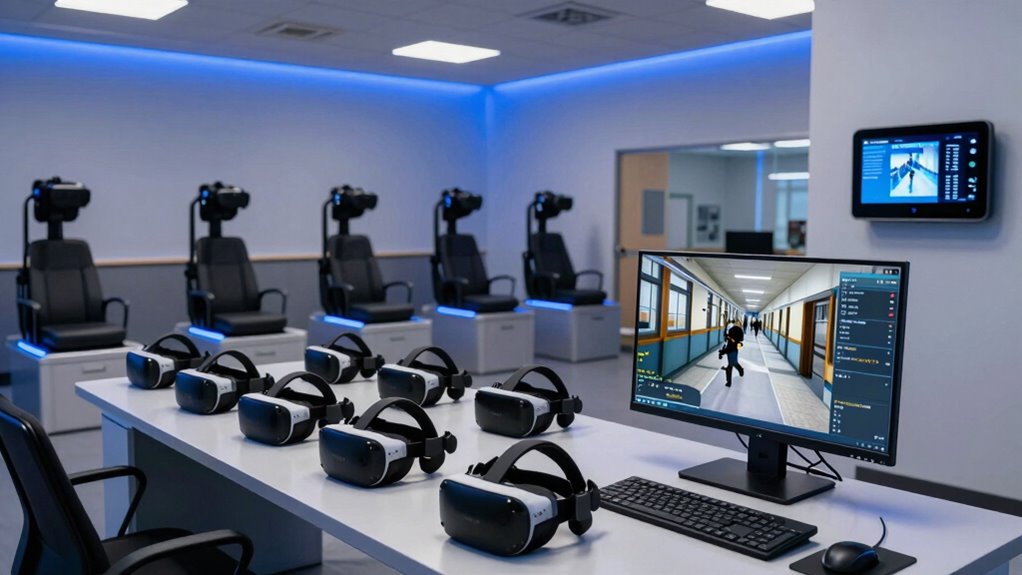
These applications demonstrate XR’s capability to deliver interactive and practical agricultural experiences tailored to both education and operational training purposes. Training uses capitalize on XR’s ability to replicate complex agricultural workflows, encompassing disease inspection procedures, biosecurity protocols, and stakeholder interviews through digital twin simulations that mirror real-world settings.
Metaverse environments facilitate meat processing employee training in controlled virtual spaces, greatly reducing the need for physical field presence. Additionally, platforms such as FarmVR generate solutions designed to educate users on food provenance while stimulating interest in agricultural careers, emphasizing remote accessibility and immersive learning.
Agritourism and urban agriculture leverage XR to broaden engagement and knowledge dissemination. Virtual Harvest and Harvest 360 offer customizable farm tours and virtual field flights, enhancing accessibility to farming experiences without geographical constraints.
Cornell University’s development of a high-resolution 3D Red Hook Farms model, accessible via VR headsets or mobile devices, incorporates ambient sounds and instructional multimedia to support urban agricultural education and peer learning, thereby bridging gaps in farm knowledge within urban populations. The increasing integration of XR technologies in agricultural education programs reflects a growing recognition of their value in enhancing learning outcomes and workforce preparedness.
References
- https://think.digital/2023/10/how-xr-technologies-are-being-used-in-agriculture/
- https://lymanorchards.com/virtual-harvest-enhancing-agritourism-through-vr-experiences-for-a-global-audience/
- https://cals.cornell.edu/news/2022/02/virtual-reality-farm-tour-expands-access-urban-agriculture
- https://news.sustainability-directory.com/news/virtual-reality-farming/feed/2/
- https://www.agritecture.com/blog/the-potential-of-virtual-reality-in-agrifood-and-consumer-behavior
- https://masujournal.org/view_journal.php?id=540
- https://farmvr.com
- https://dive.oregonstate.edu/virtual-reality-field-experiences