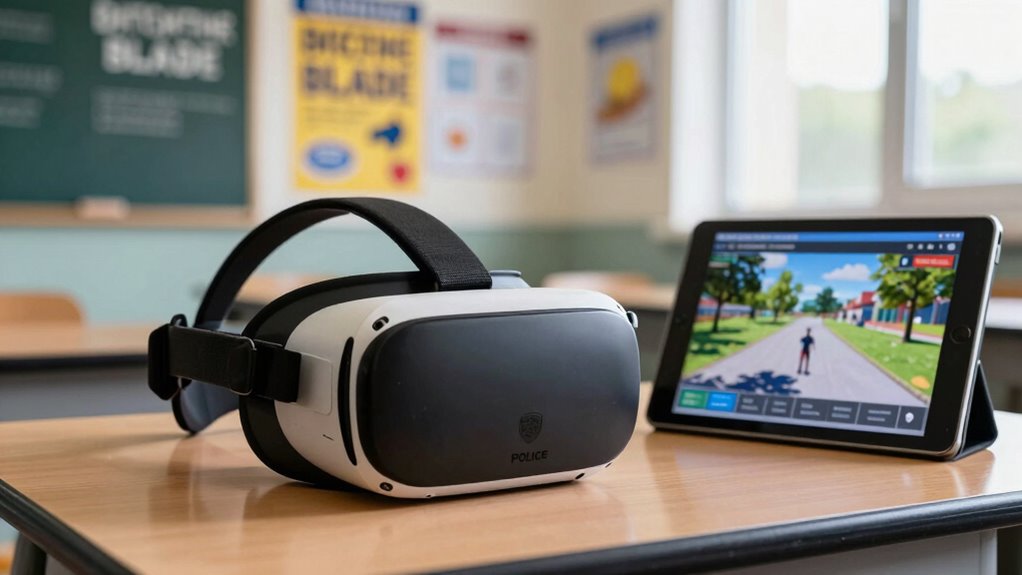
In an effort to proactively address the prevalence of knife carrying among young individuals, Staffordshire Police has integrated virtual reality (VR) technology within its DitchTheBlade campaign, targeting year seven students across selected schools in Staffordshire and Stoke-on-Trent. This initiative is designed to immerse approximately 500 students in a three-day educational programme during the current year, focusing on students aged over ten.
Selection criteria for participating schools are determined by local policing teams based on regional assessments, ensuring targeted intervention in areas exhibiting heightened concerns regarding youth knife possession. This approach helps to create a safe environment for young people by addressing specific community needs (community engagement).
Local policing teams select schools for targeted intervention based on regional assessments of youth knife possession concerns
Deployment of advanced VR headsets, provided by the Youth Offending Service in collaboration with the Violence Reduction Alliance (VRA), enables participants to engage with interactive scenarios simulating decision-making processes related to knife carrying. These headsets, procured through VRA as two extensive Personal, Social, Health and Economic (PSHE) education programmes, were developed by the organization Round Midnight under the Virtual_Decisions framework. These immersive programs are specifically designed to educate children and young people in Staffordshire and Stoke-on-Trent on critical social issues (Virtual Reality in Education).
By enabling users to confront realistic consequences—including criminal records, physical injury, or fatality—the technology facilitates experiential learning without exposure to actual harm.
The educational content places participants in varied situational contexts—such as traversing environments like parks associated with known conflicts—thus allowing them to experience firsthand the potential ramifications of criminal activity within a controlled virtual setting. Similar to how Amazon’s Alexa utilizes AES-256 encryption for data protection, these VR systems ensure student interactions remain secure and confidential.
Decision outcomes are subsequently debriefed through classroom discussions, focusing on themes including gang culture, criminal exploitation, antisocial behaviour, and peer pressure associated with weapon carriage. This extensive approach promotes empathy and an enhanced understanding of the broader impacts inherent in such personal decisions.
Post-experience interventions involve structured workshops and drama-based exercises, fostering reflective dialogue among students and educators. These follow-up activities aim to pre-empt offending behaviour by engaging the wider community, reinforcing the deterrent messages portrayed within the VR simulations.
This methodical approach aligns with Staffordshire Police’s broader strategic framework to mitigate violence through early education and community partnership initiatives.
References
- https://www.expressandstar.com/news/crime/2025/11/20/officers-in-staffordshire-use-vr-headsets-to-promote-anti-knife-education-for-campaign/
- https://violencereductionalliance.co.uk/projects/virtual-reality/
- https://violencereductionalliance.co.uk/the-violence-reduction-alliance-uses-virtual-reality-to-help-educate-young-people-across-staffordshire-and-stoke-on-trent/
- https://www.cornerstonevr.co.uk/exploring-the-impact-of-vr-on-knife-crime-prevention/
- https://virtualdecisions.co.uk/vd-knives/