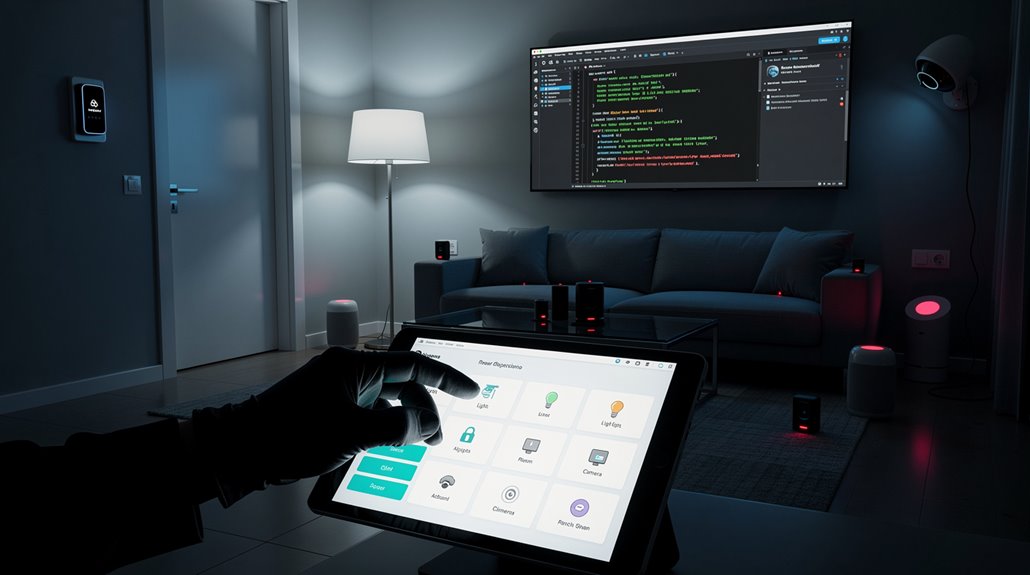
In recent cyber threat analyses, North Korean Advanced Persistent Threat (APT) groups have demonstrated significant capability in compromising smart home devices through sophisticated attack vectors, particularly the hijacking of Google accounts to exert remote control over connected hardware.
The KONNI APT group has been observed conducting malware campaigns that specifically target Google accounts, leveraging access to the Find Hub service to remotely manipulate smart devices. This operation includes the abuse of location queries within Find Hub to confirm the victim’s absence before initiating remote factory resets, which erase all stored data on Android devices, representing the first confirmed instance of North Korean hackers exploiting Google’s infrastructure for such attacks. The attackers also utilize Google’s location services to perfectly time remote wipe commands, enhancing the effectiveness of their destructive operations.
Spear-phishing remains instrumental in these infiltration efforts, with groups like Kimsuky employing PowerShell execution tactics alongside carefully crafted emails impersonating government officials. This attack was notably initiated through spear-phishing emails.
These spear-phishing messages often masquerade as communications from the South Korean National Tax Service or trusted acquaintances on messenger platforms, thereby enhancing legitimacy. The malicious PDFs or disguised stress-relief program files sent to North Korean defector students are designed to induce victims to run PowerShell scripts with administrative privileges, thereby facilitating device compromise and malware installation.
Malware capabilities deployed by these threat actors enable extensive control over targeted systems, including remote management of Android smartphones and personal computers for data exfiltration, device wiping, and covert surveillance via webcams and microphones.
Post-infiltration reconnaissance operations incorporate the registration of victim devices with remote command and control servers using downloaded certification files, ensuring persistence and coordination. Additionally, compromised KakaoTalk PC versions operate as vectors for further malware dissemination, with hijacked accounts transmitting malicious files across victim networks.
Blocking notifications post-reset delays victim awareness, while simultaneous rapid distribution of malware through trusted contacts amplifies infection rates.
Destructive tactics are characterized by remote wiping of sensitive documents and stored data, accompanied by system disruptions that inhibit alerting mechanisms and detection channels.
This strategic combination of device neutralization and account propagation exhibits exceptional tactical maturity and represents an unprecedented vector in APT methodologies.
Security advisories emphasize enabling two-step authentication, disabling automatic password saving, powering down devices when idle, and urge manufacturers to enhance multi-factor authentication protocols to counter these sophisticated incursions.
References
- https://www.youtube.com/watch?v=pPN7oTMPB-I
- https://asianews.network/north-korean-hackers-hijack-south-koreans-google-kakaotalk-accounts-to-control-phones-report/
- https://thehackernews.com/2025/02/north-korean-hackers-exploit-powershell.html
- https://www.infosecurity-magazine.com/news/react2shell-exploit-campaigns/
- https://www.justice.gov/archives/opa/pr/north-korean-government-hacker-charged-involvement-ransomware-attacks-targeting-us-hospitals
- https://www.pentasecurity.com/blog/north-korean-kimsuky-hackers-exposed-in-data-breach/
- https://www.tomshardware.com/tech-industry/cyber-security/north-korean-infiltrator-caught-working-in-amazon-it-department-thanks-to-lag-110ms-keystroke-input-raises-red-flags-over-true-location
- https://journals.sagepub.com/doi/10.1177/20438869241303941