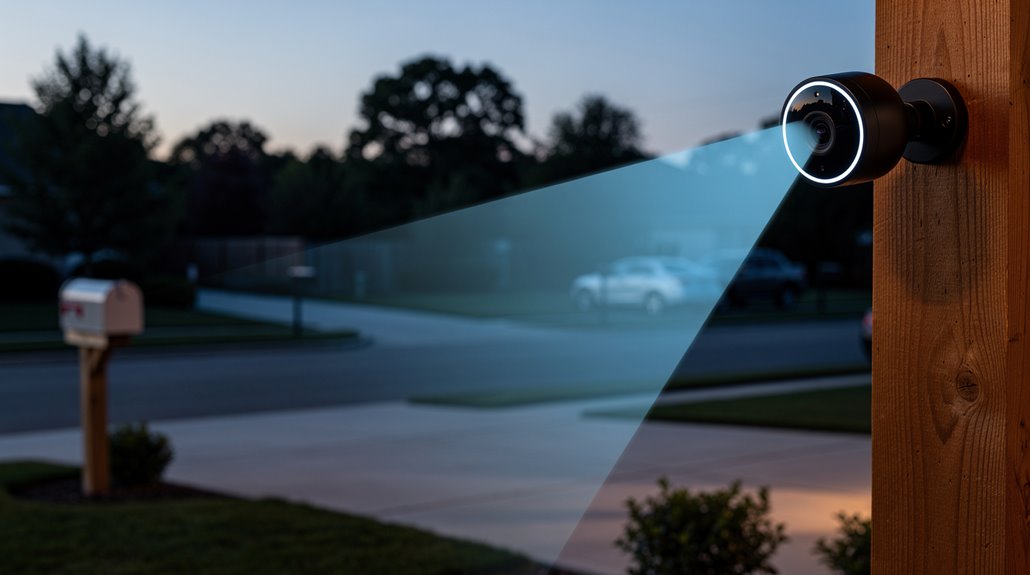
Mount security cameras at a lofty eight to ten feet, because apparently, mere mortals and petty criminals can’t reach that height—making it a pathetic attempt at deterrence wrapped in false security theater. Angle the lens downward, ensuring it captures something more useful than the usual blurred existential crisis of passing pedestrians. Forget flimsy plastic mounts; trust heavy steel and lag bolts to resist vandalism from society’s finest. If you think cameras merely adorn walls, congratulations—there’s an actual strategy lurking just beyond this façade.
Where, precisely, should one mount a security camera without succumbing to the Kafkaesque absurdity of modern surveillance theater? The answer, begrudgingly, lies between 8 and 10 feet above the ground—just high enough to thwart the amateur graffiti artist and the criminally inclined saboteur, yet low enough to capture the perfect mugshot, or in today’s parlance, the evidence for another algorithmic atrocity. Aim the lens downward with the finesse of a bored cinematographer; this angle isn’t just aesthetic—it’s the difference between a blurry forehead and a clear ID that license plate readers dream of. It is also essential to use high-quality lenses to ensure clarity and sharpness of the captured footage.
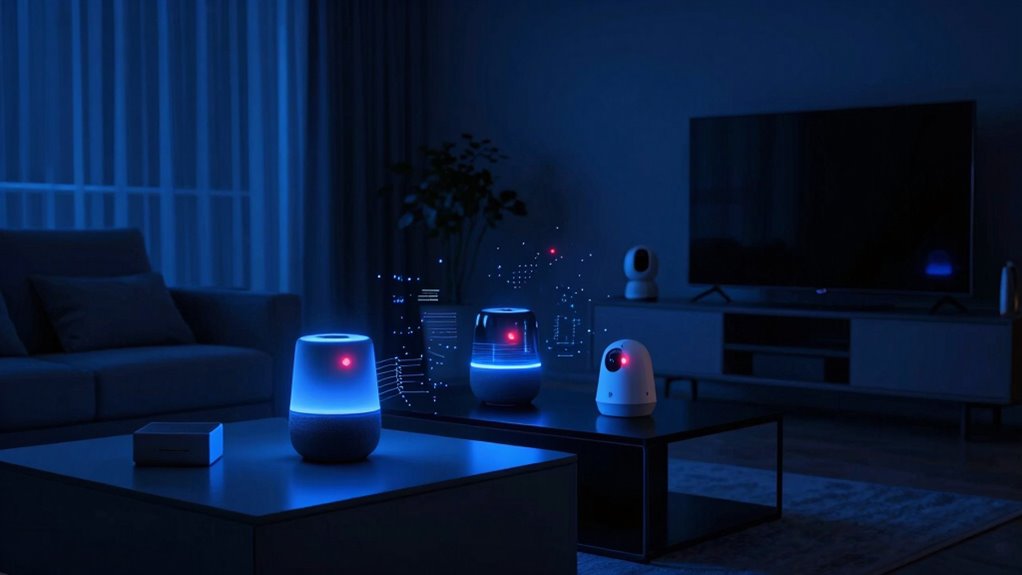
Within the claustrophobic interior, corners are prime real estate, engineered for the Orwellian panopticon with 45-degree mounts achieving a 180-degree gaze. The clever connoisseur of surveillance will hide cube cameras on sconces or corner shelves, delighting in how invisibility breeds paranoia. The main stairwell and ground-floor entrances are notoriously crucial, yet bedrooms and bathrooms remain forbidden territories of dignity—if only the institutions enforcing privacy laws could manage such clarity. Strategic locations near entryways provide optimal surveillance coverage while deterring potential intruders before they attempt entry.
Corners command the claustrophobic interior, turning discreet cube cameras into paranoia’s unseen architects.
With strategic corner placements, even entire rooms succumb to the unblinking eye, guaranteeing no couch potato or ne’er-do-well hides without digital squealing.
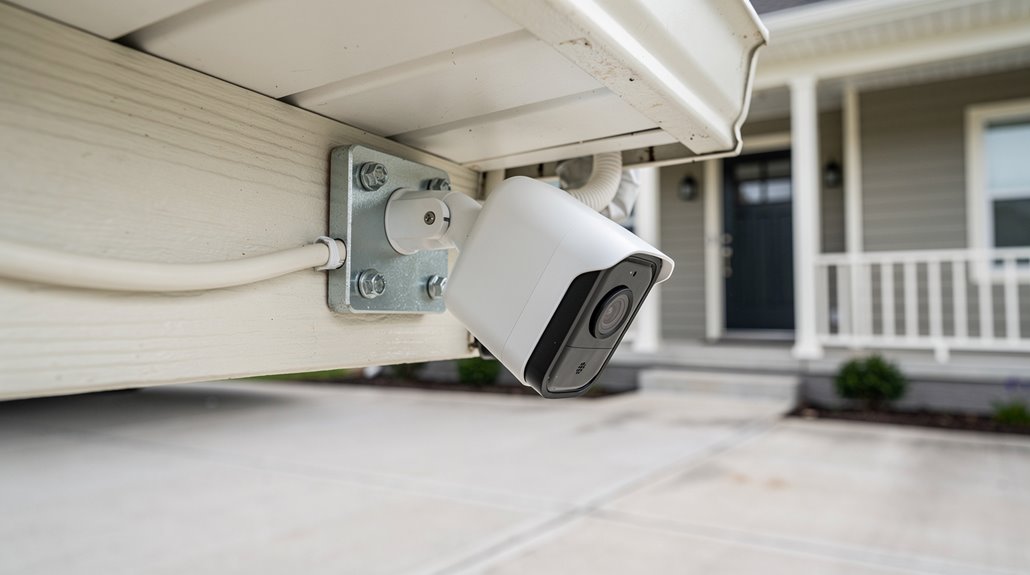
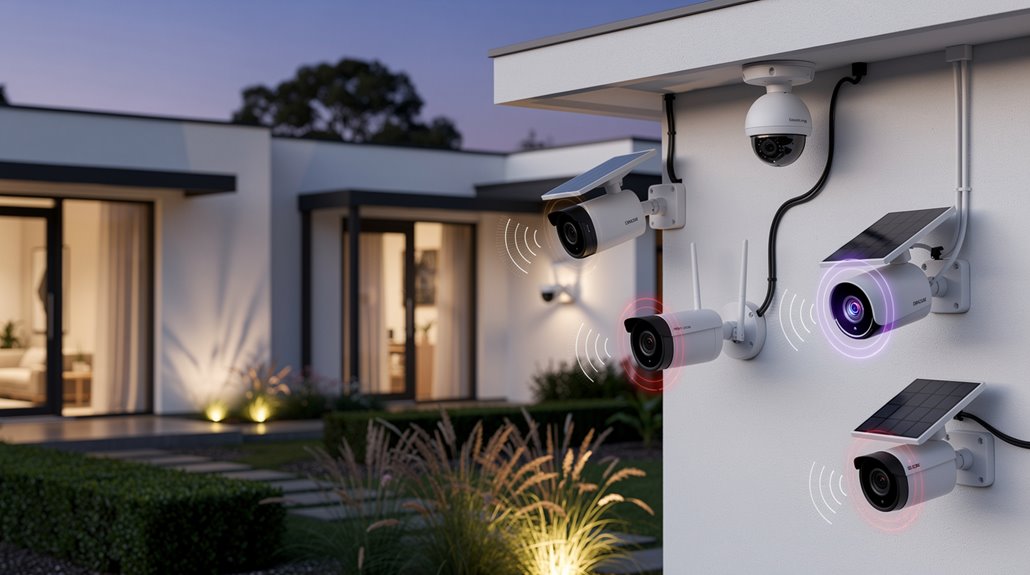
Outdoors, the soffits and fascias reign as sanctuaries against watery sabotage and passive-aggressive vandalism, while eaves over porches play dual roles of guardian and weather shelter—because who wants their pricey tech rusting away while recording the neighborhood squirrels? Correct cable management and concealment is necessary here to maintain both the camera’s function and aesthetic appeal.
Mounts must be heavy-gauge steel, sturdy enough to repel the common joystick wielding delinquent, not the plastic cheapness usually hawked to the hapless consumer. Preferably fastened tightly by lag bolts, anchoring these mechanical sentries against both gravity and human mischief.
Yet intelligent coverage demands planning reminiscent of military campaigns, avoiding overlap to conserve digital storage and prevent fuzzy redundancy. Windows, doors, and vents require direct stares, not casual glances, while sunlight remains the cruel enemy—pointing a lens into the sun is akin to putting sunglasses on a goldfish, rendering the effort laughably futile.
Validation of Wi-Fi signal strength prior to installation singularly guarantees a camera is more than an ornamental disappointment.
Frequently Asked Questions
What Types of Security Cameras Are Best for Outdoor Use?
Outdoor security cameras with 4K resolution, HDR, color night vision, and weather-resistant designs, like the Lorex 4K Spotlight and Eufy SoloCam S340, offer superior image quality, extended zoom, solar power, and motion-activated spotlight features for effective surveillance.
How Do I Protect Security Cameras From Weather Damage?
Protection from weather damage involves using IP67-rated cameras, installing weatherproof brackets and junction boxes, applying silicone sealant, ensuring downward tilt to prevent water pooling, and regularly inspecting cables and connections to maintain durability against rain, snow, and UV exposure.
Can Security Cameras Be Connected to a Smartphone App?
Security cameras can be connected to smartphone apps, enabling real-time monitoring, remote access, and control. Compatible cameras integrate with apps on Android or iOS, supporting features like motion alerts, two-way audio, and cloud storage for seamless security management.
What Is the Average Cost of Installing Security Cameras?
The average cost of installing security cameras ranges from $93 to $222 per camera for basic setups. Mid-range installations typically cost $1,000 to $3,500, while professional labor fees vary between $80 and $200 per camera.
Are Wireless Security Cameras More Vulnerable to Hacking?
Wireless security cameras exhibit higher vulnerability to hacking due to dependence on WiFi, default credentials, firmware flaws, weak authentication, and unencrypted transmissions, enabling unauthorized access, network breaches, and exploitation through exposed APIs and interception techniques.
References
- https://reolink.com/blog/security-camera-mounting-ideas/
- https://www.bossecurity.com/2024/05/03/the-ultimate-guide-to-the-installation-of-security-cameras-for-secure-and-seamless-monitoring/
- https://www.security.org/security-cameras/placement-guide/
- https://www.backstreet-surveillance.com/security-cameras-made-simple-a-diy-guide/security-camera-locations.html
- https://www.dtiq.com/blog/security/camera-placement-for-surveillance-security
- https://www.youtube.com/watch?v=NR_SDa_uH2Q&vl=en
- https://ponosecurity.com/elevating-business-safety-security-camera-installation/
- https://www.consumerreports.org/home-garden/home-security-cameras/best-outdoor-security-cameras-of-the-year-a2913488128/
- https://www.security.org/security-cameras/best/outdoor/
- https://www.safehome.org/home-security-cameras/best/outdoor/