Home security cameras sell fairy tales—a glossy 4K lens promising Fort Knox, yet delivering fuzzy shadows and clueless Alexa alerts that confuse burglars with Aunt Marge. Night vision toggles between ghostly grays and useless color floods, spotlighting your neighbors rather than crooks smart enough to dodge heat sensors. Cloud storage plunges wallets into a recurring vortex, while local cards vanish with your stolen laptop. If this sounds like security theater with a price tag, there’s more to unravel beyond the sales pitch.
Home security cameras have become the plastic roses of modern paranoia—ubiquitous, cheap, and utterly useless against the very threats that their overpriced marketing promises to neutralize.
With resolution specs paraded like badges of honor—from pedestrian 1080p to showroom-ready 4K—manufacturers want consumers to believe crystal-clear footage equates to actual safety. Yet, a 10x zoom on a grainy scream in 4K is still just a noisy blur during a neighborhood scuffle, captured by some oversaturated Sony or Nest product that Amazon hawks for a price only Wall Street’s lubricant could justify. Many top-rated cameras now emphasize video quality standards, such as a minimum of 1080p, to enhance clarity. Data also indicates that homes with visible security cameras experience 60% fewer break-ins, underlining the deterrent impact of these devices.
High-res specs don’t mean safety—a zoomed 4K scream remains a blurry, overpriced mess.
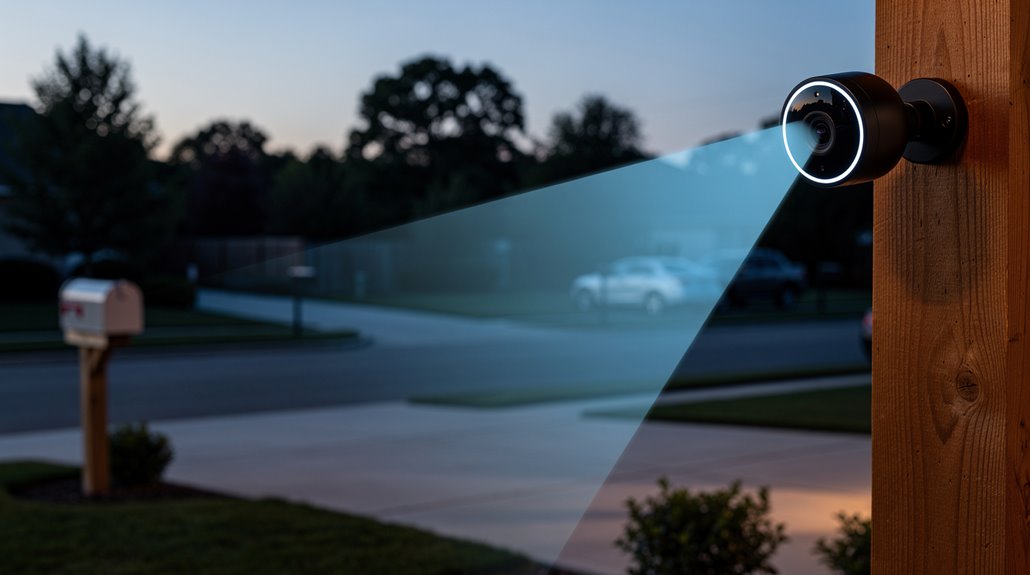
Night vision technology, that purported panacea for nocturnal skulking, oscillates between infrared’s ghostly grayscale and the laughable color night vision that promises “vivid footage” when the real culprit, shadows and smart crooks alike, simply don’t care about such cinematic gestures.
Some units offer floodlights pulsing 2,800 lumens—great for spotlighting your own neighbors, less so for catching actual miscreants who operate like ninjas, invisible to both heat sensors and your phone’s real-time notifications. Modern systems like SimpliSafe now feature live agent deterrence that actively responds to threats through two-way audio.
The so-called “smart” features—two-way audio, person detection, facial recognition—read like the bullet points of a Kafkaesque dystopia, where Big Brother‘s minor sibling fancies itself a digital guardian angel, hollering via Alexa or Siri to deter a would-be intruder, who, in a plot twist, is probably just your forgetful teenager.
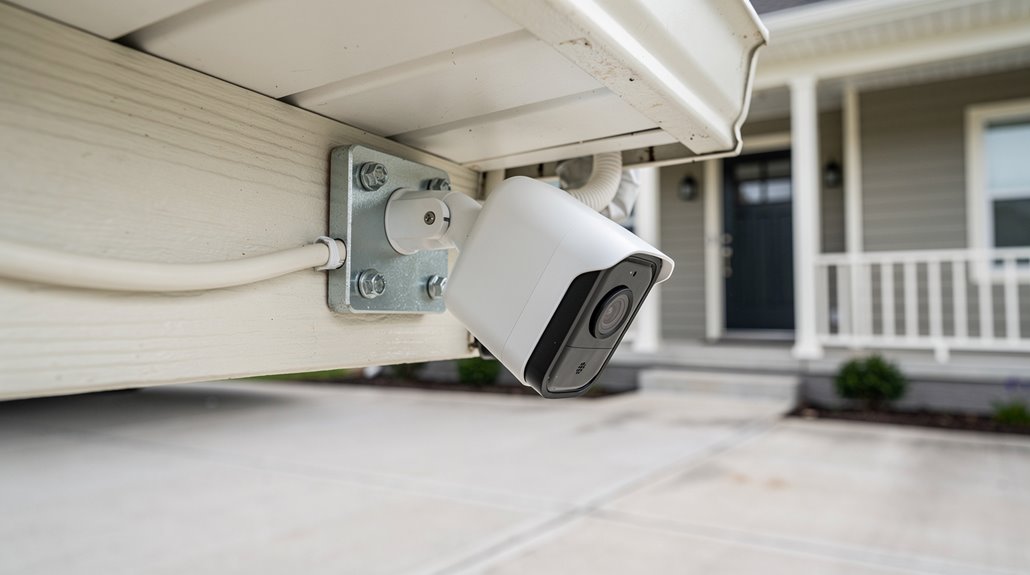
Wi-Fi-enabled, battery-powered gizmos promise no-wire installation nirvana but frequently conk out right when a blackout or hacker attack reminds users their silicon sentinels are as fallible as the institutions selling them.
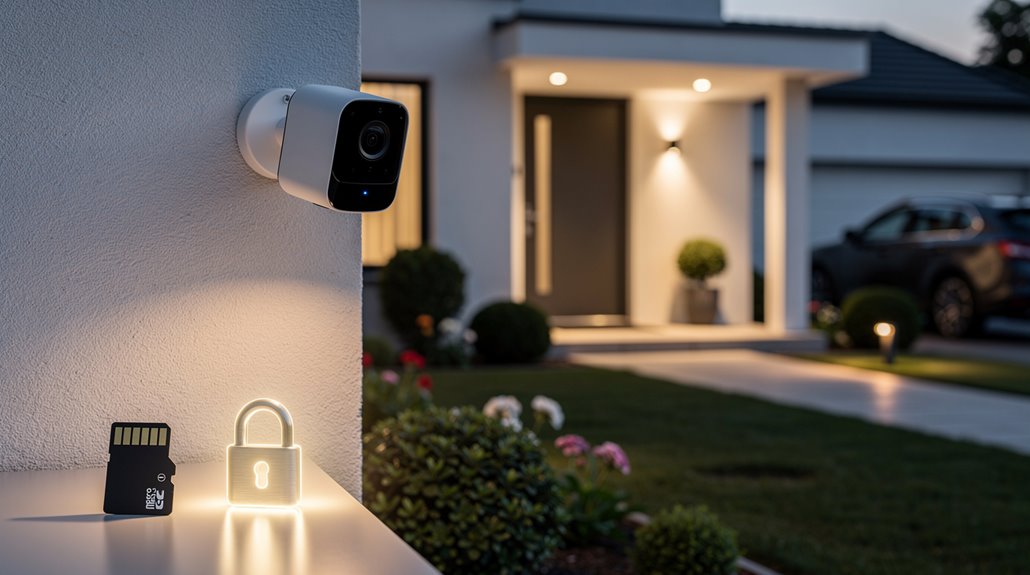
Storage options provide a Choose Your Own Nightmare scenario: endlessly costly cloud subscriptions or local MicroSD cards that can be stolen quicker than you can say “privacy breach.”
Professional-grade systems cram 16-channel NVRs into rack mounts resembling NASA’s control rooms, presenting a false paradigm where surveillance overload substitutes for actual security.
At price points ranging from bargain-bin $29.98 specials to pretentious six-hundred-dollar-plus “premium” units, the omnipresent truth remains: home security cameras are theatrical props masking a dismal societal failure to prioritize real protection over paranoia and profit.
Frequently Asked Questions
Can Home Security Cameras Work Without Wi-Fi?
Home security cameras can operate without Wi-Fi using cellular networks, wired connections, or local storage like SD cards. These systems offer reliable, subscription-free monitoring but may lack remote access and require physical installation or cellular plans.
How Much Data Do Security Cameras Use Monthly?
Security cameras typically use between 45 to over 400 GB monthly, depending on resolution, recording type, and compression. Continuous 1080p recording consumes around 45-90 GB, while 4K cameras can exceed 400 GB with continuous use.
Are Security Cameras Effective in Extreme Weather?
Security cameras designed with IP67 or IP69 ratings, temperature-resistant housings, and features like built-in heaters and anti-fog capabilities remain effective in extreme weather, maintaining clear footage and reliable operation despite harsh environmental conditions.
Can Multiple Cameras Be Linked to One App?
Multiple cameras can be linked to one app if they support ONVIF or RTSP standards. Proprietary systems and battery-powered wireless models often lack such compatibility, limiting integration within unified third-party apps or NVR platforms.
Do Cameras Record Audio, and Is It Legal?
Many security cameras record audio via built-in microphones or external inputs. However, legal restrictions vary by jurisdiction, requiring users to verify local laws before enabling audio recording to guarantee compliance and avoid privacy violations.
References
- https://www.security.org/security-cameras/best/
- https://www.safehome.org/home-security-cameras/best/
- https://www.youtube.com/watch?v=j4aEBEmVTzc
- https://www.cctvcameraworld.com/security-camera-guide/
- https://www.avigilon.com/blog/types-of-cctv-cameras
- https://montavue.com/blogs/news/the-different-types-of-security-cameras-and-their-prices
- https://safetouch.com/blog/types-of-security-cameras-in-2025/
- https://www.cctvsecuritypros.com/hd-security-camera-systems/8-camera-systems/
- https://sirixmonitoring.com/blog/security-cameras-that-dont-need-wifi/
- https://store.reolink.com/us/security-cameras-without-wifi/