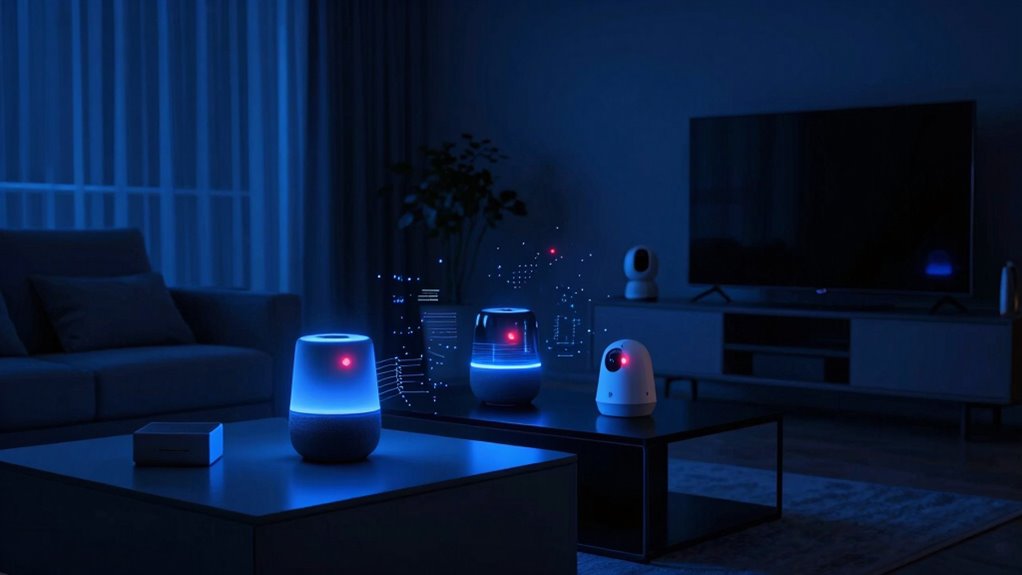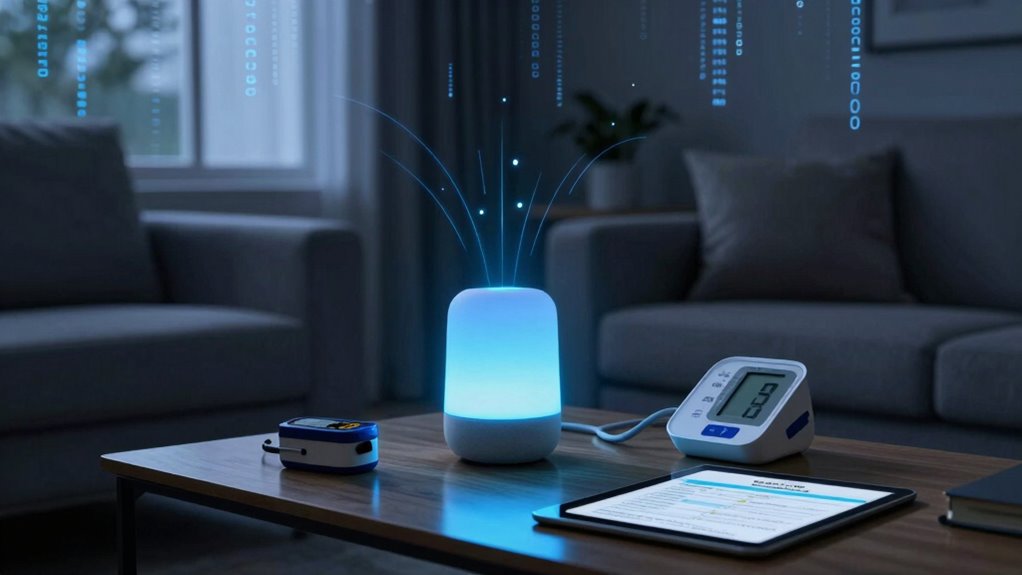
Smart speakers serve as natural language processing (NLP)-enabled conduits, facilitating real-time interactions for patients, including daily check-ins and delivering diagnostic results. They operate within complex telehealth smart home ecosystems wherein patients independently procure these devices, resulting in the introduction of unmanaged IoT endpoints. By integrating with hospital systems and medical peripherals, these voice-activated devices enable continuous remote monitoring of essential signs, thereby replicating inpatient care paradigms.
However, this integration increases exposure to vulnerabilities stemming from both cyber threats and privacy lapses intrinsic to private home networks. Incorporating medical-grade equipment into private residences introduces cybersecurity and privacy risks not normally encountered in controlled hospital environments.
This integration amplifies risks from cyberattacks and privacy issues inherent in private home environments.
Key privacy risks identified include the interception of unencrypted voice communications that frequently transmit personally identifiable information (PII) or protected health information (PHI), unauthorized network access exploiting weak security controls on devices, and the inadvertent storage or transmission of sensitive recordings to third-party platforms. Smart speakers typically lack comprehensive security capabilities, making them susceptible to exploitation within the home telehealth environment. With Alexa supporting over 100,000 devices in its ecosystem, the potential attack surface expands dramatically for healthcare applications.
Further complexity arises through smart speakers’ interoperability with mobile health (mHealth) applications, compounding data governance challenges and amplifying the attack surface.
NIST outlines multiple cybersecurity threats such as data manipulation via intercepted communication channels, denial-of-service attacks impeding telehealth service availability, and adversaries leveraging compromised smart speakers as pivot points to infiltrate healthcare infrastructures.
Threat scenarios involve prescription alterations, patient impersonation, and exploitation of lax authentication mechanisms that facilitate physical tampering.
To mitigate these risks, the guidance recommends implementing network segmentation with firewalls to isolate medical devices, enforcing encryption protocols for all data transmissions, deploying phishing-resistant authentication, continuous system monitoring, and restricting logical access to consumer IoT interfaces.
These measures aim to protect patient privacy and maintain the integrity of remote medical care within the HaH model despite the complexities introduced by integrating consumer technology in sensitive healthcare environments.
References
- https://www.einpresswire.com/article/876292383/securing-smart-speakers-for-home-health-care-nist-offers-new-guidelines
- https://csrc.nist.gov/pubs/cswp/34/mitigating-cybersecurity-and-privacy-risks-in-tele/ipd
- https://nvlpubs.nist.gov/nistpubs/CSWP/NIST.CSWP.34.ipd.pdf
- https://csrc.nist.gov/News/2025/nist-cybersecurity-white-paper-cswp-34
- https://csrc.nist.gov/pubs/cswp/34/mitigating-cybersecurity-and-privacy-risks-in-tele/final
- https://www.nist.gov/cybersecurity-and-privacy
- https://pmc.ncbi.nlm.nih.gov/articles/PMC9237761/