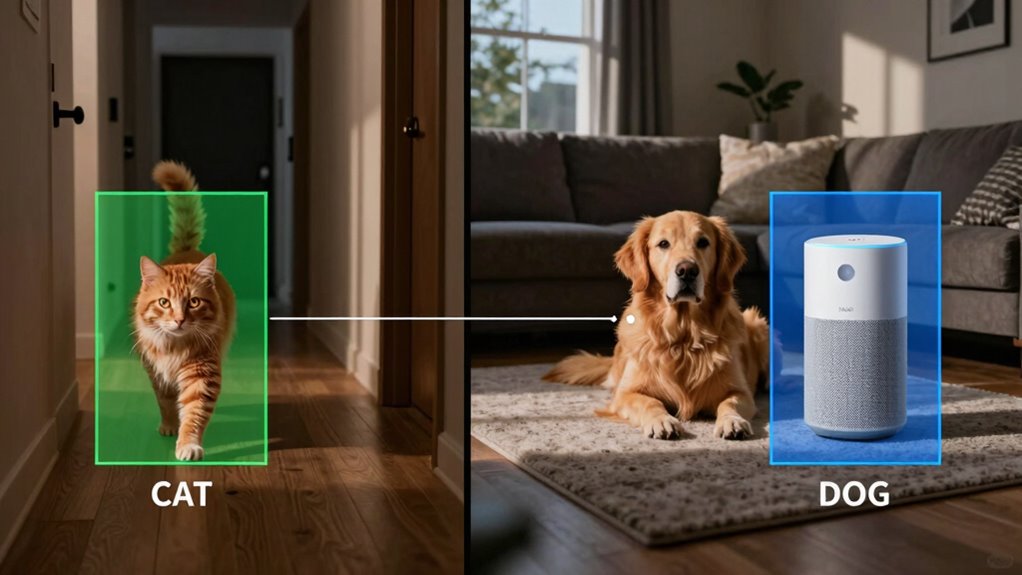
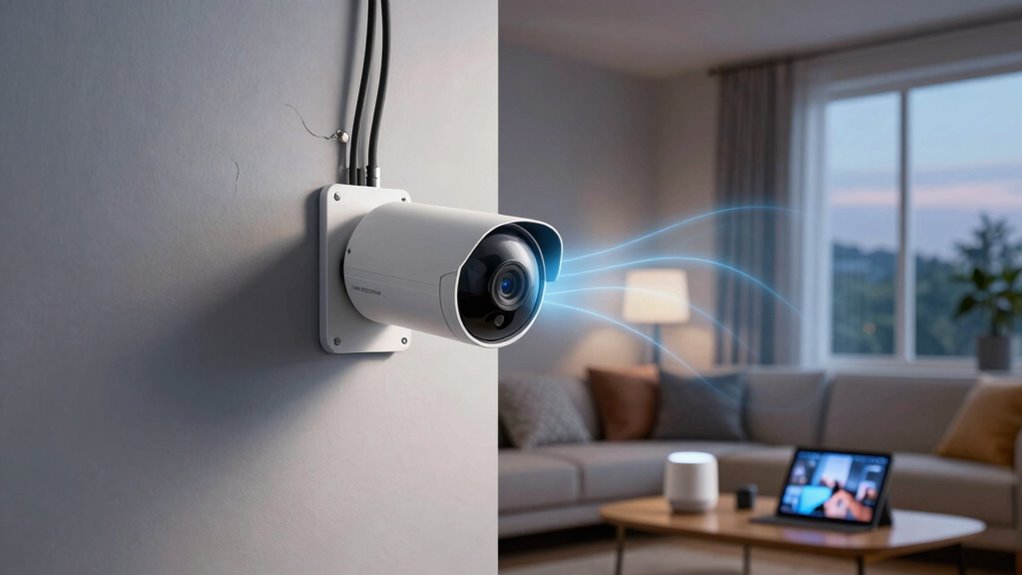
Turns out, your cat’s late-night hallway strut might finally get the recognition it deserves—Nest cameras are now pretty sharp at telling cats from dogs, thanks to some serious tech upgrades that feel like they’ve been binge-watching Animal Planet.
With advanced animal detection and real-time video analysis, these cameras don’t just spot movement—they actually figure out who’s who, even when your tabby is doing a ninja roll at 2 a.m. Machine learning models process millions of video frames, using perception algorithms to draw precise bounding boxes around animals, people, and even packages, making certain your dog’s zoomies aren’t mistaken for a suspicious intruder. This advanced capability is especially useful for users dealing with troubleshooting assistance related to unwanted animal activity, such as raccoons taking items from front doors, where accurate detection helps clarify what’s really happening.
Nest cameras now recognize your cat’s midnight antics with AI that distinguishes pets from intruders—no more false alarms when Fluffy goes ninja.
Improvements came after users complained about mix-ups, especially when their cats were mislabeled as dogs in dim lighting. That #lowlight struggle was real—shadows, silhouettes, and midnight snack raids used to confuse the system something fierce.
But now, better color accuracy and enhanced processing help the camera see what’s actually there, not just what it guesses. Thanks to new Gemini for Home updates, even Fido and Fluffy in a pile of blankets can be told apart, no DNA test needed.
Behind the scenes, engineers didn’t just train the models on real pet videos—they built entire fake living rooms. Yup, over 2.5 million synthetic cats were generated, dropped into game-like simulated homes with adjustable lighting, angles, and furniture.
This #trainingdataset magic guaranteed the models learned cat vs. dog in ways that match actual home security setups, not just phone-camera selfies. Increased data diversity has been key to improving accuracy across challenging conditions like poor lighting and partial visibility.
Of course, it’s not perfect—sometimes a crawling toddler or a very lifelike garden gnome still throws the system off. The tech doesn’t promise 100% accuracy, but with new hardware like Tensor Processing Units offering 170 times more power, decisions happen faster and right on the device, no cloud lag.
Familiar Face detection also helps, filtering out blurry or half-shot clips to focus on clear pet profiles. Nest devices send this data through encryption protocols to ensure your pet’s privacy remains protected while improving detection accuracy.
References
- https://blog.google/products/google-nest/ask-techspert-how-do-nest-cams-know-people-pets/
- https://www.googlenestcommunity.com/t5/Cameras-and-Doorbells/Nest-Camera-Not-picking-up-Animals/m-p/452522
- https://www.ghacks.net/2025/12/23/gemini-for-home-camera-update-filters-faces-and-improves-pet-detection/
- https://home.google.com/get-inspired/google-home-for-pets/