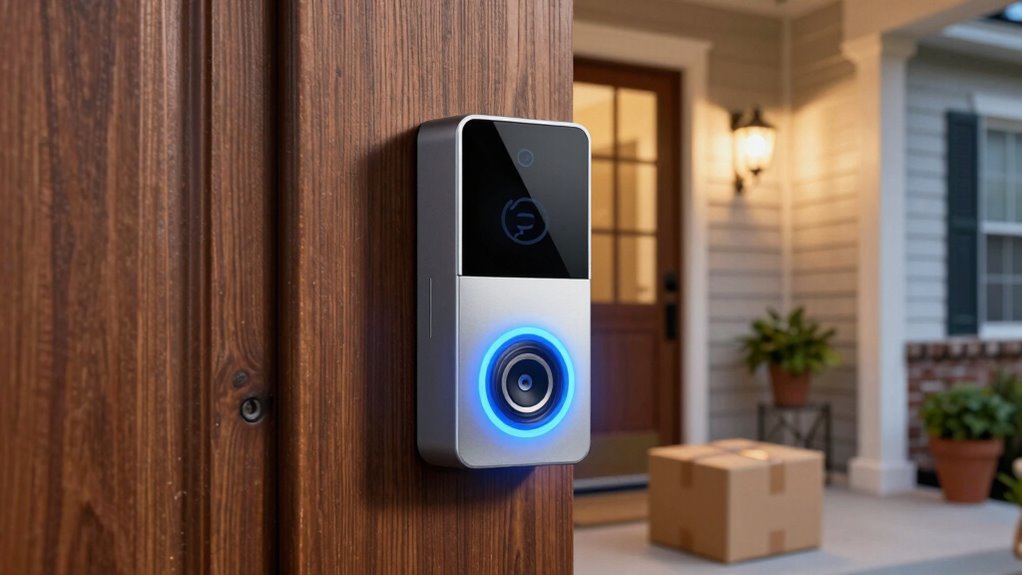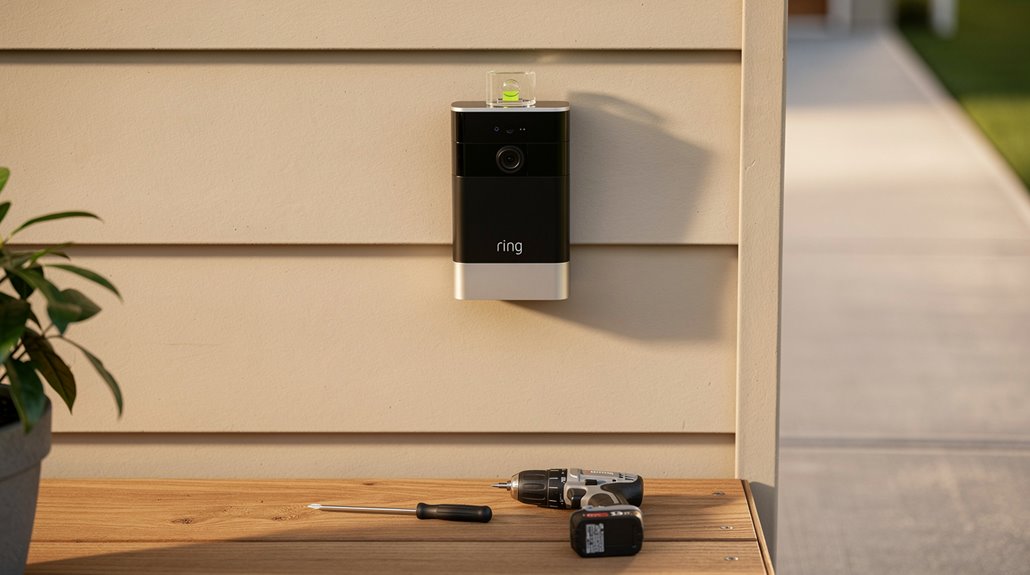
To identify your Ring Doorbell generation, one must endure the corporate Kafkaesque labyrinth of “model numbers” and “device labels” on the back, where subtle betrayals of video resolution—from the quaint 720p original to the 1536p Battery Doorbell Plus—and power options masquerade as progress. The Original’s meager infrared night vision is quaint, while the 3 Plus flaunts “Preroll” like a digital peeping Tom’s badge. Decoding this gauntlet reveals the absurd spectacle of incremental surveillance upgrades—explore further to see how deep the dystopian rabbit hole goes.
In a world where every gadget claims to be the “latest and greatest,” distinguishing among the endless parade of Ring Video Doorbell generations feels less like consumer choice and more like decoding a dystopian tech Kafkaesque riddle.
The humble beginnings of this surveillance sacrament started innocuously enough with the Ring Video Doorbell Original, draped in deceptive minimalism—satin nickel, Venetian bronze, or antique brass—and boasting a laughably paltry 720p video. Its infrared night vision was the high-water mark of privacy invasion, designed to lurk quietly without engulfing your porch in Orwellian dread. Today, newer models like the Battery Doorbell Plus have advanced features such as color night vision, enhancing visibility in low light conditions.
Enter Ring Video Doorbell 2, the unwelcome sequel, arriving before 2020 with 1080p clarity and a generous 160-degree field of view, as if watching your visitors through the lens of Big Brother’s increasingly intrusive monocle. It doubled down on “convenience” by juggling battery, solar, and hardwired power options while teasing personalization with two interchangeable faceplates. A quick-release rechargeable battery was just enough to fuel your existential despair as you pondered the futility of false security.
The Ring Video Doorbell 3 and its ostentatious sibling, the 3 Plus, ratcheted the espionage to a premium artisan level, launching that infernal “Near Motion” detection to obsess over movements 5 to 15 feet from your doorstep. These models retained the option for both wired and battery power, allowing users some flexibility in installation and use with their power options. For easy identification of your specific model, simply check the device label on the back of your doorbell where model numbers and serial details are conveniently printed.
Dual-band WiFi connectivity let you choose your preferred flavor of digital servitude. The 3 Plus threw in Preroll video—because why merely record creepy visitors when you can capture their criminal minds in full fake-4K before things even get suspicious?
Then came the Battery Doorbell Plus—a Frankenstein’s monster with a 1536p Head-to-Toe vertical view, color night vision for nocturnal nosiness, and a wallet-pinching $149.99 price tag.
The 2024 Battery Doorbell Pro, with its ostentatious 3D Motion Detection and Bird’s Eye View technology, crowned this surveillance hors d’oeuvre. Meanwhile, the Wired models insisted on clinging to ancient ring wiring for an eternal electrical tether, with the Wired Pro gleefully flaunting a $179.99 sticker and four faceplates to mask its capitalist intentions.
Identifying your Ring generation is less about genuine security and more about maneuvering this absurd pantheon of voyeuristic tech, each iteration a grotesque evolution in our collective surrender to the Panopticon.
Frequently Asked Questions
How Do I Reset My Ring Doorbell to Factory Settings?
Resetting a Ring Doorbell to factory settings requires pressing and holding the reset button—location varies by model—for about 15-20 seconds until the LED flashes, indicating data erasure, then releasing and proceeding with device setup anew.
Can I Use Multiple Ring Doorbells on One App Account?
Yes, multiple Ring doorbells can be managed within a single Ring app account. Devices from different locations can be organized using the Locations feature, enabling owners to seamlessly control all devices across various properties through one unified interface.
What Is the Battery Life of a Ring Doorbell?
The battery life of a Ring Doorbell typically ranges from 6 to 12 months per charge, though usage patterns, environmental factors, and device model influence duration. Charging generally takes 5 to 10 hours for full replenishment.
How Do I Improve Wi-Fi Signal for My Ring Doorbell?
Improving Wi-Fi for a Ring doorbell involves checking RSSI values, switching to 2.4 GHz band for better range, reducing channel congestion, optimizing router placement, and using extenders or mesh systems to strengthen weak signals throughout the property.
Are Ring Doorbells Compatible With Alexa Devices?
Ring doorbells are fully compatible with Alexa devices, enabling features like announcements, two-way talk, and live video on supported Echo and Fire TV models. Integration requires updated firmware and a shared Wi-Fi network for peak functionality.
References
- https://moderncastle.com/home-security/ring-doorbell-comparison/
- https://www.safehome.org/compare/ring-vs-ring-pro/
- https://www.youtube.com/watch?v=M2Sh1IRC7Gs
- https://www.aboutamazon.com/news/devices/best-ring-video-doorbell
- https://ring.com/video-doorbell-cameras
- https://www.security.org/doorbell-camera/ring/
- https://ring.com/support/articles/80fmp/Comparing-Ring-Video-Doorbells
- https://www.nfm.com/on/demandware.static/-/Library-Sites-NFMSharedLibrary/default/dw54215f3a/product-pdfs/060/52/60526829-educational-brochure.pdf
- https://ring.com/collections/video-doorbell-cameras
- https://www.doorbellmount.com/blogs/doorbell/how-to-reset-a-ring-doorbell