How rapidly can a metropolitan real estate market transform into a connected ecosystem of intelligent dwellings?
Dubai’s smart home sector is experiencing unprecedented acceleration, driven by a confluence of governmental infrastructure investments, telecommunications maturity, and strategic integration with the emirate’s holistic Smart City initiative****,
positioning the United Arab Emirates as the fastest-growing regional market with a compound annual growth rate of approximately 21.2 percent through 2030.
The UAE smart home market, valued at USD 654 million in 2024, is projected to expand to USD 1.64 billion by 2033,
reflecting forecast growth rates ranging from 10.7 to 27.5 percent annually****,
while the broader Middle East smart home sector is expected to escalate from USD 10.54 billion in 2025 to USD 25.38 billion by 2030 at a 19.2 percent CAGR.
Security systems command the largest revenue allocation, representing approximately 30.7 percent of the regional product mix in 2024,
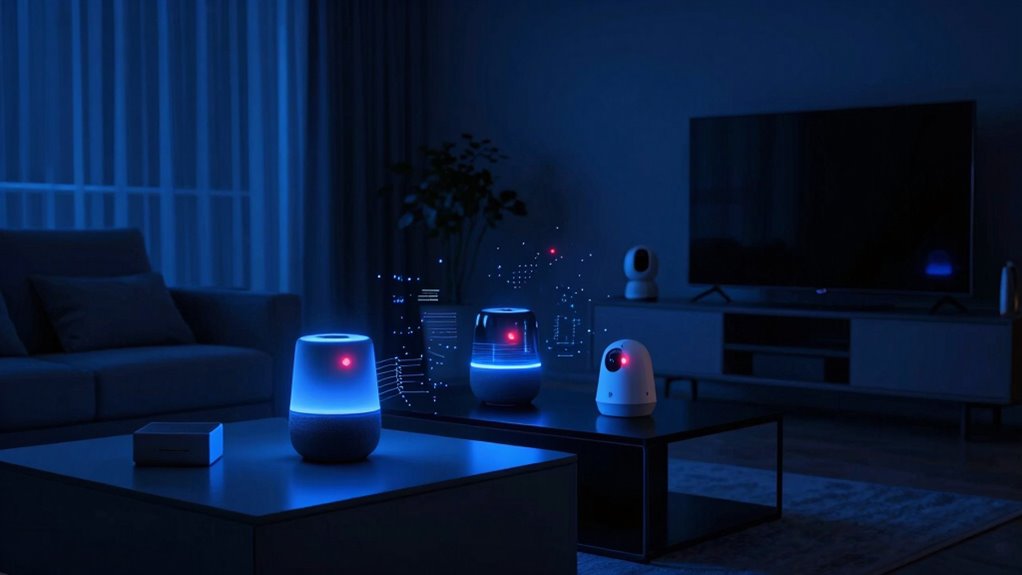
encompassing video surveillance infrastructure, biometric access control platforms, and network-connected doorbell devices that address both residential safety requirements and asset protection mandates.
Government-backed smart city programs, including DEWA’s USD 7 billion smart grid deployment and Vision 2030-aligned national strategies, contribute an estimated 4.2 percentage points to regional compound annual growth rates,
embedding Internet of Things protocols and automation systems into urban building codes and real estate megaprojects such as Masdar City.
The adoption of Matter Smart Home standard is accelerating interoperability between devices from different manufacturers, enabling seamless integration across platforms while enhancing security through mandatory AES-128 encryption protocols.
Near-universal connectivity infrastructure—100 percent internet penetration, 18 million active mobile subscriptions, and 99 percent fiber-to-the-home coverage—provides the technological backbone for low-latency device integration,
enabling 96.3 percent of UAE internet users to operate smartphones while 12.5 percent already maintain at least one smart home device as of Q3 2023.
Fifth-generation network deployment has accelerated device communication protocols, with 57 percent extremely satisfied with 5G performance according to recent consumer polls.
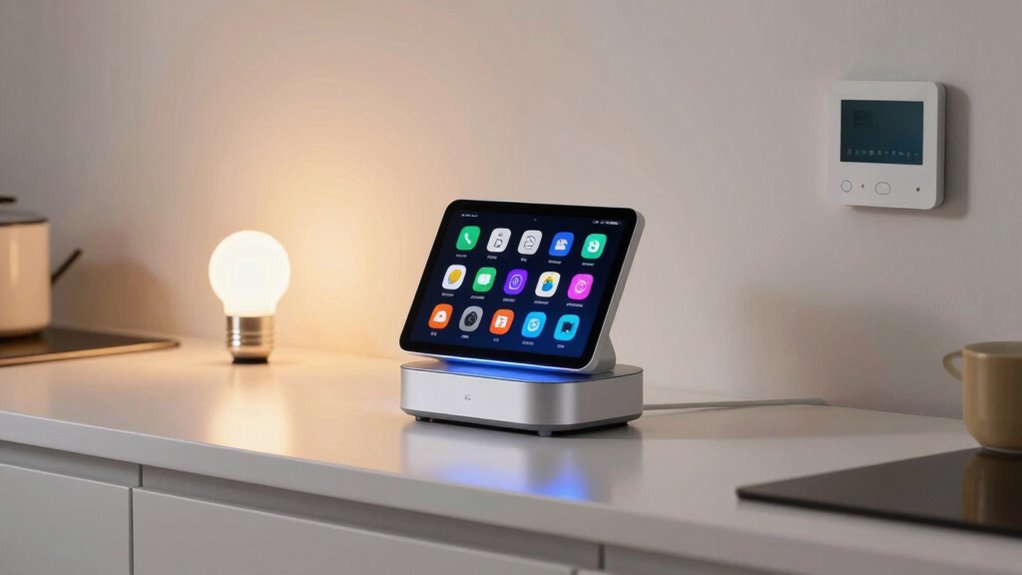
Energy-management solutions including adaptive thermostats, occupancy-responsive lighting, and automated shade systems gain commercial traction due to elevated electricity tariffs,
while AI-native utility operations exemplified by DEWA’s generative assistant Rammas link residential devices with demand-response services, billing interfaces, and consumption analytics across Dubai’s expanding portfolio of intelligent residential properties.
High-income apartments accounted for 42.7 percent of installations in 2024, as developers integrate central control panels and structured cabling during construction phases to eliminate subsequent retrofit premiums.
References
- https://www.renub.com/uae-smart-home-market-p.php
- https://www.mordorintelligence.com/industry-reports/middle-east-smart-home-market
- https://www.kenresearch.com/industry-reports/gcc-smart-home-market
- https://www.researchandmarkets.com/report/united-arab-emirates-smart-home-market
- https://www.grandviewresearch.com/horizon/outlook/smart-home-market/uae
- https://vocal.media/futurism/united-arab-emirates-smart-home-market-size-and-forecast-2025-2033-2237u03ya
- https://pob1.com/blogs/how-ai-smart-homes-are-shaping-dubai-real-estate-in-2025
- https://grandvisionuae.com/latest-news/106