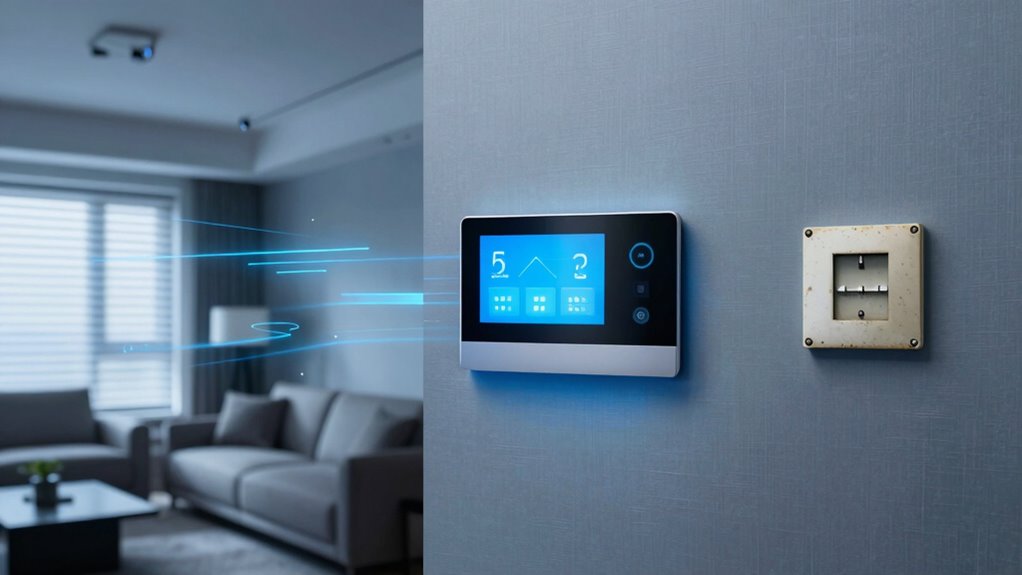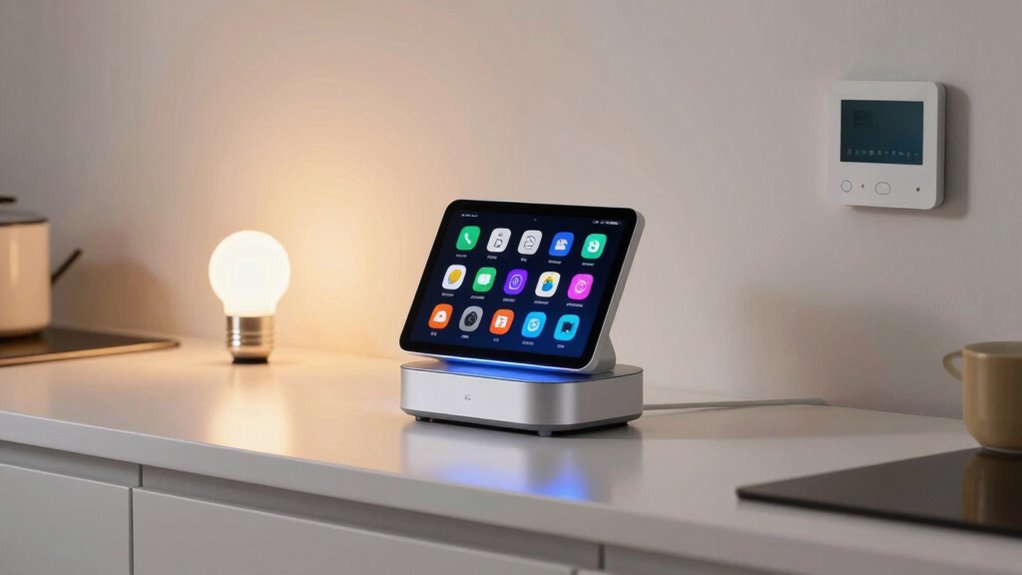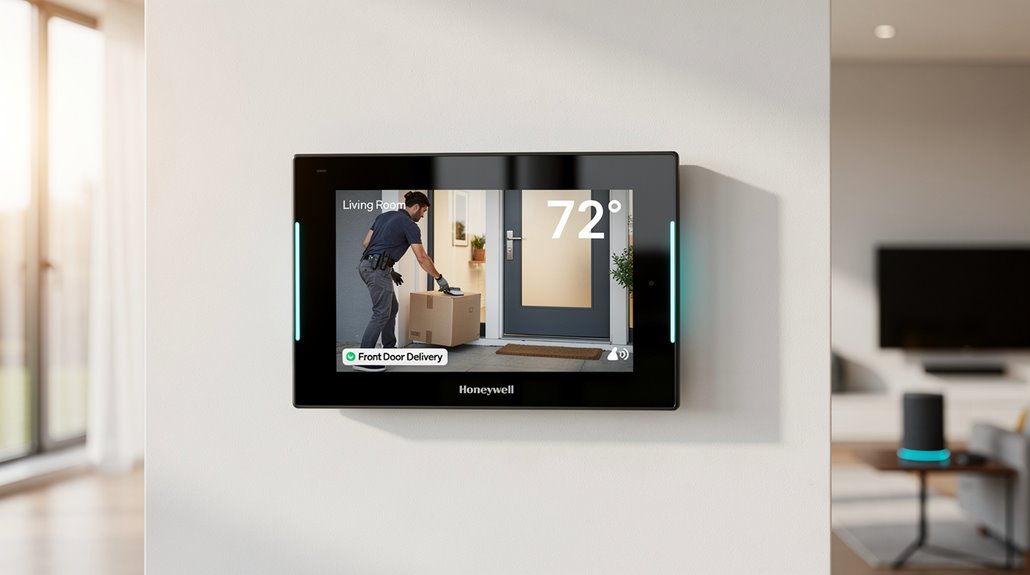

The American consumer, having apparently decided that merely adjusting room temperature with a dial represents an unacceptable burden on their cognitive faculties, can now purchase the Honeywell Home X8S Smart Thermostat—a $300 device that streams video doorbell footage to a five-inch touchscreen mounted on their wall, because checking one’s phone like a normal person has become unbearably arduous.
This monument to first-world decadence arrives draped in the usual marketing gibberish about “premium connectivity” and “smart home integration,” boasting Matter certification so your thermostat can communicate with every other overpriced gadget littering your McMansion.
The five-inch edge-to-edge display—marketed as the “largest in its class,” a designation roughly as meaningful as being the tallest dwarf—streams live video from Ring and First Alert doorbells, complete with two-way audio functionality. Nothing says “I’ve made it” quite like screaming at delivery drivers through your climate control system.
Because humanity’s greatest aspiration is bellowing at Amazon drivers through the same device that heats their living room.
Naturally, the X8S monitors volatile organic compounds and estimates carbon dioxide levels, transforming every suburban homeowner into an amateur atmospheric scientist fretting over metrics they’ll promptly ignore. The device integrates with Amazon Alexa, Google Assistant, and Apple Home, because barking commands at corporate surveillance devices represents the apex of human achievement.
Honeywell claims their thermostats save users approximately $204 annually when “recommended schedules are used consistently,” a qualifier doing Olympian-level heavy lifting given that most owners will abandon scheduling after two weeks of notifications. The system delivers monthly energy reports breaking down heating and cooling usage, providing yet another digital newsletter to ignore alongside gym membership reminders and unread LinkedIn notifications.
The thermostat employs radar sensors to detect occupancy, automatically switching between comfort and savings modes based on whether warm bodies occupy the premises. This technological marvel replaces the ancient burden of physically adjusting temperature settings when leaving home—an evolutionary adaptation humanity apparently lost somewhere between inventing the smartphone and forgetting how zippers work. Installation can be performed by independent HVAC professionals for those who’ve outsourced even basic home maintenance tasks.
Available in “bold black” and “classic white” finishes, the X8S targets what Honeywell euphemistically calls “high-end connected homes,” meaning households willing to spend premium dollars ensuring their HVAC system participates in the Internet of Things while monitoring indoor air quality metrics with the obsessive precision previously reserved for nuclear reactor cores. Following current trends, this model joins the hundreds of thermostats compatible with voice assistants that allow users to change temperatures without the horrific burden of touching anything.
The dystopian future doesn’t arrive with jackboots—it arrives with ENERGY STAR certification and dual-band Wi-Fi connectivity.
References
- https://www.honeywellhome.com/products/x8s-smart-thermostat
- https://www.youtube.com/watch?v=_GpQEHllz84
- https://www.resideo.com/us/en/corporate/newsroom/all-articles/Resideo-redefines-smart-comfort-with-launch-of-honeywell-home-X8S-smart-thermostat/
- https://www.gearbrain.com/honeywell-home-x8s-smart-thermostat-guide-2674366078.html
- https://www.honeywellhome.com/pages/x-series-elite-thermostats
- https://www.energystar.gov/productfinder/product/certified-connected-thermostats/details/4429192
- https://www.homedepot.com/p/Honeywell-Home-X8S-Smart-Thermostat-with-Sensor-Black-X8VWF10B/336936263
- https://www.honeywellhome.com/collections/wifi-thermostats
- https://www.lowes.com/pd/Honeywell-Home-Resideo-white-Smart-Compatible-Thermostat-and-room-sensor-with-Wi-Fi-Compatibility/5016397813