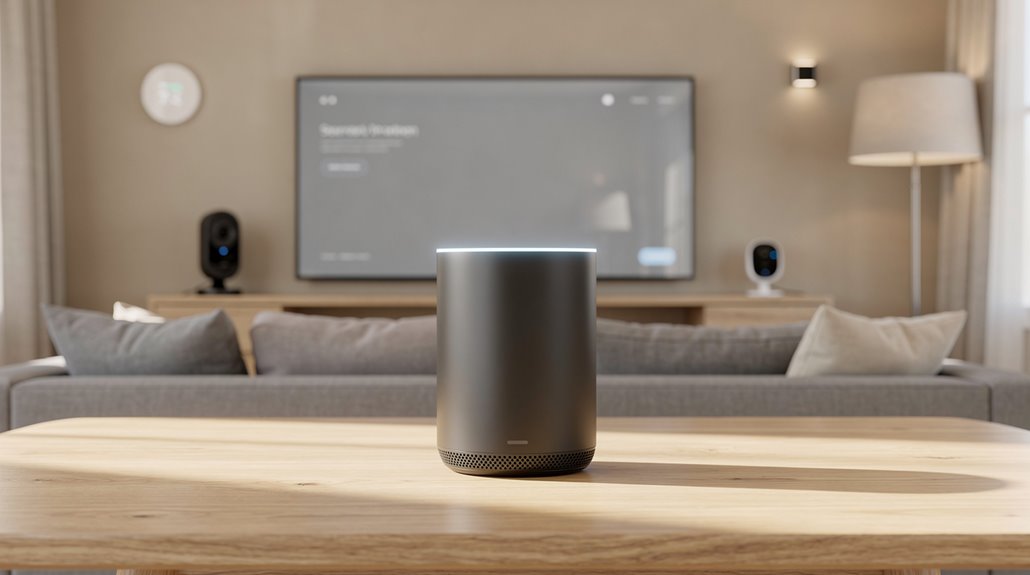

Google’s version of Alexa masquerades as a digital butler but delivers a robotic, deadpan recital of Google’s walled garden gospel, where “innovation” is synonymous with corporate captivity. Unlike Alexa’s adventurous third-party flair, Google Assistant clings to a joyless monotony of pre-approved commands, choking creative sparks beneath layers of ecosystem loyalty. Its charmingly limited skill set guarantees you’re locked in, shackled to Nest hubs and Gmail like a Silicon Valley serf. For those craving genuine advancement, the tale unfolds beyond this tawdry façade.
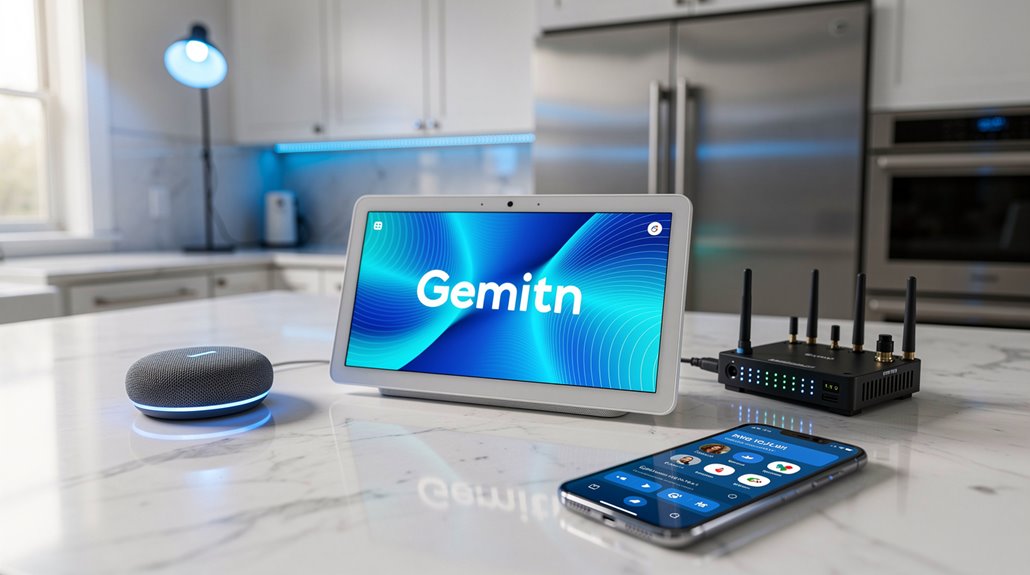
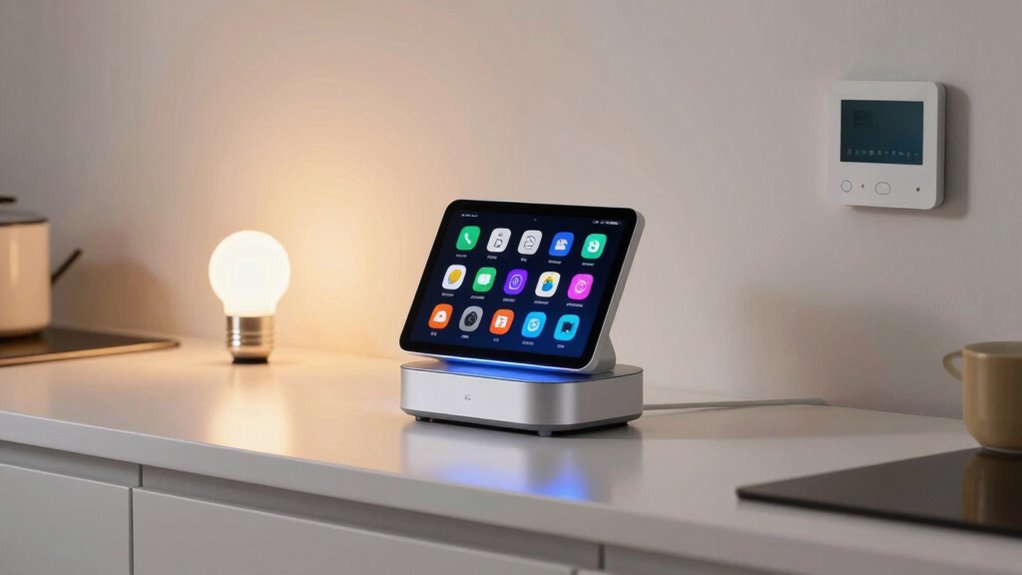
Though one might hope that technological titans—whose raison d’être ostensibly includes simplifying modern life—would deliver genuinely innovative tools, Google’s version of Alexa, the so-called “Google Assistant,” manages instead to demonstrate how mediocrity masquerades as progress. Marketed as the linchpin of smart homes, this assistant could be considered a triumph, if one finds satisfaction in a digital servant stammering through its limited repertoire amidst the razzle-dazzle. It powers Google Nest Hub and other branded gizmos, supposedly shepherding users through their daily chores with a sanguine “Hey Google.” Its deep integration with Google services makes it ideal for those firmly rooted in Google’s ecosystem.
Yet, rather than pioneering a brave new interactive frontier, it settles for pedestrian task management that barely surpasses a glorified phone’s voice command circa 2005. Both Google Nest Hub and Amazon Echo Show are available at a similar sale price, making the choice between them more about function than cost.
One might initially applaud Google Assistant‘s voice recognition for its informal, conversational leniency—finally freeing users from the linguistic rigidity that rivals typically impose. However, such flexibility rings hollow given its impermeable skill set. Unlike Alexa’s burgeoning third-party farm of customizations, Google Assistant adheres to a strict script, lacking any capacity for user-crafted ingenuity.
This digital dog performs only pre-approved tricks, a reflection less of restraint and more of corporate complacency. What is the point of “assistant” if creativity and adaptability remain verboten? This sterile environment stifles any hope of the tool escaping its infancy, while Amazon continues a relentless march of third-party innovation.
Functionally, Google Assistant’s private fiefdom is the Google ecosystem—a walled garden of Nest cameras, thermostats, and Gmail calendar events, yet conspicuously ignoring Amazon’s Ring doorbells, a glaring limitation for those wishing to mix and match their technology. Users seeking cross-platform functionality must rely on third-party tools like IFTTT to bridge the gap between ecosystems. Watching YouTube videos and managing scheduling may be its forte, but transparency in versatility is evidently sacrificed for corporate allegiance, leaving users confined in an echo chamber of Google’s own fabrication.
Affordable, compact, and undeniably user-friendly for desk-bound tasks, however, it offers a modest utility; but for all these perks, the Assistant remains a hamstrung conversationalist, shackled by a lack of third-party skills and a meager extension of Google’s walled tech garden.
Progress, it seems, is a label handed out with reckless abandon, yet the substance remains stubbornly mediocre.
Frequently Asked Questions
How Does Google’s Assistant Ensure User Privacy?
Google Assistant guarantees user privacy through encrypted data transmission, optional audio recording settings, Guest Mode to prevent data saving, personalized on-device processing, strict child data protections, and thorough user controls managing data collection and usage.
What Languages Does Google’s Assistant Support?
Google Assistant supports over 30 official languages, including English, Spanish, French, German, Japanese, Korean, Hindi, Bengali, Tamil, and Portuguese. It covers multiple regions and dialects, enabling multilingual mode and using BCP-47 language codes for precise specification.
Can Google’s Assistant Control Smart Home Devices?
Yes, Google’s assistant can control various smart home devices including cameras, lights, thermostats, and door locks through a unified interface. It enables seamless automation, remote control, and integration with Matter-compatible smart devices for enhanced home management.
Does the Assistant Require an Internet Connection?
The assistant does not always require an internet connection; basic device controls, settings adjustments, and some communication commands operate offline. However, complex tasks like web searches and real-time information retrieval still depend on internet access.
How Often Does Google Update Its Assistant’s Features?
Google Assistant’s features were updated quarterly to semi-annually, aligned with major Android releases and product announcements. Updates ceased after retirement plans in 2025, shifting to Gemini with more frequent, incremental feature rollouts throughout 2024-2026.
References
- https://www.youtube.com/watch?v=xkxp3X-h3l0
- https://evvr.io/blogs/newsroom-2/echo-show-vs-google-nest-hub
- https://portworld-solu.com/google-nest-hub-vs-amazon-echo-show-which-is-the-best-smart-display-in-2025/
- https://www.youtube.com/watch?v=Dbg1AmYlhiw
- https://developers.google.com/assistant/how-assistant-works/privacy
- https://safety.google/intl/en_in/products/assistant/
- https://support.google.com/assistant/answer/11091714?hl=en
- https://support.google.com/assistant/answer/11090019?hl=en
- https://assistant.google.com/privacy-notice-childrens-features/
- https://policies.google.com/technologies/product-privacy?hl=en-US