Yes, people can run their air conditioners with solar panels—if only the fossil-fuel lobby hadn’t entrenched itself as the world’s least charming boogeyman. Solar PV systems efficiently convert sunbeams into cold relief, slashing grid dependence and carbon emissions, yet subsidies and technology exist in suspiciously limited zones, guarded like state secrets by apathetic regulators and bloated utilities. Instead of cooling homes affordably, progress simmers under layers of bureaucratic inertia. Curious how sunlight becomes savvy skepticism? That’s where it gets interesting.
While society lolls under the illusion that air conditioning is an unquestioned birthright, the inconvenient truth remains that powering these modern luxuries by fossil-fueled grids only hastens the planet’s slow murder. Yet, as if by some cosmic joke, the very technology to mitigate this apocalypse—solar-powered air conditioning—is casually dismissed or sidelined.
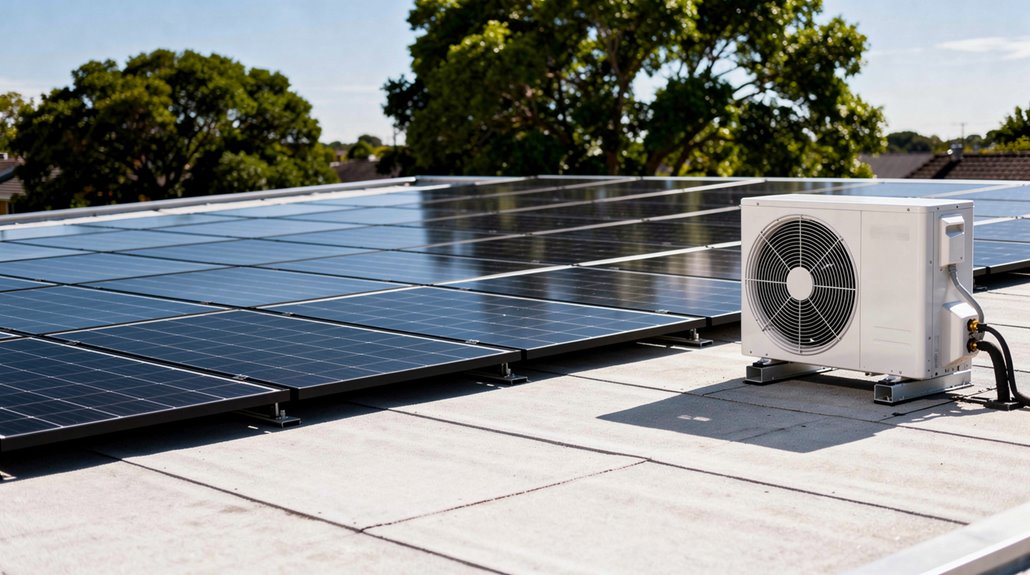
Solar panels, those glittery rectangles on rooftops, do more than sunbathe; they convert sunlight into usable energy via photovoltaic conversion, directly energizing AC internals like compressors and fans. This isn’t some pie-in-the-sky fantasy but a tangible reality: solar energy replaces grid electricity, allowing air conditioners to operate autonomously under the benevolent reign of daylight, shamefully tipping the scales away from coal and natural gas. Modern systems even incorporate variable refrigerant flow technology for improved efficiency and dual heating/cooling functions. In addition, these systems offer reliable and energy-efficient operation to suit various environments.
Solar panels don’t just sunbathe—they power ACs, cutting coal and gas from the cooling equation.
The market has staggeringly evolved beyond naive plug-and-pray systems into varieties sophisticated enough to juice entire households. Solar PV air conditioners cleverly masquerade as their fossil-fueled counterparts but run on sunlight, while hybrids cunningly siphon solar power by day, doubling down on grid or battery backup by night.
Electric wizards have conjured 48V systems and direct DC powers that connect panels straight to outdoor units, effortlessly switching to the grid only when the day conspires against sunshine. Window unit inverters emulate acrobats, flipping between solar and grid silently, as if to mock the inefficiency of traditional setups.
Sizing these solar horseshoes is no child’s play; two to six 400W panels typically muster the juice necessary, though geothermal alliances bless the setup with lower panel demands and costs. When done right, these systems flaunt SEER ratings that spike past conventionally powered units, benefiting from variable-speed DC motors that sip energy rather than guzzle it.
The result? A sharp reduction in monthly grid dependence and the elimination of power conversion losses that convert electricity into wasted heat more efficiently than old governments squander public funds.
Oh, and the economics—let’s not forget those star-crossed incentives like American subsidies slicing $2.50 to $5.00 off per panel watt. Suddenly, the electrified wallet bruises less, with amortized PV electricity costs nosediving below 15 cents per kilowatt-hour, turning fiscal fantasy into fiscal pragmatic.
Partial photovoltaic systems even crack open the door to grid-monthly bill reductions without demanding full independence, much like dropping hints of sobriety to a chronic taxpayer.
Ultimately, solar AC isn’t just a gadget but a declaration of rebellion against carbon monoxide’s pernicious reign. By decreasing grid reliance, these systems slash CO2 emissions, lending a modest pause to the planet’s fever while society continues to swelter under entropy and indifference.
It’s remarkable how such obvious progress gets tangled in a web of bureaucratic inertia and corporate complacency, ensuring that what should be ubiquitous tech remains an exotic rarity. One wonders whether humanity deserves cool air at all if it insists on roasting the only home worth cooling.
Frequently Asked Questions
How Long Do Solar Panels Typically Last?
Solar panels typically last around 25 to 30 years, with many high-quality modules functioning effectively for 35 to 40 years. Efficiency gradually declines due to annual degradation but remains viable well beyond warranty periods.
Can Solar Panels Power Other Appliances Besides the AC?
Solar panels can power various household appliances beyond air conditioning, including lighting, refrigerators, and electronics. System capacity and battery storage influence continuous usage, enabling efficient energy supply during sunlight and non-daylight hours for diverse electrical needs.
What Maintenance Is Required for Solar Panels?
Solar panel maintenance includes regular cleaning to remove debris, quarterly inspections for damage and wiring issues, monthly performance monitoring, and professional servicing every few years. Documentation of inspections and repairs guarantees long-term system reliability and efficiency.
Are Solar Panels Effective in Cloudy Weather?
Solar panels remain effective in cloudy weather, producing 10-70% of ideal output depending on cloud density. Monocrystalline and thin-film panels perform better under diffuse light, ensuring consistent energy generation even during overcast conditions.
How Do Solar Incentives Affect Installation Costs?
Solar incentives greatly reduce installation costs by providing federal tax credits, state rebates, and performance-based payments. These combined benefits lower upfront expenses and accelerate financial returns, increasing overall affordability and long-term savings for solar energy systems.
References
- https://hvacdirect.com/electrical-and-solar/solar-powered-air-conditioning-systems.html
- https://www.ecoflow.com/za/blog/are-solar-air-conditioners-worth-it
- https://en.wikipedia.org/wiki/Solar_air_conditioning
- https://solardynamics.co/solar-ac-system/
- https://www.youtube.com/watch?v=yx7AREV_8k8
- https://signaturesolar.com/all-products/high-efficiency-appliances/
- https://nastechsolar.com/solar-airconditioner
- https://palmetto.com/solar/how-long-do-solar-panels-last
- https://www.allenergysolar.com/resources/can-solar-panels-last-50-years/
- https://sinovoltaics.com/learning-center/solar-panels/understanding-solar-pv-panel-lifespan-failure-and-degradation-rates-a-strategic-perspective-for-commercial-stakeholders/