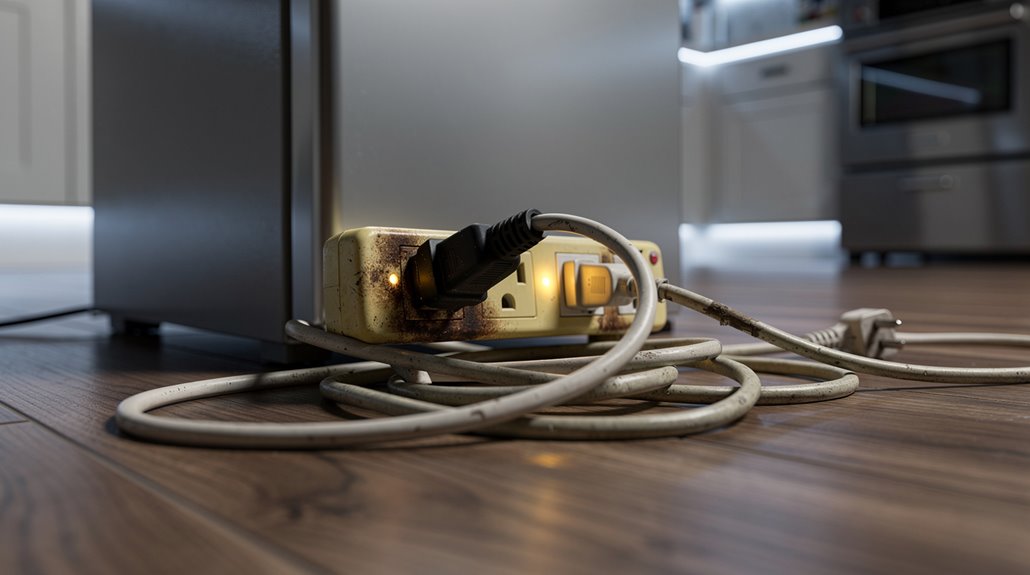

Plugging a mini fridge into a flimsy power strip is the electrical equivalent of playing Russian roulette with your wiring—because startup surges spike to 15 amps, happily roasting any underpowered strip foolish enough to bear the load. This dance of death creates a toasty, smoldering prelude to fire, while the fridge cycles like an unwelcome nightclub DJ. If you cherish your home and don’t fancy an impromptu bonfire, putting trust in anything short of a dedicated, heavy-duty circuit exemplifies willful ignorance. The real story of electrical folly awaits.
Why on earth would anyone think it’s a brilliant idea to plug a mini fridge into a flimsy power strip? It’s akin to letting a toddler juggle chainsaws — a recipe for spectacular disaster masquerading as convenience. Mini fridges, those deceptively compact appliances, demand a Herculean burst of wattage when starting up—a surging 12 to 15 amps in larger models, enough to slam most power strips into a cowardly retreat. Yet, the collective brain trust apparently decided this Frankenstein’s connection was acceptable.
Plugging a mini fridge into a flimsy power strip is inviting disaster—like letting a toddler juggle chainsaws.
The grand irony is that the running amperage is a modest merciful underachiever, often below eight amps, but those startup electrical convulsions come with the subtlety of a bull in a china shop. Common power strips, mostly rated for 15 amps at 250 volts (roughly 3,750 watts, if you insist on precision), are supposed to handle this, but they barely cling to this limit—much less thrive in the constant “on-off” fridge dance. Overload, heat build-up, and fire hazards are the default settings when matching ignored. Safety concerns arise because mini fridges cycle on and off, causing multiple surges that power strips may not safely manage. It is recommended to stay within 80% of the power strip’s maximum capacity to prevent such risks.
It gets better (or worse). Extending the fridge’s precious five-foot power cord with anything longer isn’t just impractical; it’s a crime against electrical physics. Longer cables crank resistance through the roof, morphing the innocent power delivery into a slow-motion inferno. This resistive heat generation pushes flimsy strips over the edge, turning them from a convenience to an arsonist’s toolkit. Somehow, this straightforward hazard gets lost in translation, or corporate memos.
The jittery little fridge deserves a dedicated electrical circuit — no shared strips, no daisy-chains, no bargaining with flame. But safety isn’t just a suggestion; it’s consistently ignored, as if institutional standards are a punchline. UL certification, grounded three-prong connections, and heavy-duty strips aren’t sexy topics, but they’re the only things standing between you and a fiery catastrophe masquerading as a cheap snack cooler.
Ultimately, those naïve enough to risk a power strip are gambling with a slow, smoldering death—electrically speaking. If your power strip feels even mildly warm, replace it immediately, not tomorrow or “after the weekend blackout.” The illusion of convenience here is a tragic comedy staged by ignorance, cheap cuts, and the slow erosion of common sense.
Frequently Asked Questions
How Much Electricity Does a Mini Fridge Typically Use?
A mini fridge typically uses between 50 and 100 watts during operation, averaging 70 to 90 watts. It consumes around 0.4 to 0.8 kWh daily, with annual energy usage ranging from 146 to 292 kWh.
What Type of Power Strip Is Safest for Kitchen Appliances?
The safest power strips for kitchen appliances feature heavy-duty, surge-protected, and high-amperage-rated designs. However, dedicated wall outlets are strongly recommended due to continuous high current demands and regulatory safety standards.
Can Using a Mini Fridge on a Power Strip Cause a Fire Hazard?
Using a mini fridge on a power strip can cause a fire hazard due to high starting wattage surges, overheating, and cable resistance. Standard power strips often lack capacity, increasing risks of melting wiring, sparks, and electrical fires.
How Often Should I Unplug My Mini Fridge for Safety?
The mini fridge should be unplugged nightly and during extended absences to reduce thermal stress on power strips. Regular disconnection allows the equipment to cool, minimizing fire risks and prolonging the lifespan of both the fridge and power source.
Are Surge Protectors Necessary for Mini Fridges?
Surge protectors are advisable for mini fridges to manage frequent starting current spikes and power fluctuations. They enhance safety by preventing damage during surges, ensuring stable operation, especially in environments with unstable electrical supply.
References
- https://electriciansanangelo.com/can-i-plug-a-mini-fridge-into-a-power-strip/
- https://www.ineffect.net.au/things-to-never-plug-into-power-strip/
- https://excel-electric.com/the-electrical-requirements-for-a-mini-fridge/
- https://wholesalesupply.us/news/5-things-you-should-never-plug-into-power-strips/
- https://naturesgenerator.com/blogs/news/how-many-watts-does-a-mini-fridge-use
- https://ca.bougerv.com/blogs/article/how-much-electricity-does-a-mini-fridge-use
- https://www.bluettipower.com/blogs/news/how-many-watts-does-a-mini-fridge-use
- https://santannaenergyservices.com/how-much-electricity-does-a-refrigerator-use/
- https://www.baseus.com/blogs/content/how-many-watts-does-a-refrigerator-use
- https://www.energybot.com/blog/how-many-watts-does-a-refrigerator-use.html