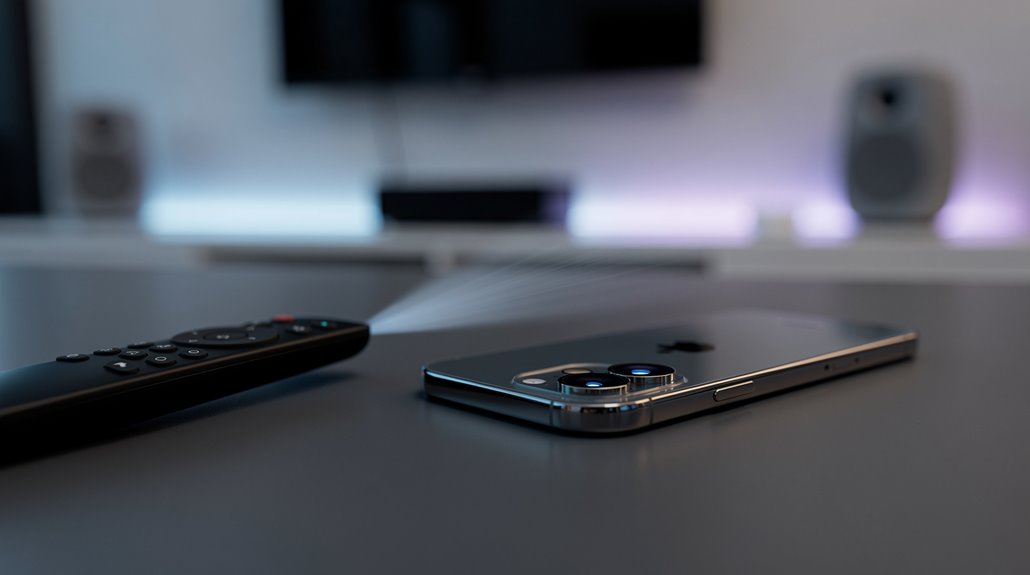
iPhone rear cameras mercilessly snub infrared light, starting with the iPhone 4, obsessively filtering it out to preserve the polished Instagram fantasy rather than offering any rudimentary IR utility. Meanwhile, the front-facing FaceTime camera grudgingly detects IR—barely—serving biometric masters with invisible dots instead of true thermal sight. Apple’s devotion to cosmetic optics over innovation guarantees users remain blind to the IR spectrum’s wonders. For those craving the cold, hard truth about iPhone IR limits, there’s more to dissect ahead.
At some exhausted point in Apple’s relentless quest to render its iPhones simultaneously indispensable and frustratingly opaque, the company decided that rear-facing cameras should filter out infrared light—because why bother letting common mortals revel in the simple joy of seeing their TV remote’s invisible laser dance when you can instead preserve the sanctity of polished, Instagram-ready mediocrity?
Starting with the iPhone 4, Apple deployed infrared filters blocking wavelengths around 940nm, the very secret handshake of remote controls everywhere. The rear camera, hence neutered, cannot register the flamboyant infrared emissions from these mundane devices, a decision stonewalling any amateur infrared voyeurism before it even begins. This deliberate obfuscation serves the cause of visible-light photography purity, ostensibly elevating photo quality by excising the rogue wavelengths that could sully the sanctimonious Instagram gallery.
The trade-off? A rear camera so metaphysically blind to IR that it might as well be a pet rock idly observing the universe.
Meanwhile, the front-facing FaceTime camera cunningly discards this draconian IR filtering, proudly exposing infrared light as a searing white spectacle in its viewfinder. The front camera gleefully detects those clandestine IR LED emissions from your remote, proving that Apple can, in fact, allow basic infrared detection when it suits its labyrinthine design whims. This makes the FaceTime camera a useful tool for infrared troubleshooting. Infrared flashing from the front camera occurs even when the device is in standby mode, suggesting functions that continue beyond active use infrared flashing.
This quirky asymmetry persists beyond the iPhone 4, showing a faint glimmer of sanity in a system otherwise committed to suppressing infrared’s common pleasures. Yet this fragile IR detection idyll shatters on newer models as they emulate their rear counterparts’ filtering dogma.
Embedded within the front lineup, the TrueDepth camera system carries a clandestine infrared arsenal, deploying 30,000 invisible dots every five seconds to render users’ faces into biometric prisons via Face ID.
This IRS-grade infrared cartography, mind you, is no thermal imaging wizardry—Apple’s sensors detect IR for facial mapping, not the sultry, heat-signature revelations sought by thermal mafias. Unlike bona fide thermal imagers, iPhone IR tech functions as a banal proximity detector masquerading as futuristic wizardry, offering nothing but identification for your corporate overlords.
Frequently Asked Questions
Can I Use an External Lens to Enhance Iphone Infrared Detection?
Yes, external thermal lens attachments can enhance iPhone infrared detection by capturing thermal radiation. These accessories mount on the phone’s camera, enabling true thermal imaging capabilities that native iPhone hardware and software cannot provide independently.
How Does Infrared Photography Differ From Thermal Imaging?
Infrared photography captures reflected infrared light to reveal surface details, while thermal imaging detects emitted heat radiation to map temperature differences. Photography shows textures visually; thermal imaging translates heat into color-coded thermal maps for heat analysis.
Are There Apps That Simulate Infrared Effects on Iphone Cameras?
Yes, various apps simulate infrared effects on iPhone cameras by digitally altering images to mimic infrared aesthetics. These applications do not capture true infrared light but use filters and post-processing techniques for visual effect.
Can Iphone Cameras Detect Ultraviolet Light?
iPhone cameras cannot detect ultraviolet light, as documented information on ultraviolet detection by iPhone cameras is unavailable. Their sensors and filters focus on visible and some infrared spectra but lack technology to capture or display ultraviolet wavelengths.
What Are Common Uses for Infrared Photography in Daily Life?
Common uses for infrared photography include remote control diagnostics, home energy assessments, electrical system inspections, nocturnal wildlife observation, and HVAC system maintenance. These applications facilitate non-contact detection of heat, energy loss, and equipment malfunctions.
References
- https://www.instructables.com/See-Infrared-LED-Light-with-an-iPhone-4/
- https://discussions.apple.com/thread/252917932
- https://www.youtube.com/watch?v=gTD678AlT3A
- https://www.youtube.com/watch?v=zfGHDeNK97o
- https://www.thermal.com/seek-nano.html
- https://www.xinfrared.com/blogs/blog/how-to-transform-your-iphone-15-into-a-thermal-camera
- https://maxxess-systems.com/2024/04/what-are-the-differences-between-infrared-vs-thermal-cameras/
- https://teslong.com/blogs/news/are-thermal-and-infrared-cameras-the-same
- https://oem.flir.com/support/support-center/knowledge-base/what-is-the-difference-between-active-ir-and-thermal-imaging/
- https://www.thedroneu.com/blog/infrared-vs-thermal-imaging-drone/