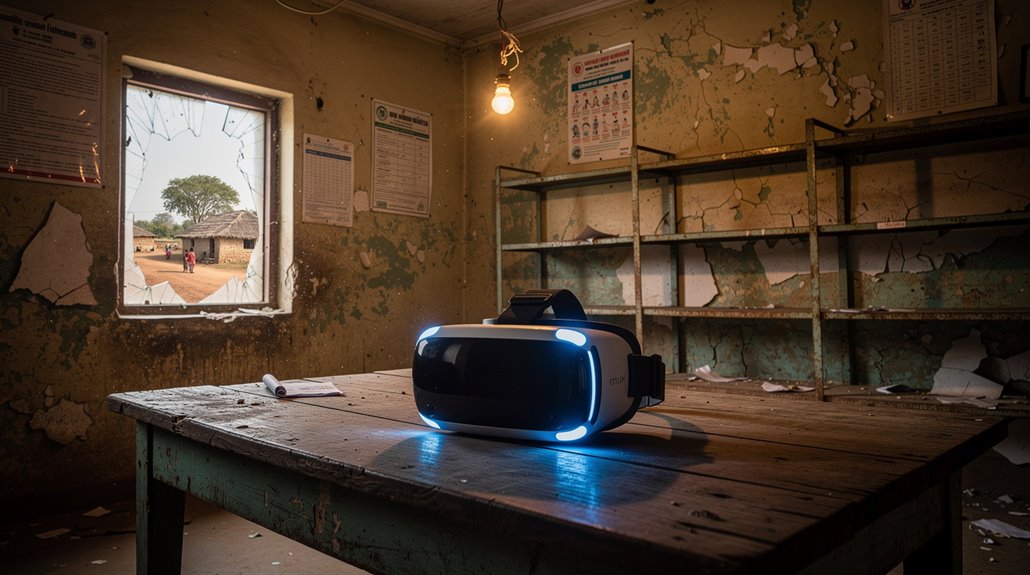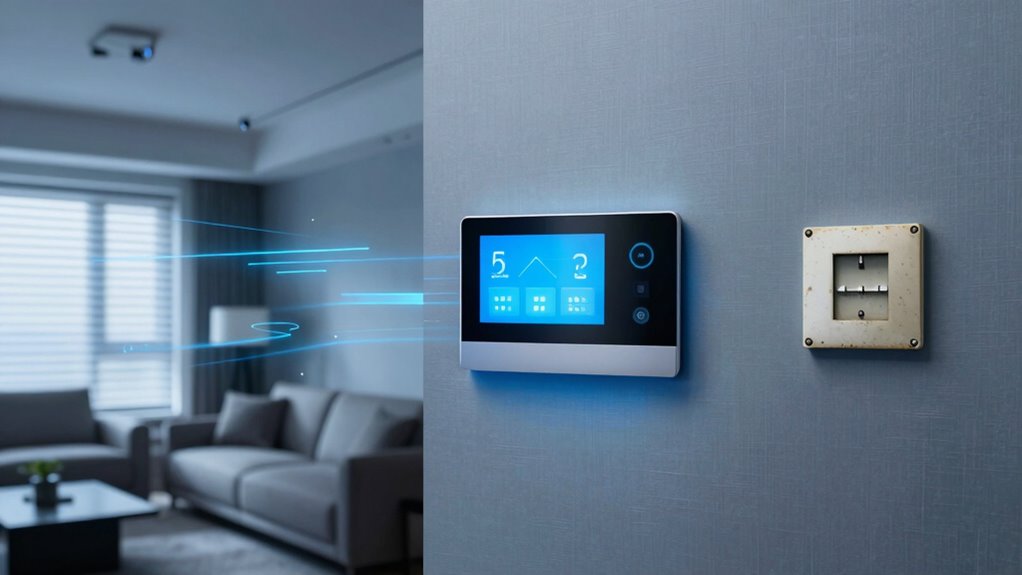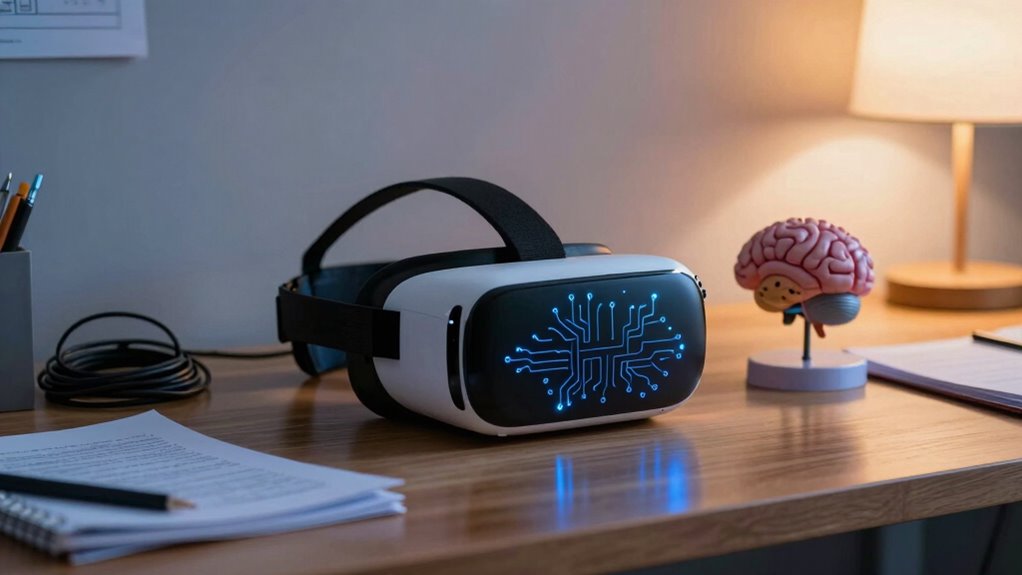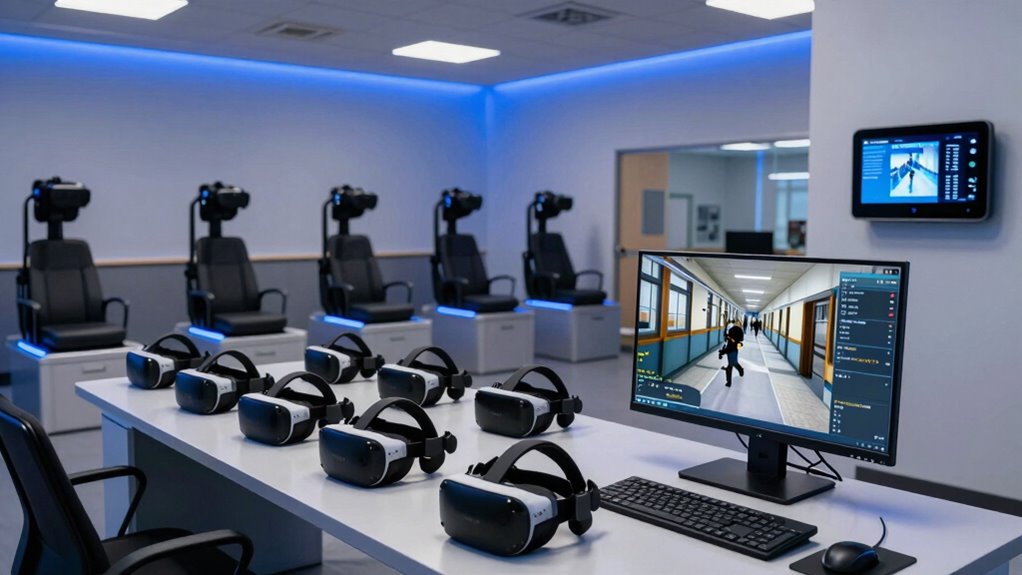
The capacity of VR platforms to replicate high-stress, hazardous incident environments with exceptional scenario fidelity without imposing physical risks renders them superior to live drills. Recent studies have demonstrated that VR-based training significantly enhances emergency personnel’s performance metrics in multi-casualty incident management. Immersive VR recreates the cognitive load of time pressure, chaotic settings, and complex decision-making demands intrinsic to active shooter events and multi-casualty emergencies, facilitating standardized, repeatable, and controlled assessments of triage, communication, and coordination protocols. This consistent scenario repeatability, unattainable in physical drills due to safety and logistical constraints, bolsters training effectiveness by enabling objective evaluation and iterative skill refinement in a controlled yet realistic virtual setting. Furthermore, VR training environments engage critical nontechnical skills such as teamwork and clinical reasoning, which are essential for effective emergency response. The systems can be integrated with smart home systems for enhanced security monitoring during both training scenarios and real-world implementations.
References
- https://pmc.ncbi.nlm.nih.gov/articles/PMC12071494/
- https://www.frontiersin.org/journals/virtual-reality/articles/10.3389/frvir.2025.1518016/full
- https://games.jmir.org/2020/3/e18822/
- https://www.nature.com/articles/s41598-025-15258-4
- https://academic.oup.com/ehjdh/advance-article/doi/10.1093/ehjdh/ztaf094/8247877
- https://trainingmag.com/the-impact-and-potential-of-virtual-reality-training-in-high-consequence-industries/
- https://www.wateroutfortwayne.com/article/top-5-benefits-of-virtual-reality-in-emergency-response-training
- https://www.trainbeyond.com/the-impact-of-immersive-training-on-emergency-preparedness/