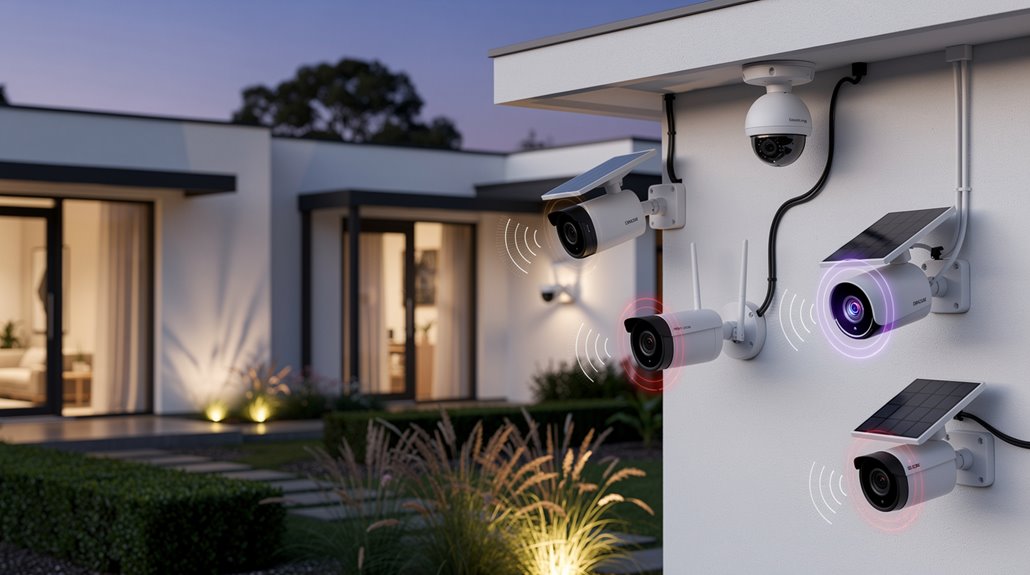
The 2025 outdoor security camera market doubles as a dystopian racket where innovation masquerades as extortion. Google Nest and Ring dominate with AI-powered features locked behind paywalls—because nothing says “safety” like mandatory subscriptions from $6 to $12 monthly. Arlo flaunts six-month batteries, yet demands ongoing fees, while budget hawks gravitate to TP-Link’s no-subscription Tapo C310, a rare island of sanity. For those brave enough to endure Kafkaesque setups and Orwellian pricing, the true exploitation reveals itself—more awaits beyond this façade.
Although one might optimistically assume that technology’s march would bolster security without bleeding wallets dry or demanding a PhD, the 2025 outdoor security camera landscape resembles a dystopian bazaar of overpriced gadgets and half-baked AI, where Arlo Pro 5S flaunts its six-month battery life and color night vision as if these miracles should distract from subscription traps lurking beneath. Extensive research involving over 5,000 hours and testing clarified the real-world performance gaps between these premium options and lesser models, influencing buyer choice toward well-tested systems.
The camera courts buyers with visions of effortless vigilance, yet requires a monthly ransom from $3.99 to $12.99 for what used to be free: functional features. It’s as if convenience has been repackaged as a hostage situation, and the consumer holds the bill.
Convenience sold at a hostage price—what once was free now demands a monthly ransom.
Meanwhile, Google’s Nest Cam parades its AI detection prowess—identifying people, packages, and even vehicles with an eerie precision—yet forces users into subscriptions ranging from $6 to $12 monthly to access facial recognition and extended video histories. It also delivers some of the best night vision performance, capturing usable footage up to 40 feet in darkness.
This clever exploitation of cutting-edge technology is dressed up as innovation but reads more like extortion through algorithmic sophistication. If Orwell had a tech expense report, this would be it.
Budget-conscious buyers aren’t spared either. The TP-Link Tapo C310 dares to offer a no-subscription-required option starting at a modest $49-69, boasting straightforward installation and no strings attached.
This rare beacon of sanity contrasts sharply with the industry’s subscription-soaked frat party, though it still demands a watchful eye on software updates masquerading as “improvements.” The SimpliSafe Outdoor Camera stands out with its Active Guard protection that enables live agents to actively deter threats when detected.
Lorex and its Fusion 2K model champion local storage for the privacy zealots, selling for $179-199, but require wiring wizardry and nearly an hour’s setup—because seamless, privacy-respecting security should clearly demand a minor renovation project.
Environmental endurance remains a battlefield where Ring’s Spotlight Cam outperforms with a frost-to-furnace rating from -20°F to 120°F, all while maintaining nearly 90% motion detection accuracy.
Yet, for all their rugged bravado, these devices serve as expensive little eye in the sky, capturing moments and hawking data in equal measure.
The verdict? The market caters to plague buyers with layers of overpriced bells and whistles, concealed subscription demands, and a Kafkaesque invite to puzzle through installation—security, it seems, has become a premium game for the elite or the exceptionally patient.
Frequently Asked Questions
How Do Outdoor Cameras Connect to Smart Home Systems?
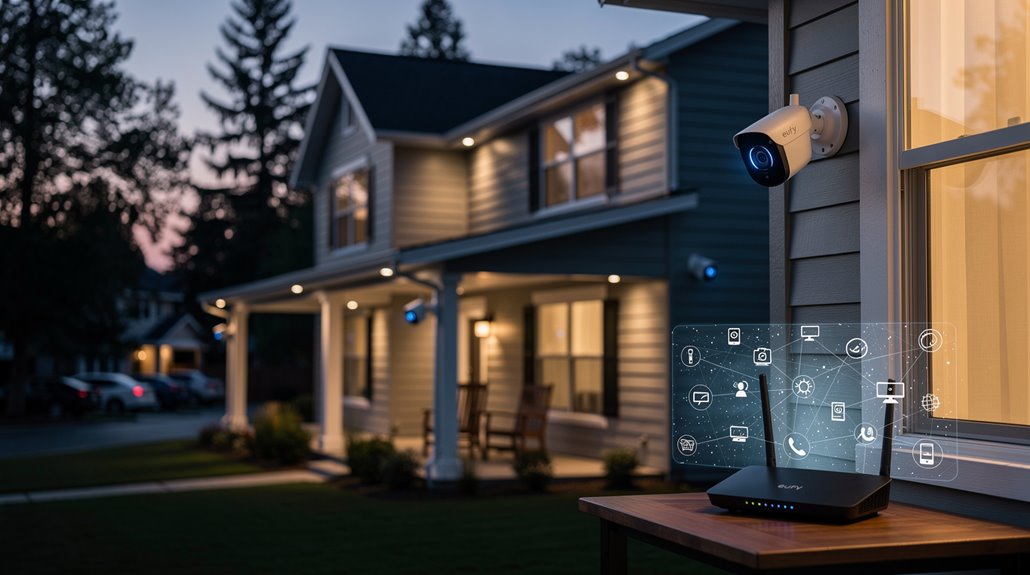
Outdoor cameras connect to smart home systems primarily through Wi-Fi networks, enabling integration with centralized hubs or platforms. This connectivity allows control via mobile apps, automation triggers, and coordination with other devices for enhanced monitoring and response.
What Are Common Troubleshooting Steps for Camera Connectivity Issues?
Common troubleshooting steps include verifying power and cable connections, checking network settings and IP addresses, rebooting devices, updating firmware, inspecting security software for blocking issues, and performing factory resets if necessary, ensuring all components function properly.
Can Outdoor Security Cameras Operate in Extreme Weather Conditions?
Outdoor security cameras designed for extreme weather operate reliably from -60°C to 60°C, featuring IP66 to IP69 ratings, metal housings, built-in heaters or cooling systems, and weather-resistant lenses to guarantee durability and clear surveillance.
How Often Should Camera Firmware Be Updated?
Camera firmware should be updated promptly upon manufacturer release, balancing security enhancements and operational stability. Frequent security patches are essential, but excessive updates risk instability. Regular, scheduled updates guarantee peak performance without unnecessary disruption.
Are There Privacy Concerns With Cloud-Stored Camera Footage?
Yes, cloud-stored camera footage raises privacy concerns including unauthorized law enforcement access, potential data breaches, risks from third-party storage providers, encryption vulnerabilities, and misuse or unauthorized sharing, which can compromise user privacy and data security.
References
- https://jer-tech.com/best-outdoor-home-security-cameras-2025/
- https://www.security.org/security-cameras/best/
- https://www.youtube.com/watch?v=71beAxdLt54
- https://www.consumerreports.org/home-garden/home-security-cameras/best-home-security-cameras-without-a-subscription-a1077107880/
- https://ipcamtalk.com/threads/2025-best-cameras-setup-guide-s-tier-a-tier-b-tier-etc.79921/
- https://dzees.com/blogs/security-camera/home-security-camera-integration-with-smart-home
- https://www.mysecuresystems.com/how-to-integrate-surveillance-cameras-into-your-home-security-system/
- https://community.home-assistant.io/t/best-camera-wireless-and-wired-to-integrate-in-home-assistant-and-use-own-cloud-solution/684419
- https://www.youtube.com/watch?v=f8CdMNsVVDU
- https://goldylocksinc.com/5-benefits-of-integrating-security-cameras-with-smart-home-systems/