Sometimes, the most high-tech solutions come in the weirdest packages—like strapping on a VR headset while still in your hospital gown. For new moms recovering from cesarean delivery, that’s exactly what’s happening in some forward-thinking hospitals—where virtual reality isn’t just for gaming, but for breastfeeding education. And get this: it’s working better than anyone expected.
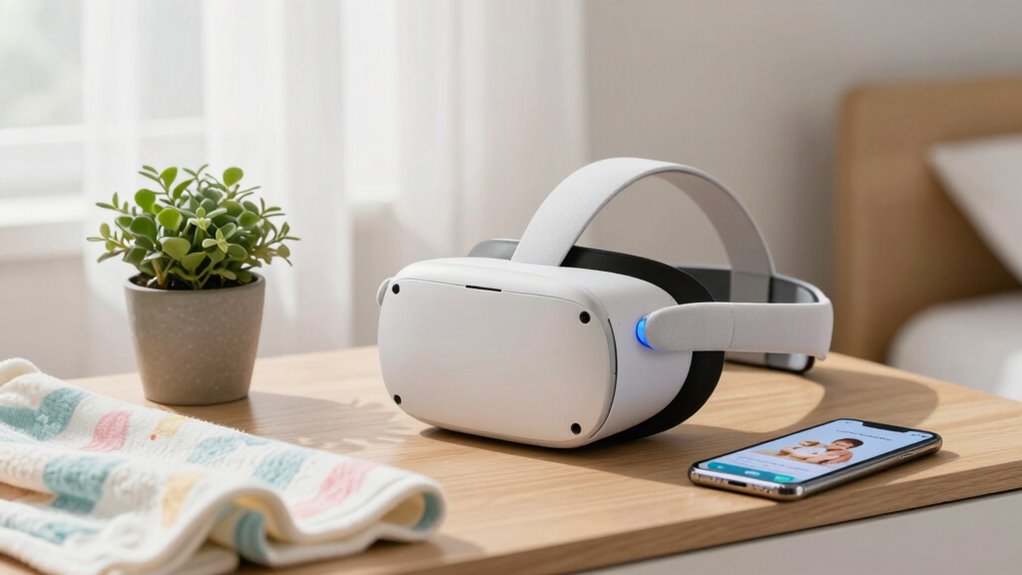
Researchers put VR breastfeeding training to the test on 66 postpartum women—35 got the high-tech lesson, 31 stuck with the usual pamphlets and nurse chats. The VR group? They slipped on Meta Quest 2 headsets just 4 hours and 24 hours after giving birth—critical moments when babies are waking up hungry and moms are, frankly, still trying to process what a cesarean scar feels like.
Instead of overwhelming new parents with jargon, the VR modules dropped them into calming, interactive digital environments—think: a peaceful virtual room with step-by-step guidance on positioning, latch, and all things breastfeeding. Much like smart irrigation systems that adapt to real-time environmental data, these VR programs adjust to each mother’s specific learning needs and concerns.
The results were no joke. Moms using virtual reality scored way higher on breastfeeding self-efficacy—basically, how confident they felt doing this whole nursing thing. And confidence mattered: those same women aced the LATCH assessments, a tool that rates real-world breastfeeding skills like latch quality and milk transfer. Higher self-efficacy scores? Higher LATCH scores. The two moved together like peanut butter and jelly.
No needles, no meds—just a headset and well-timed education. The VR experiences replaced outdated videos and rushed verbal instructions, swapping them for immersive, personalized learning. One mom joked she “felt like Neo in The Matrix—but for boob school.” Another said she’d have panicked without it, especially post-surgery.
This isn’t sci-fi anymore; it’s smart, timely, and oddly adorable. By tapping into early postpartum windows—when nerves are high and pain meds are kicking in—VR turns anxiety into empowerment. It turns “I can’t do this” into “Hey, I’ve got this.”
And for hospitals looking to boost breastfeeding success, it’s proof that sometimes, the best support isn’t a person in the room—it’s a virtual guide, showing up right on time. A recent study found significant improvements in breastfeeding outcomes with Metaverse- and VR-supported education. The study included only mothers who received breastfeeding counseling during pregnancy, ensuring they had a foundational understanding before the VR intervention.
References
- https://pubmed.ncbi.nlm.nih.gov/39085438/
- https://pmc.ncbi.nlm.nih.gov/articles/PMC7293063/
- https://clinicaltrials.gov/study/NCT07078825
- https://obrc.ouhsc.edu/DesktopModules/EasyDNNNews/DocumentDownload.ashx?portalid=195&moduleid=47665&articleid=32281&documentid=2858
- https://www.centerwatch.com/clinical-trials/listings/NCT06256822/technology-based-breastfeeding-training-after-cesarean