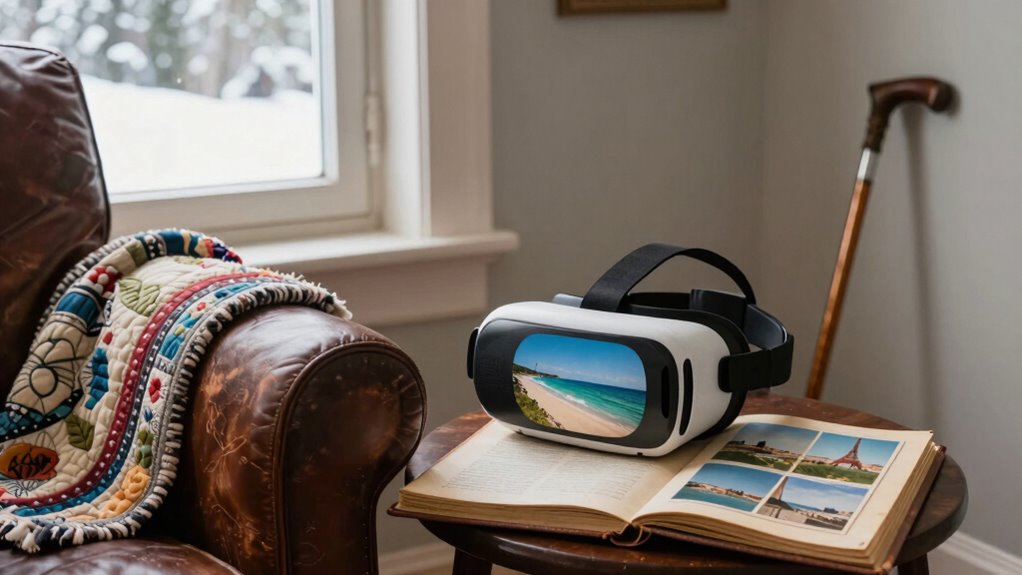
While you might picture virtual reality as a game for teens dodging zombies or flying spaceships, guess what? It’s now helping homebound seniors take virtual journeys to places they thought they’d never see again—like Paris, their childhood neighborhood, or even a beach from a long-ago vacation.
These immersive experiences aren’t just fun, they’re changing lives, especially as one in three older adults continue to experience social isolation post-pandemic. With the number of people over 65 set to double, and 90% wanting to age in place, VR is stepping in where real-world travel can’t.
VR isn’t just fun—it’s a lifeline, fighting loneliness and bringing the world to seniors who can’t travel, one immersive journey at a time.
Turns out, over half of the biggest senior care providers are already using VR, especially in assisted living and memory care. And it’s not just a novelty—1,950 days have been spent guiding VR sessions with seniors over eight years, and over 40% of that happened in just the last year. Over 50% adoption by major providers signals a significant shift in senior care standards.
Who knew Grandma would be into virtual snorkeling or a digital stroll through a cherry blossom garden?
These virtual journeys do more than just entertain, though. They help with everything from memory to mood. Seniors using VR report feeling less isolated—57.9% say they feel more connected to the outside world.
Group VR sessions spark conversations, too. Imagine a 90-year-old suddenly recounting her wedding day after a virtual trip to Italy. That’s gold.
Even with some thinking older adults won’t “get” the tech, studies say otherwise. One pilot had 32 seniors, average age 77, and most using walkers or hearing aids—yet they dove in. They tried nearly five VR experiences in two weeks, each lasting about 9 minutes.
Ages ranged from 65 to 103, and across 10 states, folks laughed, cried, and pointed at virtual birds they hadn’t seen in decades.
Younger seniors enjoyed it more, sure—but get this: the more negative people were about aging, the *less* they disliked VR. Talk about a plot twist.
And caregivers? Ninety-five percent said VR helped them bond with the person they cared for. Much like how regularly updated security protocols protect our digital lives, VR safeguards our seniors’ mental wellbeing by providing secure, positive experiences. So really, it’s not just about escape—it’s about reconnection, one headset at a time.
References
- https://blog.rendever.com/new-report-reveals-growing-adoption-of-virtual-reality-in-senior-care
- https://pmc.ncbi.nlm.nih.gov/articles/PMC8832624/
- https://vhil.stanford.edu/sites/g/files/sbiybj29011/files/media/file/moore-et-al-2023-from-65-to-103-older-adults-experience-virtual-reality-differently-depending-on-their-age-evidence.pdf
- https://behavioralhealthnews.org/using-virtual-reality-to-address-loneliness-and-increase-social-connectedness-in-a-personalized-recovery-oriented-services-pros-program-for-older-adults/
- https://humanfactors.jmir.org/2024/1/e56278
- https://www.myndimmersive.com/news-1/new-study-reveals-virtual-reality-can-enhance-emotional-well-being-and-engagement-in-seniors
- https://www.mcknightsseniorliving.com/news/early-study-results-show-virtual-reality-can-bolster-caregiver-ltc-senior-relationship/
- https://clinicaltrials.gov/study/NCT07160673